 is here! Shop now, pay later in 4 easy installments


RC Night Running: Safety, Lighting, and Why It's Actually Better
There's something magical about firing up your RC vehicle after dark. The park's empty, the asphalt's cooled down from the scorching afternoon sun, and suddenly your Traxxas or Arrma has the whole place to itself. But here's what most drivers don't realise – night running isn't just about having the track to yourself. It's actually better for your vehicle, your batteries, and your overall experience.
After thirty years in the Australian RC scene, we've watched night running evolve from a niche activity to something heaps of enthusiasts actively prefer. And honestly? The data backs them up. Your brushless motor runs cooler, your LiPo batteries deliver better performance, and you avoid the harsh afternoon heat that can wreak havoc on your electronics. Plus, there's no dodging kids on bikes or explaining to concerned parents why you're ripping around the local oval at 80kph.
But – and this is important – night running requires proper preparation. You can't just rock up with a stock vehicle and expect to see where you're going, let alone avoid obstacles. The right lighting setup, basic safety gear, and understanding how darkness affects your vehicle's performance make the difference between an awesome session and an expensive trip to buy spare parts.
This guide covers everything from essential LED light kits to the surprising performance advantages you'll discover once the sun goes down. Whether you're running off-road buggies, drift cars, or rock crawlers, we'll show you how to transform after-dark sessions from risky experiments into your favourite driving time.
Table of Contents
Why Night Running Is Actually Better for Your RC
Here's the thing nobody tells you about RC driving in summer – Australian afternoons absolutely murder your electronics. We've seen perfectly good ESCs go into thermal shutdown on 38-degree days, and don't even get us started on what happens to LiPo batteries when you push them hard in the heat. Night running completely sidesteps these problems.
Once the sun drops, ambient temperatures in most Australian cities fall by 10-15 degrees. Your motor runs noticeably cooler, meaning less stress on the windings and longer component life. Your ESC doesn't have to work as hard managing heat, and your batteries maintain more consistent voltage throughout the run. It's not just theory – you'll feel the difference in throttle response and runtime.
Beyond the performance advantages, cooler evening air is actually denser, which affects how your vehicle handles. This denser air improves cooling efficiency for all your electronics and can even marginally increase traction on some surfaces. Plus, if you're running nitro engines, you'll find they tune more easily and deliver more consistent power in cooler temperatures.
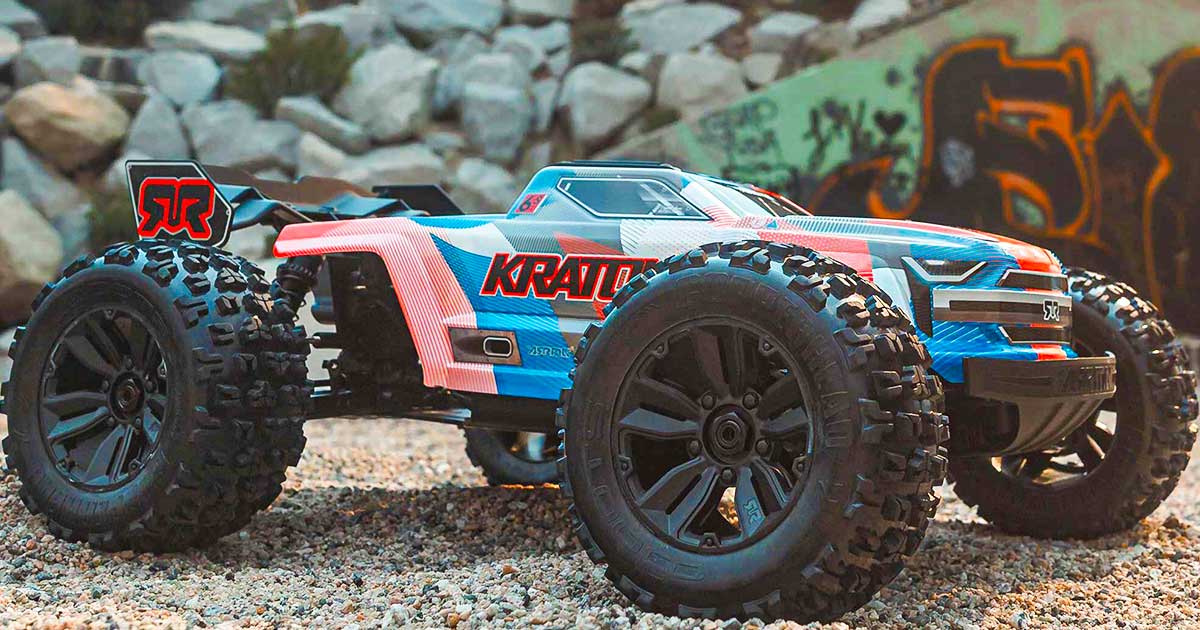
The practical benefits are pretty obvious too. Most parks and ovals are dead quiet after 7pm. No cyclists to dodge, no dog walkers to worry about, and no curious crowds gathering to watch. You can run your Traxxas Slash or Arrma Kraton at full throttle without constantly scanning for pedestrians. The peace of mind alone makes night sessions worth it.
![[SUGGESTED IMAGE: RC car with bright LED lights running on a track at night, showing the illuminated path ahead]](https://www.hearnshobbies.com/cdn/shop/files/ARA8608V6T1_A11_OEGSQW4Y_jpg.jpg?v=1736334188&width=1200)
Performance Temperature Sweet Spot
Most brushless systems and LiPo batteries perform optimally between 15-25°C. Australian summer evenings typically sit right in this range, while afternoon temperatures can hit 35-40°C. That 15-20 degree difference translates directly to better performance and longer component life.
Essential Lighting Equipment You Actually Need
Let's cut through the marketing rubbish – you need three types of lighting for proper night running. First, your vehicle needs proper LED lights. Second, you need personal lighting to see your surroundings. Third, you need visibility markers so you can track your vehicle's position and orientation. Skip any of these and you're asking for trouble.
For vehicle-mounted lights, there's heaps of options depending on your budget and how much wiring you fancy doing. Pre-made light kits that plug straight into your receiver are the easiest option – they typically include front headlights, rear taillights, and sometimes underglow LEDs. These kits draw minimal power and won't noticeably affect your runtime. Mount them securely inside your body shell using the included hardware.
More advanced setups might include programmable LED strips that can switch between different colours or patterns via a spare channel on your transmitter. These are brilliant for drift cars or when running multiple vehicles – assign each car a different colour scheme so you can instantly identify which one's yours. Just remember that more complex lighting systems require proper wiring and sometimes separate power sources.
For personal lighting, a decent headlamp is non-negotiable. You'll need to see obstacles, inspect your vehicle, and occasionally make quick repairs or adjustments. Get one with at least 200 lumens and a red-light mode for checking your transmitter screen without destroying your night vision. Keep spare batteries in your field bag – nothing's more frustrating than your headlamp dying mid-session.
Light Kit Installation Options
| Installation Type | Difficulty | Best For |
|---|---|---|
| Plug-and-play kits | Easy | Beginners, quick setup |
| Direct receiver connection | Moderate | Standard RTR vehicles |
| Programmable LED systems | Advanced | Drift cars, show vehicles |
| Custom soldered setups | Expert | Race builds, specific applications |
Safety Gear and Location Selection
Right, let's talk about picking your night running spot. Not every location that works during the day is safe after dark. You want flat, open areas with consistent surface conditions and minimal obstacles. Familiar territory is crucial – running somewhere new at night is asking for grief. That skate park you've driven a hundred times during the day? Perfect. That random bush track you've never explored? Save it for daylight.
Check for hazards before the light completely fades. Walk your intended course looking for holes, rocks, or debris that might be hard to spot in the dark. Even with proper lighting on your vehicle, you won't see everything. Mark problem areas with reflective tape or small LED markers if needed. Better to spend ten minutes on prep than to bin a $500 truck into a drainage ditch.
Personal safety matters too, especially if you're running solo. Tell someone where you're going and when you'll be back. Keep your mobile charged and accessible. If possible, bring a mate – not just for safety, but because they can help spot your vehicle and retrieve it if it ends up somewhere awkward. Plus, running with others is just more fun, and you can compare different lighting setups.
Consider the local noise regulations before you rock up with a screaming nitro engine. Most residential areas have quiet hours, and even electric motors can be surprisingly loud when you're pushing hard. If you're running near houses, be respectful. The last thing the hobby needs is more council restrictions because someone was doing full-throttle passes at 10pm.
![[SUGGESTED IMAGE: Well-lit RC driving area at night showing safe, flat terrain with visible boundaries and no obstacles]](https://www.hearnshobbies.com/cdn/shop/products/DA-746003.jpg?v=1734699100&width=500)
Preparing Your Vehicle for Night Sessions
Before you head out, give your vehicle a proper once-over. Night running means you can't easily spot developing problems, so you want everything tight and right before you start. Check all suspension arms, make sure your wheels are secure, and verify that your servo is responding properly. A loose screw that might just rattle during the day could cause a major failure at night when you can't see it developing.
Test your lighting system thoroughly before leaving home. Connect everything, power it up, and make sure all LEDs are functioning. Check that your wiring is secured and won't get caught in moving parts. If you're running separate power for your lights, make sure that battery is charged. Nothing's more annoying than showing up and discovering your lights don't work.
Consider adjusting your differential oil slightly thicker for night running. Cooler temperatures mean your standard diff oil will become thicker anyway, so starting with slightly heavier oil compensates for this. The same logic applies to shock oil – what works perfectly at 30°C might feel sluggish at 18°C. Make small adjustments and test how your vehicle responds.
Pack a proper field kit with essential tools and spare parts. Include hex drivers, spare wheels, extra batteries, and whatever parts your specific vehicle tends to break. A small magnetic parts tray is brilliant for keeping screws from disappearing into the darkness. Trust me, searching for a dropped 3mm screw in the grass at night is nobody's idea of a good time.
Pre-Session Checklist
- Test all lights and connections
- Check battery charge levels
- Tighten all chassis screws
- Verify servo operation
- Pack essential repair tools
Temperature Adjustments
- Slightly thicker diff oil
- Adjusted shock fluid
- Pre-warmed batteries
- Appropriate tyre compound
- Gear ratio consideration
Battery Performance and Temperature Management
Here's where night running gets interesting – your LiPo batteries behave quite differently in cooler temperatures. Cold batteries deliver less voltage and reduced capacity, but here's the twist: the cooler ambient air means they won't heat up as quickly during use. For most Australian evening temperatures (15-22°C), this balance works beautifully. Your packs stay in their optimal temperature range throughout the run.
If you're running in proper winter conditions or starting early when it's still quite cold, pre-warming your batteries helps enormously. Keep them in an insulated bag or even just inside your jacket for 15-20 minutes before use. You're not trying to make them hot – just bringing them up to around 20°C gives you better performance right from the start. Never use external heat sources like heaters though; warm them gently with your body heat.
Monitor your pack temperatures during charging and after runs. In cooler conditions, you might notice they're staying cooler during use, which is brilliant. However, don't assume cold means you can push harder – a cold battery pushed too hard can suffer internal damage just as easily as an overheated one. Stick to the manufacturer's C-rating recommendations regardless of temperature.
Consider running slightly lower voltage packs or conservative gearing for night sessions. Since you can't see approaching obstacles as easily, you'll naturally drive a bit more cautiously. Lower speeds mean less battery stress and longer runtimes. Plus, cooler operating temperatures extend your pack's overall lifespan – you'll get more cycles out of batteries that spend more time running cool versus constantly hitting thermal limits.
Battery Temperature Guidelines
Optimal operating range: 20-40°C for most LiPo packs
Pre-warm if below: 15°C for best performance
Never use if below: 0°C (risk of permanent damage)
Stop using if above: 60°C (thermal protection activation)
Ideal night temperature: 15-25°C ambient for extended runtime
Maintaining Visual Contact with Your Vehicle
The biggest challenge with night running is simply keeping track of where your vehicle is. Even with proper lighting, a fast-moving truck can disappear surprisingly quickly if it gets too far away. This is where good lighting design and driving technique become crucial. Your vehicle lights need to be bright enough to see from 30-40 metres away, and ideally colour-coded so you know which end is front.
Traditional white headlights and red taillights work brilliantly for orientation. At a glance, you know exactly which direction your vehicle's pointing and can anticipate its movement accordingly. Some drivers add different coloured LEDs on each side for additional orientation feedback. This might seem like overkill, but when you're running multiple vehicles or doing high-speed passes, these visual cues become incredibly valuable.
Underglow lighting serves a practical purpose beyond looking cool. Those LEDs shining downward illuminate the ground immediately around your vehicle, giving you feedback about surface conditions and helping you spot obstacles just before you hit them. For rock crawlers, underbody lighting is almost mandatory at night – you need to see exactly where you're placing your wheels.
Consider your driving distance and adjust accordingly. If you're running drift cars on a relatively small track, standard LED strips work fine. But if you're doing high-speed 1/8 scale bashing in a large field, you'll want seriously bright lights or accept that you'll need to stay closer. There's no shame in keeping your vehicle within 15-20 metres – better to see clearly and drive confidently than squint into the darkness hoping for the best.
![[SUGGESTED IMAGE: Multiple RC vehicles with different coloured LED lighting showing orientation and visibility from various angles at night]](https://www.hearnshobbies.com/cdn/shop/files/C4327_1.jpg?v=1734701468&width=1200)
Navigating Different Terrains at Night
Different surfaces and terrains present unique challenges after dark. Smooth asphalt or concrete are the easiest – your on-road vehicle's lights will clearly illuminate the path ahead, and you'll spot any obstacles well in advance. This is why many drivers start with sealed surfaces when first trying night running. Once you're comfortable, you can graduate to more challenging terrain.
Grass surfaces are trickier because your depth perception gets weird at night. What looks flat might hide small dips or holes. Run slower than usual and scan ahead constantly. Your off-road buggy or crawler will handle the terrain fine, but you need to give yourself reaction time. Fresh mown grass is easier than long grass, which can hide all sorts of problems.
Loose dirt or gravel demands even more caution. Your vehicle's lights will reflect off dust clouds, temporarily blinding your view. This is particularly problematic with 1/8 scale vehicles throwing up massive rooster tails. Adjust your driving style to minimise dust – smooth throttle inputs rather than aggressive acceleration. Consider waiting a few minutes if conditions get too dusty; the particles settle surprisingly quickly in still evening air.
Technical terrain like rock crawling courses become genuinely challenging at night. You absolutely need excellent lighting here – both on the vehicle and personal lighting to spot your intended line. Many night crawlers use small flashlights or LED markers to illuminate particularly technical sections. There's no rush; take your time, plan your line carefully, and accept that you'll move more slowly than during daylight sessions.
Terrain-Specific Night Running Tips
| Terrain Type | Main Challenge | Recommended Setup |
|---|---|---|
| Sealed surfaces | Pedestrian awareness | Standard LED kit, bright rear lights |
| Grass | Hidden dips/holes | Underglow LEDs, slower speeds |
| Dirt/gravel | Dust clouds | Extra-bright headlights, smooth driving |
| Technical rocks | Line selection visibility | Multiple light sources, extra personal lighting |
Common Night Running Mistakes to Avoid
Right, let's talk about the silly things people do when they first try night running. The biggest mistake? Going too fast too soon. Your reaction time is slower at night even with perfect lighting. What feels like moderate speed during the day seems absolutely rapid in the dark. Start slow, build confidence gradually, and don't try matching your daytime pace for at least a few sessions. Your spare parts budget will thank you.
Second common error is inadequate preparation. Showing up without proper lighting, forgetting tools, or not checking your vehicle thoroughly beforehand. Night sessions aren't spontaneous activities – they require planning. We've seen too many drivers discover their lights don't work or their battery is dead only after driving 20 minutes to their running spot. Do a full systems check before you leave home.
Many drivers underestimate how quickly batteries drain in cooler conditions. What gives you 15 minutes of runtime at 30°C might only deliver 12 minutes at 18°C. Bring extra packs and don't push them to the absolute limit. Running your battery completely flat in the dark, far from your starting point, is a recipe for a long walk carrying a heavy truck.
Finally, some drivers get overconfident with their lighting setup and venture into genuinely dangerous territory. Your LED headlights aren't spotlights – they won't illuminate obstacles 50 metres away. Respect the limits of your visibility and don't drive faster than your lights allow you to react. Also, don't run in areas where you might disturb wildlife or trespass on private property. The last thing anyone needs is a run-in with an angry property owner or, worse, an encounter with wildlife that considers you (or your vehicle) a threat.
Top Night Running Mistakes
- Driving too fast initially
- Inadequate lighting setup
- Forgetting spare batteries
- Not checking vehicle condition
- Running in unfamiliar locations
Safety Priorities
- Always bring a mate
- Tell someone your location
- Carry charged mobile phone
- Bring personal lighting
- Respect local noise regulations
Frequently Asked Questions
Do I need special batteries or electronics for night running?
No, your standard electronics and batteries work fine at night – actually, they often perform better in cooler temperatures. The only addition you need is proper LED lighting for visibility. Most plug-and-play light kits draw minimal current and won't significantly impact your runtime. If you're running in genuinely cold conditions (below 10°C), consider pre-warming your batteries to room temperature before use, but standard Australian evening temperatures are typically perfect for RC performance.
How much does a decent lighting setup cost for my RC vehicle?
Basic plug-and-play light kits start around $30-50 and include front headlights and rear taillights – perfectly adequate for most night running. Mid-range setups with programmable LEDs and underglow lighting run $80-150. High-end systems with multiple colours, wireless control, and custom installations can exceed $200. Start simple; you can always upgrade later once you know what features you actually want. Remember, you'll also want a decent headlamp for yourself (around $30-80), which is arguably more important than fancy vehicle lighting.
Is night running safe for my vehicle's electronics?
Absolutely – night running in moderate Australian temperatures is actually better for your electronics than afternoon sessions in 35°C heat. Your ESC and motor run cooler, reducing thermal stress and extending component life. The main safety concern is moisture from dew, particularly if you're running late into the night. Most modern quality vehicles have water-resistant electronics, but if dew is heavy, wipe down your vehicle afterwards and let it dry completely before storage. Check your receiver and ESC for moisture accumulation.
Can I run my nitro vehicle at night, or is it electric only?
You can definitely run nitro engines at night, and they often perform brilliantly in cooler temperatures – the denser air provides better combustion. However, be mindful of noise regulations; nitro engines are loud, and what's acceptable at 2pm might cause complaints at 8pm. They're also trickier to start and tune in the dark, so make sure your glow plug and tuning are sorted before the light fades. Many nitro enthusiasts prefer electric for night sessions simply for the convenience and quieter operation, but there's no technical reason you can't run nitro after dark.
Final Thoughts
Night running transforms your RC experience in ways you won't fully appreciate until you try it. The cooler temperatures mean better performance, longer component life, and more comfortable conditions for extended sessions. Empty parks and ovals give you space to properly open up your vehicle without constantly watching for pedestrians. And honestly, there's something special about seeing your truck lit up like a Christmas tree, carving through the darkness at full chat.
The key to successful night running is proper preparation. Invest in decent lighting, check your vehicle thoroughly before heading out, and start with familiar locations until you build confidence. Don't rush it – your first few night sessions should focus on getting comfortable with limited visibility rather than pushing performance limits. Once you've adapted, you'll wonder why you ever bothered with scorching afternoon sessions.
Remember, safety comes first. Always run with a mate when possible, keep your mobile charged, and respect local regulations regarding noise and public space usage. The RC community's reputation depends on us being responsible, considerate hobbyists. Done right, night running can become your favourite time to drive – we know it has for many of our regular customers. Grab your batteries, install those lights, and discover what you've been missing after dark.