 is here! Shop now, pay later in 4 easy installments


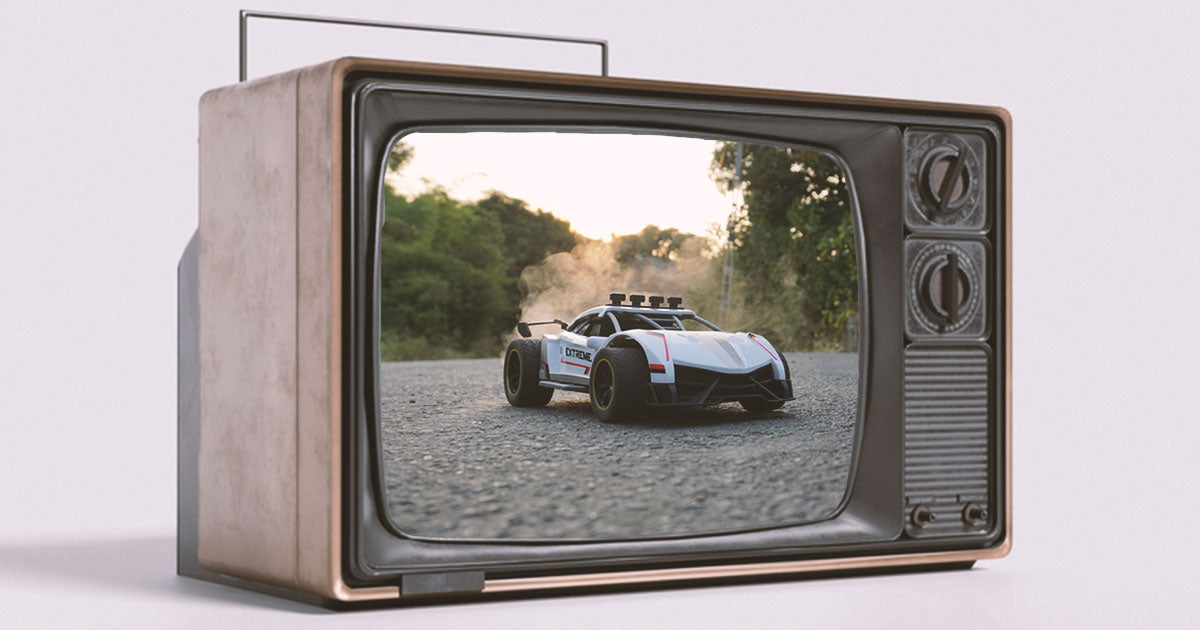
Are Older RCs Really Better Or Is That Your Nostalgia Talking?
Right, let's address the elephant in the workshop – that beautifully weathered Tamiya Hornet sitting on your shelf probably wasn't as brilliant as you remember. But try telling that to someone who grew up in the 1980s, and you'll start an argument that'll last longer than a fully charged NiMH battery pack.
At Hearns Hobbies, we've watched this debate unfold for thirty years. Blokes bring in their pristine Yokomo 870c from storage, convinced it'll outperform anything modern. Then they see a kid's Traxxas Rustler absolutely demolish their childhood hero on the track. The look on their face? That's the exact moment nostalgia crashes into reality at about 60 kilometres per hour.
Here's the thing though – both sides have valid points. Vintage RC cars were built differently, looked prettier, and had character modern cars can't replicate. But modern RCs have technology that would've seemed like science fiction in 1985. Brushless motors, LiPo batteries, digital proportional control – these aren't just upgrades, they're complete game-changers.
So are older RCs genuinely better, or is that just your memory playing tricks? Well, grab a cuppa and settle in, because we're about to dive into this topic with all the objectivity we can muster (which isn't much, honestly). We'll look at what vintage cars actually got right, where modern tech leaves them in the dust, and why you're probably romanticising those Saturday mornings at the track more than you realise.
Table of Contents
The Golden Age Myth (And Why It Exists)
The 1980s gets called the "Golden Age of RC" so often you'd think the cars were literally made of gold. They weren't, obviously – mostly plastic and aluminium – but the era holds this legendary status in the hobby community. And look, we get it. The mid-80s through early 90s saw an explosion of RC popularity that hasn't been matched since. Hobby shops were everywhere, tracks were packed, and manufacturers were churning out innovative designs monthly.
But here's what actually made that era special: it was new. For most people, it was their first proper exposure to hobby-grade RC vehicles. The Tamiya Grasshopper, the Kyosho Optima, the legendary Associated RC10 – these weren't just toys, they were proper engineering marvels you could hold in your hands. No wonder they left such a lasting impression. Your first proper RC car is like your first kiss – you remember it being perfect even if objectively it probably wasn't.
The nostalgia factor is absolutely massive here. You weren't just driving a car, you were experiencing freedom, independence, and the satisfaction of building something yourself. Those Saturday mornings at the track weren't just about racing – they were about community, learning, and probably avoiding doing your homework. When you look at that Tamiya Sand Scorcher now, you're not seeing plastic and metal, you're seeing memories.
Psychology research shows we tend to remember positive experiences more vividly than negative ones, especially from our youth. You remember the thrill of hitting that jump perfectly, not the seventeen times you broke the front suspension. You remember winning that local club race, not the constant frustration of battery packs dying mid-run. Your brain's basically curating a highlight reel whilst conveniently editing out the dodgy bits.
![[SUGGESTED IMAGE: A vintage 1980s RC car (like Tamiya Grasshopper or Hornet) displayed next to a modern equivalent, showing the design evolution]](https://www.hearnshobbies.com/cdn/shop/files/yz-834b_17.jpg?v=1724441433&width=800)
The Nostalgia Filter in Action
What you remember: Amazing handling, incredible speed, bullet-proof durability
What actually happened: Constantly adjusting gear mesh, five-minute run times, weekly repairs
The truth: Both are valid experiences – the memory is real even if the details are fuzzy
Build Quality: Were They Actually Built Better?
Here's where things get interesting. Ask any vintage RC enthusiast about build quality and they'll swear cars were made better "back in the day." And you know what? In some very specific ways, they're not wrong. But overall? Modern RC vehicles are built to tighter tolerances, use better materials, and benefit from decades of design refinement.
Vintage kits, especially from manufacturers like Tamiya and Yokomo, used heaps of metal parts where modern cars use composite materials. That gold-anodized aluminium on the RC10? Gorgeous and genuinely well-made. Those fibreglass chassis plates on competition buggies? Proper engineering. But "more metal" doesn't automatically mean "better" – it often just means heavier and more expensive to replace.
Modern cars use advanced plastics and composites that are lighter, more flexible, and frankly more practical for bashing. When you bin your Arrma Kraton into a gum tree at full throttle, the plastic bits flex and absorb impact rather than snapping like old fibreglass did. Replacement parts cost a fraction of what vintage alloy components did, and they're actually available without hunting through forums and hoping someone in Germany has NOS stock.
One area where vintage cars genuinely shine is aesthetic build quality. The attention to detail on kits from the 80s and 90s was phenomenal. Beautiful box art, detailed instruction manuals that actually taught you about the mechanics, chrome-plated parts that served no functional purpose except looking flash. Modern RTR cars are optimized for performance and cost-effectiveness, which means less of that lovingly crafted presentation. Your Traxxas Slash is brilliant, but it'll never have the soul of a carefully assembled Tamiya Wild One.
Build Quality Reality Check
| Component | Vintage Approach | Modern Approach |
|---|---|---|
| Chassis | Fibreglass or alloy tub | Carbon fibre or composite |
| Suspension arms | Rigid aluminium | Flexible nylon composite |
| Drivetrain | Metal gears, exposed diffs | Sealed diffs, hardened plastics |
| Fasteners | Phillips head screws, E-clips | Allen head, proper threaded |
The Technology Gap Nobody Wants to Admit
Alright, this is where vintage enthusiasts need to take a seat because the truth isn't pretty. Modern RC technology isn't just better – it's in a completely different universe. The jump from 1980s tech to 2025 tech is roughly equivalent to going from a horse-drawn cart to a Tesla. Actually, that might undersell how dramatic the changes are.
Let's start with brushless motors. These things are legitimately magical compared to brushed motors. They're up to 1.5 times more efficient, produce way more power, generate less heat, and basically never wear out because there are no brushes to destroy themselves. Back in the day, a brushed motor might last a season if you were lucky and careful. Modern brushless systems? They'll outlive your interest in the hobby.
LiPo batteries are another game-changer that vintage fans conveniently ignore when making comparisons. A 2S LiPo weighs a fraction of what old NiMH packs did, holds way more energy, and delivers consistent power right up until they're dead. Remember how NiCd and NiMH packs would fade gradually, so you'd lose performance throughout a run? LiPos maintain voltage until they're done, then they're done. No more wondering if that slower lap was you or the battery dying.
Electronic speed controllers (ESCs) now have more computing power than the computers that sent people to the moon. They can handle insane current loads, offer programmable settings for throttle curves and braking, protect your battery from damage, and some even send telemetry data to your phone. Vintage mechanical speed controllers? They got hot, occasionally caught fire, and gave you approximately three settings: slow, medium, and "I hope this doesn't melt."
Radio systems have evolved ridiculously too. Modern 2.4GHz systems eliminate frequency conflicts, offer insane range, include multiple model memory, and cost less than vintage 27MHz systems did. You can now run dozens of cars at the same track without interference, something that would've been impossible in the 80s when everyone had to clip frequency pins to the aerial and hope nobody else showed up with the same channel.
![[SUGGESTED IMAGE: Side-by-side comparison of vintage NiCd battery pack next to modern LiPo battery, showing the dramatic size and weight difference]](https://www.hearnshobbies.com/cdn/shop/products/f6a86db568c95af694541fa0db181d6d.jpg?v=1740163237&width=800)
Technology Then
- 5-minute battery run times
- Motors lasted one season
- 27MHz frequency conflicts
- Mechanical speed control
- Servo reversing with switches
Aesthetics and Character: Where Vintage Wins
Right, so modern cars have better tech – we've established that and it's not really debatable. But here's where vintage RCs absolutely smash their modern counterparts: they look fantastic and have genuine personality. This isn't nostalgia talking (well, not entirely) – vintage RC cars were designed when aesthetics mattered as much as performance.
The body shells from that era are proper works of art. Hand-painted driver figures, detailed interiors, chrome-effect window trim, scale accessories that served no purpose except looking brilliant. Modern Tamiya re-releases still include these details, but most modern RTR cars have simplified bodies optimized for durability over decoration. Your Arrma Typhon is fast as hell but it's basically just a swoopy bit of plastic – no character, no soul.
The build process itself was part of the appeal. Opening a vintage kit was like Christmas morning. The box art was incredible – detailed illustrations that made your car look heroic even before you'd assembled it. Instructions were educational, teaching you about gear ratios, differential operation, and suspension geometry. You learned whilst building, and the finished product felt like an achievement. Modern RTR cars? Chuck in a battery, switch it on, done. Convenient, sure, but you miss that connection.
Then there's the whole aesthetic of vintage racing culture. Pit boxes with foam-lined tool trays, gear ratio charts on laminated cards, chargers that looked like they belonged in a chemistry lab. Everything had this proper hobbyist feel to it. Modern racing is more efficient but somehow less romantic. LiPo chargers are brilliant but they don't have the same vibe as watching those old LED peak-detection chargers cycle through their routine.
The liveries and sponsorship decals from vintage era were incredible too. Yokomo's Shell-sponsored cars, the iconic Martini Racing stripes, manufacturer team liveries that referenced real motorsport – these cars looked like miniature racing machines. Now? Most RTR bodies have generic "extreme" graphics or made-up sponsors. Functional but forgettable.
The Intangible Factor
You can measure speed and efficiency, but you can't quantify the feeling of carefully applying decals to a freshly painted Tamiya Hornet body shell at midnight because you're too excited to wait until morning. That's the magic vintage cars still have – they make you care about them in ways modern RTRs often don't.
Performance Reality Check: Numbers Don't Lie
Alright, time for some uncomfortable truths. If you put a bone-stock 1985 RC10 on a modern track against a bone-stock 2025 Team Associated B6.4, the vintage car would get absolutely destroyed. Not close racing destroyed – embarrassingly lapped within minutes destroyed. The performance gap is that dramatic, and pretending otherwise is just lying to yourself.
Modern race buggies corner faster, accelerate harder, and handle better than vintage cars ever dreamed of. Improved suspension geometry, better tyre compounds, optimized weight distribution, sealed diffs that maintain consistent performance – all these incremental improvements add up to cars that are simply in a different league. It's not that vintage designs were bad; they were brilliant for their time. But engineering has moved on.
Speed is even more dramatic. A modified Traxxas XO-1 can hit 160 km/h out of the box. Even basic modern bashers routinely exceed 50-60 km/h with room to grow. Vintage cars? Getting to 40 km/h required serious modification and tuning. For scale reference, a 1/10 car doing 60 km/h is equivalent to about 400 km/h in real-world scale speed. That's bonkers fast, and it's now accessible to anyone with a few hundred dollars and a decent battery.
Run times are another area where the comparison isn't even fair. Old NiCd packs might give you five minutes of full-throttle running if you were lucky and the weather was perfect. Modern LiPo batteries? You're looking at 20-30 minutes easily, and the car maintains consistent power throughout. No more strategic power management – just pin it and forget it until the ESC beeps low voltage warning.
Durability in actual use is better too, despite what vintage fans claim. Yes, metal parts don't break as easily as plastic, but they're heavier, more expensive, and when they do fail, they're properly knackered. Modern composites flex, absorb impacts, and often survive crashes that would've destroyed vintage cars. Plus, replacement parts are cheap and available. Good luck finding NOS suspension arms for your 1987 Schumacher Cat at reasonable prices.
![[SUGGESTED IMAGE: Modern RC buggy in action on a track, demonstrating the improved suspension travel and handling capabilities]](https://www.hearnshobbies.com/cdn/shop/products/f073c7fd80fc036dc933c9035af09273.jpg?v=1731165380&width=800)
Performance Comparison: Then vs Now
| Metric | 1985 Standard | 2025 Standard |
|---|---|---|
| Top Speed | ~25-35 km/h | 50-70+ km/h |
| Run Time | 5-7 minutes | 20-30 minutes |
| Charge Time | Overnight (14+ hours) | 30-60 minutes |
| Motor Lifespan | One racing season | Essentially unlimited |
The Hobby Experience: Then vs Now
Performance metrics tell one story, but the actual experience of being in the RC hobby has changed massively in ways that go beyond speed and technology. Whether these changes are improvements depends entirely on what you value, and this is where the debate gets properly interesting rather than just being about specifications.
Back in the Golden Age, RC was properly social. You basically had to go to a track or club to participate fully. Local hobby shops were community hubs where you'd spend Saturday mornings hanging out, swapping parts, getting advice, and learning from experienced racers. Club racing was the main event, and you'd know everyone's name, car setup, and probably their dog's name too. It was a proper community.
Now? You can order everything online, build your car watching YouTube tutorials, and bash solo in your backyard with gear that performs better than club racers had. Is this progress? Absolutely. Is something lost? Probably. The convenience is brilliant – you're not limited by local shop hours or track schedules – but that accidental community building through necessity is largely gone. Modern RC is more accessible but somehow lonelier.
The barrier to entry has shifted too. Vintage RC required commitment and learning. You had to build your kit (teaching you how everything worked), understand basics of gearing and setup, and learn battery care because proper chargers were expensive. This filtered out casual interest – you were either properly into it or you weren't. Modern RTR cars remove these barriers, which is great for accessibility but means less investment (emotional, not financial) from many users.
Information access has changed everything too. Back then, you learned from club members, hobby shop staff, or expensive specialist magazines. Now, there's a YouTube video for literally everything, forums answer any question instantly, and you can live-stream pro races from anywhere. Knowledge democratization is brilliant, but it's removed some of that mentorship culture that was special about vintage RC.
Australian conditions haven't changed though – we still have scorching summers, humid coastlines, and bush tracks that eat tyres for breakfast. What's changed is how we deal with them. Modern LiPo batteries handle heat better than NiCd packs did (though they still need care), and brushless systems cope with dust and moisture that would've killed vintage electronics. The environmental challenges are the same, but solutions are better.
Vintage Hobby Culture
- Mandatory community involvement
- Learning through mentorship
- Weekend track-focused activities
- Shared frequency management
- Local shop as information hub
Modern Hobby Culture
- Optional community involvement
- YouTube tutorial learning
- Bash anywhere, anytime
- Unlimited simultaneous running
- Internet as information source
Collector Value: When Nostalgia Meets Market
Here's the thing about collector value – it's entirely based on nostalgia, scarcity, and what people are willing to pay. It has bugger all to do with whether the cars are objectively better. A mint condition RC10 is valuable because it's iconic and nostalgic, not because it performs well compared to modern alternatives. You're not paying for performance; you're paying for time travel and memories.
Tamiya's re-release program has been brilliant for making iconic kits available again, but it's also created an interesting market dynamic. Original vintage kits command premium prices, whilst re-releases are relatively affordable. Some collectors look down on re-releases as "not authentic," whilst others reckon they're better because the plastic hasn't degraded over 40 years. Both views are valid, and both camps will argue passionately.
The weird thing about RC collecting is you're often buying something you'll never use. That pristine NIB Yokomo Dog Fighter sitting in your display cabinet? It'll never see a track, because using it destroys its collector value. So you've essentially bought an expensive photograph of your childhood that you're too scared to touch. Some people buy a second one to actually build and run, which is both understandable and slightly mental.
Modern RC cars depreciate like real cars – buy them new, lose value immediately. Vintage kits appreciate like classic cars – slowly at first, then dramatically if they hit that nostalgic sweet spot. Weirdly, this means keeping boxes and manuals from current releases might be a solid investment for 2050, when today's kids grow up with disposable income and want to own the Traxxas Maxx they couldn't afford at age twelve.
The Uncomfortable Truth About Progress
So after all this, are older RCs really better? The honest answer is: not objectively, no. Modern cars are faster, more reliable, easier to maintain, and vastly more technologically advanced. If you're measuring performance, efficiency, or capability, there's no contest – new wins decisively. Anyone claiming otherwise is either delusional or selling something.
But here's the uncomfortable bit that vintage fans don't want to hear and modern enthusiasts often miss: "better" isn't just about specifications. Those vintage cars from the 1980s and 90s had something intangible that many modern RCs lack – soul, character, whatever you want to call it. They felt special in ways that go beyond lap times and battery run times. Building them was an experience. Racing them was a community event. Owning them felt like being part of something.
Modern RC cars are objectively superior tools that deliver incredible performance at accessible prices. But they're often just that – tools. You buy them, you use them, you might upgrade them, but you don't necessarily love them. Vintage cars required you to invest time and effort, which created emotional attachment. You remembered building your Grasshopper because you spent twelve hours doing it. You remember your first proper race because getting there required so much preparation.
The real truth? Nostalgia isn't entirely wrong, it's just incomplete. Yes, you're remembering the good parts more vividly than the frustrations. Yes, modern technology is objectively superior. But those memories are real, and the emotions attached to vintage cars are valid even if the cars themselves weren't actually as good as you remember. You're not just missing the cars – you're missing being twelve years old with no responsibilities beyond getting your car ready for Saturday racing.
For anyone getting into RC racing today, buy modern equipment. Don't handicap yourself with vintage gear out of some misplaced sense of authenticity. But if you have the space and budget, maybe build a vintage kit too. Not because it'll perform better – it won't – but because the experience of building it will teach you things about the hobby that RTR cars simply can't. And you'll understand why older enthusiasts get so passionate about cars that are technically inferior in every measurable way.
Frequently Asked Questions
Can I run vintage RC cars competitively against modern ones?
Short answer: not really, no. Even fully modified vintage race buggies from the 1980s and 90s struggle to keep pace with bone-stock modern race kits. The technology gap is just too massive. However, many clubs run dedicated vintage racing classes where everyone's using period-correct equipment, and these can be absolutely brilliant fun. The racing's close because everyone's equally handicapped by 1980s technology. If you're serious about competitive modern racing though, you need modern equipment – there's no way around it.
Are the Tamiya re-releases actually identical to the originals?
Mostly yes, but with some important differences. Tamiya's re-release kits use the same moulds and designs, so they're dimensionally identical and build the same way. However, the plastic can be slightly different (sometimes better, sometimes worse), and they include modern electronics like 2.4GHz radios rather than vintage 27MHz systems. They also come with modern brushed motors and ESCs that are far superior to original equipment. The building experience is authentic, but purists note they're not "true" vintage cars. For most people though, they're the perfect way to experience classic kits without paying collector prices.
Why do vintage RC cars feel slower than I remember them being?
Two reasons: you're bigger now, and your frame of reference has changed. When you were a kid, everything seemed faster and more impressive. That Hornet doing 35 km/h looked lightning fast when you were eight years old. Now you drive real cars at 100+ km/h daily, so 35 km/h feels like a crawl. Plus, if you've experienced modern brushless-powered bashers hitting 60+ km/h, your perception of "fast" has been recalibrated. The car hasn't changed – your perspective has. Also, if you're running original NiMH batteries from the 80s, they're probably completely knackered and delivering a fraction of their original power.
Should I upgrade my vintage RC car with modern electronics?
This is a deeply personal decision that'll start arguments at any club. Purists say no – keep it authentic with period-correct equipment. Pragmatists say absolutely – why handicap yourself with inferior technology when modern brushless combos and LiPo batteries fit straight in? Our take: if it's a valuable collector piece, keep it stock. If it's a runner you actually drive, upgrade away and enjoy the massive performance boost. Modern electronics in vintage chassis is incredibly fun – you get the aesthetics you love with performance that doesn't make you want to throw it through a window. Just keep the original parts safely stored so you can revert if needed.
Final Thoughts
Look, we're not here to harsh anyone's nostalgia buzz. If vintage RC cars bring you joy, that's brilliant and don't let anyone tell you otherwise. Build those Tamiya kits, restore those classics, race in vintage classes, and enjoy every second. The hobby's big enough for everyone, and there's no wrong way to have fun.
But let's be honest with ourselves too. Modern RC technology is incredible, and dismissing it because "they don't make them like they used to" ignores decades of genuine engineering progress. Today's enthusiasts get to experience performance and reliability that 1980s racers would've sold organs for. That's something worth appreciating rather than lamenting.
The best approach? Embrace both. Run modern equipment when you want proper performance, and build vintage kits when you want that emotional connection and slower-paced experience. You don't have to choose sides in some imaginary war between old and new. Collect what you love, drive what makes you happy, and maybe stop arguing about which era was better. They're all good, just different.