 is here! Shop now, pay later in 4 easy installments


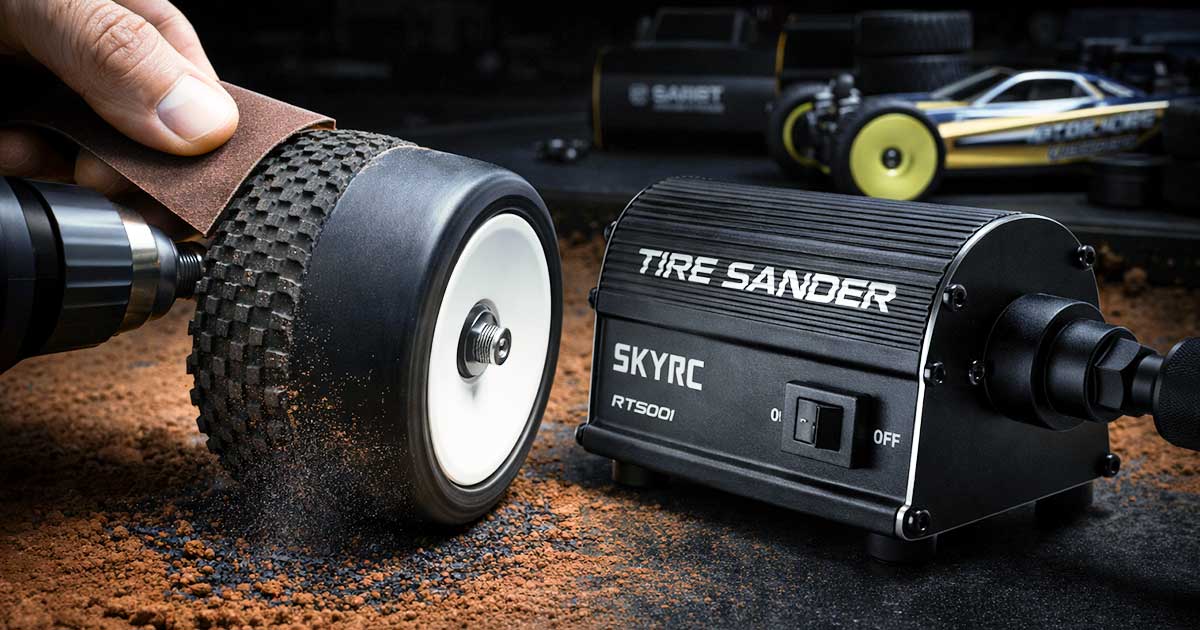
Can You Sand RC Tyres Smooth?
Note: this is from a Reddit question: https://www.reddit.com/r/rcracing/comments/1rrfg73/is_sanding_tires_smooth_a_thing_that_will_work/
If you’re new to RC racing, you might hear other drivers talking about sanding their RC tyres smooth. At first it sounds odd—why remove the tread that’s supposed to provide grip?
However, on certain racing surfaces, particularly high-traction clay tracks, smooth tyres (often called slicks) can actually perform better than tyres with tread patterns.
For years, RC racers have experimented with sanding tyres to improve grip in the right conditions. In this guide, we’ll explain why racers sand RC tyres, when it works, and when you’re better off using purpose-built slick tyres from brands like Pro-Line, JConcepts, Sweep or GRP.
Table of Contents
Why Do RC Racers Sand Their Tyres Smooth?

On high-bite racing surfaces, tyre tread can sometimes reduce grip instead of improving it.
When racers sand their tyres smooth:
-
The tyre creates a larger contact patch
-
Grip becomes more consistent
-
The car feels more predictable through corners
Before dedicated clay slick tyres became widely available, racers would often buy tyres with threads and sand the threads down to create their own slicks.
While modern manufacturers now produce purpose-built clay tyres, some racers still sand tyres during practice or when experimenting with setups.
Brands such as Pro-Line Racing, JConcepts, Sweep, and AKA Racing now offer tyres specifically designed for high-traction clay tracks.
Does Sanding RC Tyres Actually Work?
Yes — but only in the right conditions.
Sanding tyres can work well if:
-
The track surface is smooth clay
-
The track has high traction
-
You’re trying to replicate the behaviour of slick tyres
However, purpose-built racing tyres generally perform better because they’re designed with the correct rubber compound, sidewall support, and tyre profile.
For example, brands like Pro-Line and JConcepts produce tyres such as the Positron, Electron, and Ellipse series, which are widely used on clay tracks around Australia and internationally.
If you plan to race competitively, these tyres will usually provide more consistent performance than modified tyres.
How RC Racers Sand Tyres Properly
Tyre Compound Matters More Than Tread
Many beginners focus on tread patterns, but experienced racers know that rubber compound often has a bigger impact on grip.
Different compounds behave differently depending on the track surface.
For example:
-
Soft compounds provide maximum grip
-
Medium compounds balance grip and durability
-
Hard compounds last longer but offer less traction
Manufacturers such as Schumacher, Sweep Racing, and AKA Racing produce tyres in multiple compounds designed for specific track conditions.
Choosing the correct compound for your surface often makes a bigger difference than modifying the tread pattern.
When You Should Sand Tyres (and When You Shouldn’t)
Sanding tyres can be useful if:
✔ You’re running practice laps
✔ You want to experiment with slick setups
✔ You don’t have dedicated slick tyres available
However, if you plan to race competitively, it’s usually better to invest in purpose-built racing tyres.
These tyres are designed with:
-
Optimised compounds
-
Proper tyre profiles
-
Consistent carcass construction
-
Predictable handling characteristics
Popular racing tyre brands used by RC drivers include:
-
Pro-Line Racing
-
JConcepts
-
Sweep
-
AKA Racing
-
GRP Racing Tyres
Ask Local Racers for Advice
Every RC track is different.
Some clay tracks are:
-
High grip and smooth
-
Dusty and loose
-
Chemically treated for traction
Local racers usually know exactly which tyres work best for their track.
Before modifying your tyres, it’s always worth asking what the fast drivers are running. Many racers are happy to share setup tips, and sometimes you can even pick up lightly used race tyres for practice.
Frequently Asked Questions
Can you turn any RC tyre into a slick?
Technically yes, but performance will depend heavily on the rubber compound and tyre construction.
Is sanding RC tyres allowed in racing?
Most club racing allows it, although some classes may require specific tyre types.
What tool is used to sand RC tyres?
Most racers use a power drill with arbour, which spins the tyre evenly while sanding.
Are slick tyres good for dirt tracks?
Generally no. Slick tyres work best on high-traction clay, asphalt, or carpet tracks.
Racer Tip:
Experimenting with tyres is part of learning RC racing. Once you understand your local track conditions, switching to purpose-built tyres from quality brands will almost always improve performance.