 is here! Shop now, pay later in 4 easy installments


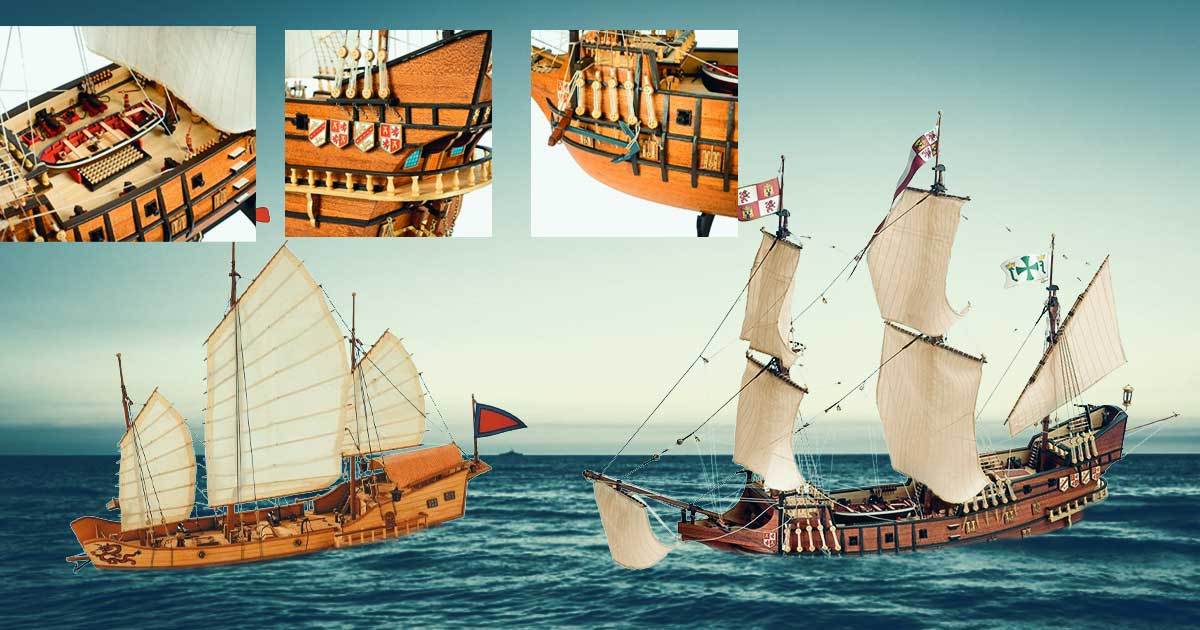
Why Wooden Model Ship Building Is A Great Retirement Hobby
You've finally done it - traded the morning commute for morning coffee on the verandah. But after three weeks of retirement bliss, that nagging thought creeps in: "Now what?" If you're searching for something that'll keep your hands busy and your mind sharp, wooden model ship building might just be your answer. Not the plastic snap-together stuff, mind you - we're talking proper wooden kits that'll have you feeling like a master shipwright by the time you're done.
Here's the thing about retirement hobbies - they need to hit that sweet spot between challenging and relaxing. Too easy and you're bored within a month. Too hard and it becomes another job. Wooden ship modelling somehow manages to nail this balance perfectly. One day you're carefully planking a hull, completely absorbed for hours. The next, you're casually rigging sails while listening to the cricket. It adapts to your mood, which is exactly what retirement should be about.
We've seen heaps of retirees walk through our doors at Hearns Hobbies, initially just browsing, then leaving with their first Artesania Latina kit tucked under their arm. Six months later, they're back showing us photos of their completed HMS Victory, eyes sparkling with pride. There's something about building these miniature vessels that captures the imagination in ways that golf or gardening sometimes can't.
The best part? You don't need a massive workshop or thousands of dollars worth of tools to get started. A decent-sized table, some basic hand tools, and good lighting will see you through your first build. As your skills develop, you might add a few specialized bits and pieces, but that's half the fun - growing into the hobby at your own pace.
Table of Contents
The Mental Benefits That Keep Your Mind Sharp
Let's be honest - retirement can sometimes feel like your brain's gone on permanent holiday. One minute you're solving complex work problems, the next you're struggling to remember what day it is. Ship modelling throws your brain a lifeline, keeping those cognitive gears turning without the stress of deadlines or demanding bosses.
Following the intricate instructions in a quality wooden ship kit exercises your spatial reasoning like nothing else. You're constantly visualizing three-dimensional structures from two-dimensional plans, working out how pieces fit together, and problem-solving when things don't quite line up. It's basically a gym workout for your brain, except you end up with a beautiful ship instead of sore muscles.
The concentration required is another massive benefit. In our world of constant notifications and distractions, ship building creates a bubble of focused calm. You'll find yourself completely absorbed for hours, what psychologists call being "in the flow." Time seems to disappear as you carefully shape a tiny piece of wood or thread rigging through miniature blocks. This kind of deep focus is increasingly rare and incredibly valuable for mental health.
Then there's the memory workout. Remembering nautical terminology, understanding different ship components, keeping track of which piece goes where - it all adds up to serious mental exercise. Many retirees tell us they've learned more about maritime history and engineering through model building than they ever did at school. Your brain stays plastic and adaptable when you're constantly learning new skills and information.
![[SUGGESTED IMAGE: A retiree working intently on a wooden ship model at a well-lit workbench with tools and plans visible]](https://www.hearnshobbies.com/cdn/shop/files/ART-22420.jpg?v=1736422660&width=1000)
Cognitive Benefits at a Glance
Problem-solving: Working out assembly sequences and fixing mistakes
Fine motor skills: Handling tiny parts keeps dexterity sharp
Pattern recognition: Following complex rigging patterns and hull planking
Planning abilities: Breaking large projects into manageable steps
Attention to detail: Noticing and correcting small imperfections
Building Social Connections Through Ships
You might think ship modelling is a solitary pursuit, but you'd be surprised how social it can become. Local model clubs are packed with retirees who've discovered this hobby, and they're some of the friendliest groups you'll ever meet. Everyone remembers struggling with their first planking job or rigging disaster, so newcomers get plenty of support and encouragement.
The online community is absolutely massive too. Forums, Facebook groups, YouTube channels - there's no shortage of places to share your progress, ask for advice, or just admire other people's work. Post a photo of your latest build and watch the compliments and constructive tips roll in. It's social media with a purpose, connecting you with like-minded enthusiasts from around the world.
Model ship exhibitions and competitions offer another social outlet. Even if you're not ready to compete (though many retirees surprise themselves), these events are brilliant for meeting fellow builders, picking up techniques, and getting inspired. You'll see everything from simple fishing boats to elaborate man-o-wars, each with a proud builder ready to share their story.
Family connections often strengthen too. Grandkids love watching ships take shape, and many retirees report that building models becomes a bonding activity. Teaching a youngster to tie proper rigging knots or letting them help with painting creates memories that last. Plus, when visitors admire your completed models, you've got instant conversation starters and stories to share.
Local Connection Opportunities
- Model ship building clubs
- Maritime museum workshops
- Hobby shop build nights
- Library display exhibitions
- Men's Shed programmes
Online Communities
- Specialized Facebook groups
- YouTube tutorial channels
- Model ship forums
- Instagram build logs
- Virtual build-along sessions
Practical Advantages for Retirees
Unlike many retirement hobbies, ship modelling doesn't demand perfect weather, expensive memberships, or driving across town. Your workshop (even if it's just the dining table) is always available, rain or shine. Bad back acting up? Take a break. Feeling energetic? Work for hours. The flexibility is unbeatable for retirees dealing with the unpredictability of ageing bodies.
Space requirements are surprisingly modest. We've seen incredible models built on kitchen tables, in spare bedrooms, even in caravan annexes. A basic setup might include a cutting mat, good lighting, and storage for your tools and materials. Compare that to the garage space needed for woodworking or the garden required for serious horticulture - ship modelling wins hands down for apartment dwellers.
The pace is entirely self-directed, which suits retirement perfectly. No coach pushing you to improve your swing, no plants dying if you take a week off. Your half-finished galleon will wait patiently while you visit the grandkids or take that cruise. Some retirees complete a model in weeks, others take months savouring every step. There's no right or wrong timeline.
Cost-wise, it's remarkably scalable. Start with a simple $50 kit to test the waters. If you love it, gradually invest in better tools and more complex models. Unlike hobbies with hefty upfront costs (looking at you, golf), ship modelling lets you grow your investment alongside your interest. Plus, completed models can actually become valuable - we know builders who've sold their work for impressive sums.
![[SUGGESTED IMAGE: A compact, well-organized workspace showing ship building tools, a model in progress, and storage solutions]](https://www.hearnshobbies.com/cdn/shop/products/ART-22452.png?v=1734917900&width=500)
Getting Started Without Breaking the Bank
The beauty of starting wooden ship modelling in retirement is you can ease into it without committing your entire pension. Begin with a beginner-friendly kit that includes pre-cut parts and clear instructions. Brands like Artesania Latina offer starter sets specifically designed for newcomers, complete with basic tools and materials.
Your initial tool investment doesn't need to be massive. A good craft knife, some sandpaper, PVA glue, and a few clamps will get you through your first build. As you progress, you might add specialized items like a plank bender, rigging tools, or a mini drill, but these can wait. Many retirees actually enjoy gradually building their tool collection, hunting for bargains at markets or treating themselves to quality pieces for birthdays.
Choosing your first kit requires some thought. Avoid the temptation to start with that magnificent HMS Victory you've always admired - save it for when you've got a few builds under your belt. Look for kits labeled as skill level 1 or 2, typically smaller vessels with fewer than 100 pieces. A classic fishing boat or simple yacht makes an ideal first project, teaching fundamental techniques without overwhelming complexity.
Workshop setup can be as simple or elaborate as you like. Many successful builders work on a portable building board that can be moved when needed. Good lighting is crucial - natural light is ideal, but a decent LED lamp works wonders for evening sessions. Storage can be as simple as plastic containers for parts and a toolbox for equipment. The key is starting simple and upgrading as your passion grows.
Essential Starter Shopping List
| Item | Budget Option | Why You Need It |
|---|---|---|
| Beginner Kit | $50-100 | Complete project to learn basics |
| Craft Knife | $15-25 | Precise cutting of parts |
| Sandpaper Set | $10-15 | Smoothing and shaping |
| PVA Glue | $5-10 | Main adhesive for wood |
| Small Clamps | $20-30 | Holding pieces while glue dries |
The Natural Progression of Skills
One of the most satisfying aspects of ship modelling is watching your skills develop naturally over time. Your first model might have wonky planking and rigging that looks like a bird's nest, but that's perfectly normal. By your third or fourth build, you'll be producing work that genuinely impresses visitors. The progression feels earned because it is - every improvement comes from your own hands and patience.
Basic skills like cutting, sanding, and gluing become second nature surprisingly quickly. Within weeks, you'll develop a feel for how much pressure to apply, which adhesive works best for different materials, and how to achieve smooth curves. These fundamentals transfer between projects, so each new model starts from a higher skill baseline. It's like compound interest for your hands.
Intermediate techniques open up gradually. Planking a hull properly is often the first major milestone - getting those strips to lie perfectly against the frames without gaps or twists. Then comes rigging, which seems impossibly complex until suddenly it clicks. You'll find yourself tying tiny knots with confidence, threading lines through microscopic blocks, creating authentic-looking rope coils.
Advanced builders often specialize in areas that particularly interest them. Some become masters of weathering, making new models look centuries old with careful painting and distressing. Others focus on historical accuracy, researching specific vessels and adding period-correct details. A few even venture into scratch-building, creating ships from raw materials using only plans. The ceiling for skill development is remarkably high.
Typical Skill Progression Timeline
Months 1-3: Basic assembly, following instructions, simple painting
Months 4-6: Improved planking, basic rigging, better finishing
Months 7-12: Complex rigging, custom details, weathering attempts
Year 2+: Advanced techniques, modifications, possible scratch-building
Remember: Everyone progresses differently - enjoy your own journey!
Connecting with Maritime History
Building model ships inevitably leads you down fascinating historical rabbit holes. That Spanish galleon you're constructing? Suddenly you're reading about treasure fleets, naval battles, and age-of-sail navigation. The humble fishing trawler kit becomes a gateway to understanding maritime commerce, weather patterns, and coastal communities. It's education disguised as entertainment.
Many retirees discover a passion for naval history they never knew existed. You start by wanting to know what those funny-shaped things on your model are called, and before you know it, you're an expert on 18th-century naval artillery or Victorian-era shipbuilding techniques. Museums become treasure troves of inspiration, and historical documentaries replace reality TV in your viewing schedule.
The Australian maritime connection adds local flavour to the hobby. Building models of vessels that visited our shores, from First Fleet ships to modern naval vessels, creates tangible links to our history. Some builders focus exclusively on Australian maritime heritage, recreating pearl luggers from Broome, paddle steamers from the Murray, or the naval vessels that protected our coastline.
Research becomes part of the fun. Tracking down historical plans, studying period paintings for colour schemes, understanding how different navies organized their rigging - it all feeds into more accurate and satisfying models. Many retirees report that this historical research keeps their minds active and gives them interesting topics for conversation. You become the person who knows why British ships had yellow and black stripes (it's called the Nelson Chequer, by the way).
![[SUGGESTED IMAGE: A collection of maritime history books, ship plans, and reference materials alongside a partially completed historical ship model]](https://www.hearnshobbies.com/cdn/shop/products/ART-18020.jpg?v=1750044259&width=800)
Common Challenges and How to Overcome Them
Let's not sugarcoat it - ship modelling has its frustrating moments. Parts break, instructions confuse, and sometimes you'll spend an hour trying to thread a piece of rigging through a hole you can barely see. But here's the thing: every experienced builder has been there, and there's always a solution or workaround.
Eyesight challenges are probably the most common issue for retirees. Those tiny parts aren't getting any bigger, and threading rigging can test anyone's vision. The solution? Invest in good magnification. A desktop magnifying lamp works wonders, and many builders swear by magnifying headsets that leave both hands free. Some even use their phone cameras as magnifiers - modern problems require modern solutions!
Shaky hands can make precision work tricky, especially after that morning coffee. Try working when you're most steady (often mid-morning for many retirees), use tools with larger grips, and don't be afraid to brace your hands against the workbench for stability. Some builders find that slightly larger scale models are more forgiving. Remember, this is meant to be enjoyable, not a test of surgical precision.
Instructions can sometimes feel like they're written in another language (because sometimes they literally are). Online build logs are absolute goldmines here - someone else has probably documented every step of your exact kit with photos and tips. YouTube tutorials fill in the gaps, and forums provide quick answers to specific questions. The community support for confused builders is genuinely heartwarming.
Physical Challenges
- Poor lighting → LED magnifying lamps
- Small parts → Larger scale models
- Hand tremors → Stabilizing techniques
- Back pain → Adjustable seating
- Arthritis → Ergonomic tools
Technical Solutions
- Confusing instructions → Online guides
- Missing pieces → Supplier replacements
- Broken parts → Repair techniques
- Wrong assembly → Careful disassembly
- Paint mistakes → Sanding and repainting
Creating Display-Worthy Pieces
There's immense satisfaction in completing a model ship that becomes a conversation piece in your home. Unlike jigsaw puzzles that get broken up or crafts that end up in storage, ship models are genuine display pieces. Visitors invariably gravitate toward them, and you'll find yourself explaining construction techniques and historical details with pride.
Proper display enhances your models dramatically. A simple display case protects from dust while allowing full viewing. Some retirees create themed displays with multiple ships from the same era or navy. Others build custom stands with brass nameplates, turning each model into a museum-quality piece. The presentation becomes part of the hobby, extending the enjoyment beyond construction.
Many builders discover their models have genuine value beyond sentiment. Quality wooden ship models, especially well-built examples of popular subjects, can sell for substantial sums. We know retirees who've funded their next kit by selling previous builds, and others who've created lasting legacies for their families. That HMS Victory you spent six months building? It might become a treasured family heirloom.
Photography becomes an unexpected extension of the hobby. Documenting your builds creates a visual diary of your improving skills. Many retirees maintain online build logs, sharing progress photos and receiving encouragement from fellow builders worldwide. Some even produce tutorials, passing on techniques they've mastered. Your retirement hobby can inspire others to start their own journey.
Display Tips from Expert Builders
Lighting: LED strips in display cases highlight details beautifully
Positioning: Eye-level placement shows models to best advantage
Grouping: Multiple models create impressive fleet displays
Protection: Cases prevent dust and accidental damage
Documentation: Small cards with ship history add educational value
Frequently Asked Questions
How much space do I really need to build wooden ship models?
You'd be surprised how little space ship modelling actually requires. A kitchen table or desk about 1 metre by 60cm provides enough workspace for most wooden ship kits. Many successful builders work on a portable board (around 60cm x 45cm) that can be stored when not in use. The key is having somewhere to leave your project undisturbed between sessions - constantly packing and unpacking adds frustration. For tool storage, a simple toolbox or drawer organizer works perfectly. Some retirees in apartments use a card table in the corner of their living room, while others set up in spare bedrooms. The beauty is you can adapt the hobby to your available space rather than needing dedicated workshops.
What if my eyesight isn't what it used to be?
Poor eyesight needn't stop you enjoying ship modelling - it just means adapting your approach. Start with larger scale models (1:50 or bigger) where parts are more manageable. Invest in a good magnifying lamp with LED lighting - these make an enormous difference. Many builders use magnifying headsets that leave hands free for work. Some clever retirees use their phone cameras as magnifiers, zooming in on tiny details on the screen. Choose models with simpler rigging if threading becomes difficult. Consider painting details rather than applying tiny decals. The community is full of builders with vision challenges who've found workarounds, and they're always happy to share tips.
How long does it typically take to complete a model ship?
Build time varies enormously depending on the model's complexity and your working pace. A simple beginner's fishing boat kit might take 20-30 hours spread over a few weeks. A moderate difficulty sailing ship could occupy 60-100 hours over several months. Complex models like HMS Victory can involve 200+ hours across six months to a year. But here's the important bit - there's no deadline! Many retirees work an hour or two daily, treating it as relaxing "me time." Others have intense building weekends followed by breaks. Some deliberately stretch projects out, savouring each stage. The journey matters more than the destination, and rushing defeats the therapeutic benefits of the hobby.
What's the typical cost of this hobby compared to other retirement activities?
Ship modelling is remarkably affordable compared to many retirement hobbies. Initial setup (first kit plus basic tools) runs $100-200. Ongoing costs depend on your building pace - most retirees spend $300-600 annually on kits and supplies. Compare that to golf club memberships, boat ownership, or travelling. You can start small with a $50 kit, and if you don't enjoy it, you're not out much. Quality tools last decades, so they're one-time investments. Some builders offset costs by selling completed models - good ones fetch $200-1000+. Plus, a single kit provides months of entertainment. When you calculate cost per hour of enjoyment, ship modelling is exceptional value. You can also pause spending anytime without losing skills or access, unlike subscription-based hobbies.
Final Thoughts
After watching countless retirees discover wooden ship modelling, we can honestly say it's one of the most rewarding hobbies for this stage of life. It combines mental stimulation, creative expression, and practical skill development in a package that adapts perfectly to retirement's rhythms. Whether you're building alone in peaceful concentration or sharing the journey with fellow enthusiasts, there's something deeply satisfying about creating these miniature vessels.
The beauty lies in the hobby's flexibility. Start small, grow at your own pace, take breaks when needed, and never feel pressured to perform. Your workshop is always there, rain or shine. Your half-finished project waits patiently while you travel or spend time with family. And unlike many retirement activities, ship modelling leaves you with tangible achievements - beautiful models that tell stories of both maritime history and your own developing skills.
If you're sitting there thinking "maybe this could work for me," trust that instinct. Pop into Hearns Hobbies, have a chat about starter kits, feel the quality of the wooden parts, imagine the satisfaction of completing your first model. The investment is modest, the rewards are significant, and the community is welcoming. Your retirement deserves a hobby that challenges, relaxes, and fulfills in equal measure. Wooden ship building might just be that perfect fit.