 is here! Shop now, pay later in 4 easy installments


Why Pokemon Model Kits Are Converting Video Gamers into Scale Modellers
Something fascinating is happening in the model kit world right now. Walk into our shop on any Saturday arvo, and you'll spot twenty-somethings who've never touched a plastic model before, eagerly examining boxes featuring Pikachu and Charizard. These aren't your typical Gunpla builders or Airfix veterans - they're Pokemon trainers discovering that their favourite creatures exist as sophisticated Bandai model kits.
We've watched this trend explode over the past eighteen months. Young adults who grew up with Game Boys in the '90s are now finding themselves in our tools section, asking about nippers and panel lining pens. It's brilliant, actually - an entire generation discovering the meditative joy of model building through characters they've loved since childhood. The gateway drug isn't quick-build Spitfires anymore; it's a Mewtwo that needs assembly.
What makes this shift so interesting is how these Pokemon kits bridge two completely different hobbies. On one side, you've got decades of Japanese model kit engineering excellence. On the other, there's this massive gaming culture that never really intersected with traditional scale modelling before. Now suddenly, someone who spent hundreds of hours catching digital Pokemon is spending their weekend carefully assembling a physical Entei model, and loving every minute of it.
The quality of these kits has caught even veteran modellers off guard. These aren't simple toys or basic snap-together figures - they're proper Bandai engineering with articulation, colour separation, and detail that rivals their famous Gundam lines. We're talking about gateway kits that don't talk down to beginners but also don't overwhelm them. It's a perfect storm of nostalgia, quality, and accessibility that's creating a whole new category of hobbyist.
Table of Contents
The Bandai Pokemon Revolution: More Than Just Nostalgia
When Bandai announced they were producing Pokemon model kits, most of us in the hobby world were sceptical. Another cash grab targeting millennials' nostalgia, we thought. Then the first shipments arrived, and bloody hell, we were wrong. These kits showcase the same engineering philosophy that made Gunpla a global phenomenon, just applied to creatures millions already love.
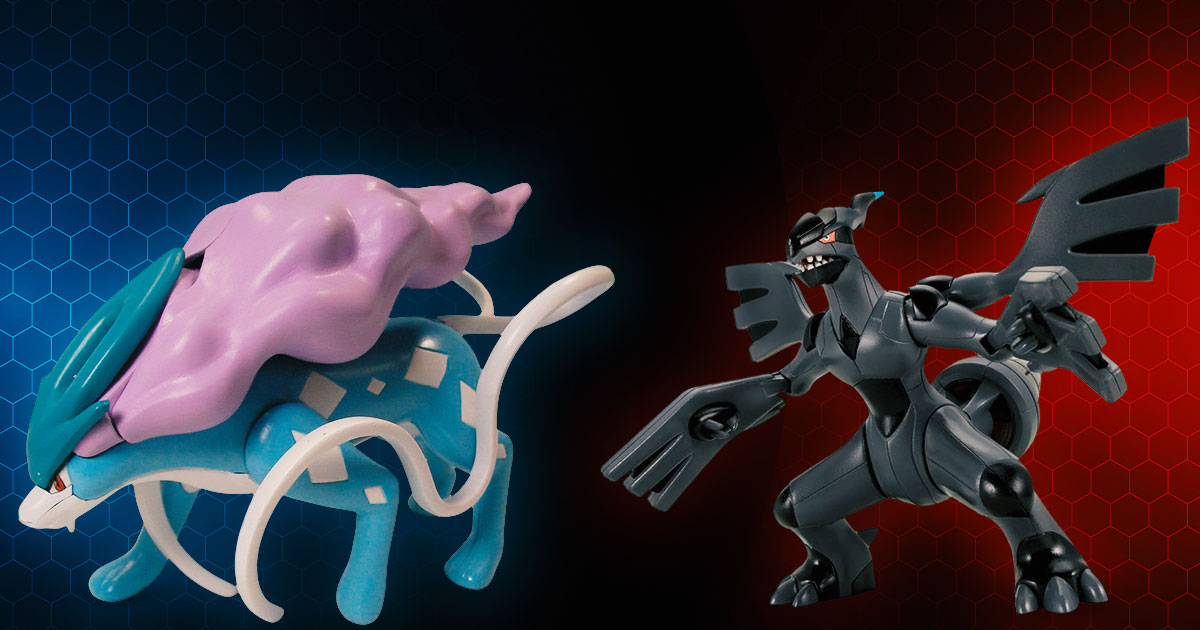
The genius move was treating Pokemon with the same respect as their Real Grade or Master Grade lines. No shortcuts, no cheap plastic, no simplified construction. Each Pokemon kit features proper colour separation, meaning you don't need paint to achieve an anime-accurate look. The Zekrom kit, for instance, comes with parts in black, grey, and blue straight from the box - no stickers needed for the basic colour scheme.
What really impresses us old-timers is the articulation. These aren't static figures; they're poseable models with ball joints, swivels, and hinges in all the right places. Your completed Raikou can crouch, pounce, or stand majestically - whatever matches your vision. It's the same satisfaction you get from posing a High Grade mobile suit, but with creatures that actually mean something to a whole generation of builders.
The instruction manuals deserve special mention too. Bandai didn't dumb them down for the Pokemon audience. They're using their standard pictogram system that transcends language barriers, teaching newcomers proper building techniques without being patronising. Someone assembling their first Suicune is learning the same skills they'd need for tackling a Master Grade kit later.
![[SUGGESTED IMAGE: Display of assembled Bandai Pokemon model kits showing the detail and articulation of different legendary Pokemon models]](https://www.hearnshobbies.com/cdn/shop/products/IMG_7756_2088x_9c884a13-feeb-45c3-a868-a6af31adc954.jpg?v=1735047060&width=1200)
Legendary Beasts as Model Kits: The Appeal of Iconic Pokemon
There's something special about building legendary Pokemon specifically. These aren't your garden-variety Pidgeys or Rattatas - we're talking about the creatures that graced game boxes and movie posters. The Entei, Raikou, and Suicune trio, for example, represent pivotal moments in many players' gaming journeys. Building them as physical models adds a whole new dimension to that connection.
The scale and presence of these legendary kits also helps. Unlike smaller Pokemon that might get lost on a shelf, something like Zekrom commands attention. It's got the same shelf presence as a 1:10 scale car or a decent-sized aircraft model. Visitors who wouldn't normally notice your military models stop and stare at a well-built Mewtwo.
What's particularly clever about the legendary Pokemon selection is how each one offers different building challenges. Mewtwo is relatively humanoid, making it familiar territory for anyone who's built Gundam or other mecha. Meanwhile, the beast-like forms of Entei or Suicune require different techniques, teaching builders how to work with quadrupedal designs and flowing organic shapes. It's surprisingly educational.
The colour schemes of these legendaries also serve as perfect introductions to painting techniques. Sure, they look good straight from the box, but adding a bit of panel lining or some subtle weathering can transform them completely. We've seen builders start with straight builds, then return months later asking about airbrushes because they want to add custom effects to their Zekrom's electricity parts.
Popular Legendary Pokemon Kits Available
Current Range: Mewtwo (psychic type), Zekrom (electric/dragon), Entei (fire), Raikou (electric), Suicune (water)
Difficulty Range: Beginner to Intermediate
Average Build Time: 2-4 hours per kit
Tools Needed: Basic nippers (minimum), sanding sticks (recommended)
From Snap-Fit to Custom: The Natural Skill Progression
Watching Pokemon builders evolve (pun intended) their skills has been fascinating. They typically start with a straight build - just cutting parts from sprues and snapping them together. The satisfaction of completing that first Suicune without any modifications hooks them instantly. It looks good, it was fun to build, and suddenly they're wondering what else they could do.
Stage two usually hits within a month. They're back in the shop, asking about panel line markers because they've seen online builds where the details pop more. Then it's sanding tools to remove nub marks cleanly. Before you know it, they're examining brushes and asking whether Tamiya acrylics or Vallejo paints work better for detailing.
The real transformation happens when they discover customisation. Pokemon fans are already creative - they've been imagining their own teams and strategies for decades. Give them physical models and suddenly they're mixing paint colours to create shiny variants, using LEDs to light up Mewtwo's eyes, or combining parts from different kits to create their own interpretations. It's kitbashing but with a Pokemon twist.
We've actually set up a small display area showing this progression - a basic snap-fit build, a panel-lined version, a fully painted custom, and finally a diorama incorporating scenic elements. New builders love it because they can see the journey ahead of them. It's not overwhelming; it's inspiring. Each step is achievable, and they can stop at whatever level makes them happy.
Skill Progression Timeline
| Month | Skills Learned | Tools Acquired |
|---|---|---|
| Month 1 | Basic assembly, part removal | Entry-level nippers |
| Month 2-3 | Nub removal, panel lining | Sanding sticks, markers |
| Month 4-6 | Basic painting, detailing | Brushes, paints |
| Month 7+ | Advanced techniques, customs | Airbrush, putty |
The Community Shift: When Pokemon Fans Meet Model Builders
The collision between Pokemon fandom and traditional model building has created some interesting dynamics in our local modelling community. Initially, there was a bit of side-eye from the old guard - blokes who've been building Tamiya tanks since the '70s weren't sure what to make of grown adults building cartoon monsters. But something beautiful happened: they started helping each other.
We've witnessed veteran modellers teaching Pokemon builders about weathering techniques to make their Entei look battle-worn. In return, younger builders have introduced traditional modellers to online communities, YouTube tutorials, and social media sharing that's revitalised interest in the hobby. It's cross-pollination at its finest, and everyone's benefiting.
The building techniques transfer remarkably well too. A Pokemon builder who's mastered clean assembly on their Zekrom has the skills to tackle a High Grade Gundam. Someone who's learned colour theory painting Suicune's flowing mane can apply those skills to car models or aircraft. The fundamentals are universal - patience, attention to detail, and the satisfaction of creating something with your hands.
Social media has amplified this community building. Instagram and TikTok are full of Pokemon kit builds, with techniques ranging from basic assembly to mind-blowing customs. Local Facebook groups that were dying are suddenly active again with younger members sharing their latest builds. The display case market is booming because people actually want to show off their collections.
![[SUGGESTED IMAGE: A hobby workbench showing Pokemon model kits alongside traditional modeling tools and paint supplies]](https://www.hearnshobbies.com/cdn/shop/files/boxart_35e4ff24-0f01-4b50-82a7-ddb41edbd862.webp?v=1736145553&width=700)
Why Pokemon Kits Work as Gateway Models
After watching hundreds of new builders enter the hobby through Pokemon kits, we've identified what makes them such perfect gateway models. First, there's zero intimidation factor. Nobody looks at a Raikou kit and thinks "that's too complex for me" the way they might with a Master Grade mobile suit or a detailed ship model.
The subject matter helps enormously. New builders already know exactly what the finished model should look like. They've seen these Pokemon animated for decades, know their colour schemes by heart, and have emotional connections to the characters. Compare that to someone building their first Spitfire who might not know if the cockpit colour is right - Pokemon builders have confident references.
Price point is another factor. These kits sit in that sweet spot where they're affordable enough to impulse buy but substantial enough to feel like proper models. At around the same price as a video game, they're competing in a market these buyers already understand. And unlike a game you might finish in a weekend, a model kit provides ongoing display value.
The lack of required painting is crucial too. Traditional model kits often need paint to look presentable, which means buying brushes, primers, and learning techniques before you even start. Pokemon kits look anime-accurate straight from the box. Painting becomes an enhancement option, not a requirement. This removes the biggest barrier that stops people trying model building.
Gateway Advantages
- Familiar subject matter
- No paint required
- Clear visual references
- Reasonable price point
- Active online community
Skills Developed
- Part identification
- Clean cutting techniques
- Following instructions
- Patience and focus
- Hand-eye coordination
Beyond Pokemon: Where New Builders Go Next
The progression path from Pokemon kits is fascinatingly diverse. About half stay within the Bandai ecosystem, moving to Gundam kits - particularly the Entry Grade and High Grade lines. The building techniques are identical, the quality is consistent, and there's that same satisfaction of creating something substantial without painting.
Others discover other anime properties. Star Wars models from Bandai are popular next steps, especially for builders who want something slightly more challenging. The Maschinen Krieger kits attract those who developed a taste for weathering and want to try something grittier than Pokemon.
Surprisingly, quite a few jump into completely different genres. We've seen Pokemon builders tackle military vehicles because they want to learn proper weathering techniques. Others go for car kits because they want to practice spray painting. The skills they learned on Mewtwo transfer perfectly to a Tamiya Nissan Skyline.
The really ambitious ones start combining hobbies. They'll build dioramas featuring their Pokemon models using scenery techniques learned from model railway enthusiasts. Or they'll incorporate LED lighting skills from RC modding. We've even seen someone create a battle scene between Zekrom and a custom-painted Gundam - absolutely mad, but brilliantly executed.
The Investment Angle: Collectibility Meets Craftsmanship
Here's something interesting we've noticed - Pokemon kit builders think about value differently than traditional modellers. They're coming from a collecting culture where mint condition items appreciate over time. Some are buying two of each kit: one to build, one to keep sealed. It's bringing investment mindset to a hobby that's traditionally been about the building process.
Limited runs and exclusive releases are driving this collector mentality. When Bandai announces a special edition with effect parts or unique colors, they sell out instantly. The aftermarket for discontinued Pokemon kits is already developing, with some earlier releases commanding premium prices. It's like the diecast collecting market but with the added element of craftsmanship.
Built kits are holding value too, especially well-executed customs. A professionally painted Mewtwo with custom effects can sell for several times the kit price. This has created a cottage industry of builders taking commissions, turning their newfound skills into side income. The barrier to entry for commission building is lower with Pokemon than traditional military or aircraft models where accuracy is paramount.
What's really clever is how this investment angle keeps people in the hobby. Even if they lose interest in building temporarily, they'll keep buying kits as investments. Then inevitably, that sealed Entei kit starts calling to them, and they're back at the workbench. It's sustainable engagement that benefits everyone - collectors, builders, and shops like ours.
Market Reality Check
While some Pokemon kits do appreciate, treating them purely as investments is risky. Market demand fluctuates, reissues happen, and storage costs add up. The real value is in the skills learned and enjoyment gained. Any financial appreciation should be considered a bonus, not the primary reason for collecting. Build what you love, keep what brings joy, and don't bet the house on plastic Pokemon.
Frequently Asked Questions
Do I need any experience to build Pokemon model kits?
Absolutely not! These kits are designed for complete beginners. The parts snap together without glue, instructions use clear pictures instead of text, and you only really need one tool - a pair of basic nippers to remove parts from the frame. The Bandai instruction style is intuitive, showing exactly which parts connect where. Most people complete their first kit in 2-3 hours without any issues. If you can build LEGO, you can build these. The only difference is cutting parts from sprues instead of opening bags.
What's the difference between Pokemon model kits and regular Pokemon figures?
Model kits require assembly and offer much more detail and articulation than pre-made figures. When you build something like the Suicune kit, you're getting precise color separation, moveable joints, and the satisfaction of creating it yourself. Regular figures are typically solid pieces with minimal movement and often less accurate proportions. Model kits also tend to be larger and more display-worthy. Plus, you can customise them with paint and weathering if you want. The building process itself is part of the value - it's meditative and rewarding in a way buying a finished figure isn't.
Can kids build these Pokemon kits, or are they too complex?
Kids around 10-12 can definitely handle these with minimal supervision. Younger kids might need help with cutting parts cleanly from sprues, but the actual assembly is straightforward. The bigger concern is small parts - some pieces are tiny and easy to lose. We recommend starting with larger, simpler Pokemon if building with younger children. The Raikou and Entei kits have fewer small parts than something like Mewtwo. It's actually a great parent-child activity - teaches patience, following instructions, and fine motor skills while bonding over Pokemon.
Which Pokemon kit should I start with as a complete beginner?
For absolute beginners, we typically recommend Raikou or Entei. They're substantial enough to feel like proper models but don't have the tiny parts that might frustrate a first-timer. Suicune is beautiful but has some flowing parts that need careful handling. Mewtwo is excellent if you want something more humanoid - good practice if you're thinking about moving to Gundam later. Zekrom is the most complex with its wings and tail, better as a second or third build. Really though, pick your favourite Pokemon - enthusiasm for the subject makes the building process more enjoyable.
Do these Pokemon kits need painting to look good?
Not at all! That's the beauty of Bandai's colour separation technology. Each kit comes moulded in appropriate colours, so a straight build looks anime-accurate. You might want to add panel lining to make details pop, but even that's optional. Many builders enjoy them exactly as designed. If you do want to paint later, these kits are excellent practice pieces - the plastic takes acrylic paint well, and Pokemon's bold colours are forgiving for beginners learning brush control.
Final Thoughts
The Pokemon model kit phenomenon represents something bigger than just another product line. It's proof that the model building hobby can evolve and attract new generations without losing what makes it special. These kits respect both their source material and the craft of model building, creating a perfect bridge between digital childhoods and hands-on hobbies.
We're seeing people discover the joy of creating something physical in an increasingly digital world. Young adults who've spent years in virtual worlds are finding immense satisfaction in building tangible objects. The focus required, the problem-solving when a part doesn't fit quite right, the pride in displaying a completed model - these experiences resonate deeply with people seeking balance in their leisure time.
Whether Pokemon kits are your final destination or just the beginning of a modelling journey, they're bringing fresh energy to hobby shops across Australia. The skills learned, friendships formed, and creative outlets discovered through these gateway kits enrich the entire hobby community. So if you've been curious about trying one, grab a Mewtwo or Suicune kit and see where it takes you. You might just discover your new favourite hobby.