 is here! Shop now, pay later in 4 easy installments


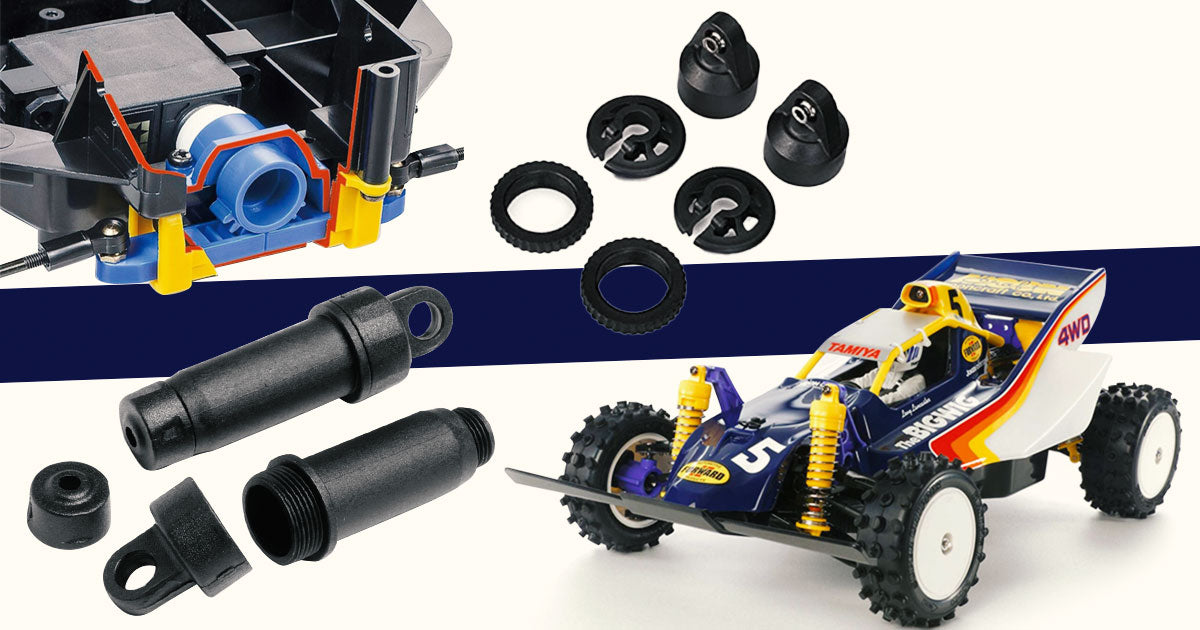
RC Shock Setup Guide for Different Track Conditions
Getting your shock setup dialled in can transform your RC from an unpredictable handful into a corner-carving weapon. We've watched countless racers at Australian tracks struggle with suspension tuning, often running the same setup whether they're on polished concrete or loose dirt. The difference between winning and watching from the sidelines often comes down to understanding how your shocks interact with different surfaces.
Here's the thing about suspension tuning - it's not rocket science, but it does require methodical thinking. Your shocks control how weight transfers during acceleration, braking, and cornering. Get them wrong, and you'll be fighting the car constantly. Get them right, and suddenly that tricky section everyone else struggles with becomes your passing opportunity. We've seen drivers drop seconds off their lap times just by matching their shock setup to track conditions.
Australian tracks throw unique challenges at our suspension systems. From the dusty clay ovals in Queensland to Melbourne's high-grip carpet tracks, each surface demands specific adjustments. Add in our extreme temperature swings - where morning practice might be 15 degrees but the afternoon final hits 35 - and you quickly realise why a one-size-fits-all approach doesn't work. Your shock oil that felt perfect in winter might turn to water in summer heat.
This guide breaks down shock tuning into practical, trackside adjustments you can actually use. We'll cover the fundamentals first, then dive into specific setups for different surfaces. Whether you're racing off-road buggies or drift cars, understanding these principles will make you faster and more consistent.
Table of Contents
Understanding Shock Basics
Before we start throwing numbers around, let's establish what your shocks actually do. Each shock assembly combines a spring (controlling ride height and weight support) with a damper (controlling how fast the suspension moves). These two components work together, but they affect handling in different ways. Understanding this relationship is crucial for making intelligent tuning decisions rather than randomly changing settings.
Springs determine your car's static ride height and how much the chassis compresses under load. Stiffer springs keep the car flatter through corners but reduce mechanical grip over bumps. Softer springs allow more chassis movement, improving traction on rough surfaces but potentially causing excessive body roll. The spring rate you choose sets the foundation for everything else - get this wrong and no amount of oil changes will fix it.
Damping controls the speed of suspension movement, not the amount. Thicker oil slows down compression and rebound, while thinner oil allows faster movement. This affects how quickly weight transfers during direction changes and how the car handles surface irregularities. Too much damping makes the car feel sluggish and unresponsive. Too little creates a bouncy, unstable platform that's hard to drive consistently.
The relationship between spring rate and damping must stay balanced. Running super soft springs with thick oil creates a car that compresses slowly but wants to bounce back quickly - a horrible combination. Conversely, stiff springs with thin oil produce a car that crashes over bumps without any control. Finding the sweet spot requires understanding how these elements interact on your specific track surface.
![[SUGGESTED IMAGE: Detailed RC shock components laid out - spring, piston, shock body, and oil]](https://cdn.shopify.com/s/files/1/1008/9754/products/7764_94840ef6-9dc8-4850-b4e3-96b09a77c674.jpg?v=1722272671)
Oil Weight Selection and Temperature
Shock oil viscosity might seem like a minor detail, but it's often the difference between a sorted car and one that never quite feels right. The numbers on that bottle - 30wt, 40wt, 50wt - represent the oil's thickness at room temperature. But here's what catches people out: oil viscosity changes dramatically with temperature. That perfect setup from your air-conditioned workshop might be completely wrong after ten minutes in the Australian sun.
Temperature affects oil viscosity more than most realise. A 10-degree temperature increase can make your oil feel one grade thinner. During a typical summer race day in Brisbane, track temperatures might hit 50 degrees Celsius. Your carefully selected 40wt oil now behaves more like 30wt, completely changing your car's handling. Smart racers carry multiple oil weights and adjust between rounds as conditions change.
Different track surfaces require different baseline oil weights. High-grip carpet or treated clay tracks typically need thicker oils (40-60wt) to control chassis movement. Loose dirt or dusty conditions work better with thinner oils (20-35wt) that allow the suspension to follow surface irregularities. Differential oils follow similar principles but typically run much thicker for consistent performance.
Mixing oils creates custom viscosities when you need something between standard weights. Combining equal parts 30wt and 40wt gives you roughly 35wt. This technique proves invaluable when fine-tuning for specific conditions. Keep a mixing chart handy and always use oils from the same manufacturer - different brands use different viscosity scales, making mixing unpredictable.
Oil Weight Quick Reference
| Track Surface | Front Oil | Rear Oil | Temperature Adjustment |
|---|---|---|---|
| High-Grip Carpet | 40-50wt | 35-45wt | +5wt per 10°C |
| Clay/Packed Dirt | 35-45wt | 30-40wt | +5wt per 10°C |
| Loose Dirt | 25-35wt | 20-30wt | +3wt per 10°C |
| Grass/Rough | 20-30wt | 20-25wt | +3wt per 10°C |
Spring Rates and Preload
Spring selection forms the foundation of your suspension setup. The colour-coding system most manufacturers use helps identify rates quickly - typically progressing from soft (white/yellow) through medium (blue/green) to firm (red/black). But don't just grab the springs that came with your kit and assume they're right. Track conditions, driving style, and even your motor choice affect optimal spring rates.
Weight distribution plays a huge role in spring selection. Most 1/10 buggies run slightly stiffer springs up front to handle braking forces and prevent nose-diving. Truggies and monster trucks often reverse this, needing stiffer rear springs to handle the extra weight of larger wheels and tyres. Measure your car's weight distribution properly - bathroom scales under each wheel work fine - and adjust accordingly.
Preload affects ride height and initial spring tension but doesn't change the spring rate itself. More preload raises ride height and makes the suspension feel initially firmer, but once compressed past the preload point, the spring rate remains constant. Running excessive preload to compensate for soft springs creates an unpredictable car that handles differently over small and large bumps. Choose the right spring rate first, then use preload for fine-tuning ride height.
Progressive springs offer variable rates - softer initially, then stiffening as they compress. These work brilliantly on bumpy tracks where you need compliance over small bumps but support during big hits. Standard linear springs provide more predictable handling but might struggle with varied terrain. Some racers stack two springs (dual-rate setup) to achieve similar effects, though this requires careful tuning to work properly.
Pro Tip: Spring Testing
Test spring rates by pressing down on each corner of your car. The suspension should compress smoothly and return without bouncing. If it bounces multiple times, your damping is too light for the spring rate. If it barely returns, your oil is too thick. This simple test saves hours of track testing.
Piston Selection and Damping
Pistons control how oil flows through your shocks, directly affecting damping characteristics. Those tiny holes might look insignificant, but changing from a 1.2mm to 1.3mm piston creates noticeable handling differences. Larger holes allow more oil flow, reducing damping. Smaller holes restrict flow, increasing damping. The number of holes also matters - six small holes often work better than three large ones for smooth damping.
Tapered pistons offer different compression and rebound rates. The cone shape creates more resistance in one direction (usually compression) while allowing freer movement in the other. This proves useful on jump-heavy tracks where you want firm compression to absorb landings but quick rebound to prepare for the next jump. Some pistons feature bypass channels or special port designs for even more tuning options.
Blank pistons let you drill custom hole patterns for specific handling characteristics. Start with proven patterns from kit manufacturers before experimenting. Three holes in a triangle pattern works well for general use. Four holes in a square provides more flow for bumpy conditions. Avoid drilling holes too close to the edge - this weakens the piston and can cause premature failure.
Pack-style damping uses multiple thin pistons stacked together. This creates more consistent damping across the stroke and reduces fade during long runs. The downside? Pack pistons require more maintenance and precise assembly. Air bubbles trapped between pistons ruin damping consistency. For most club racers, quality single pistons provide better reliability with minimal performance sacrifice.
![[SUGGESTED IMAGE: Various shock pistons with different hole configurations displayed]](https://www.hearnshobbies.com/cdn/shop/files/37d30db6b040b4027a0443971f679305.jpg?v=1748466605&width=800)
High-Grip Track Setup
High-grip surfaces like carpet, treated clay, or premium outdoor tracks demand specific shock setups to maximise their potential. These surfaces generate tremendous mechanical grip, allowing aggressive driving lines and late braking. But get your shocks wrong, and that grip becomes a liability - the car either refuses to rotate or becomes twitchy and unpredictable. Finding the balance requires methodical tuning.
Start with stiffer springs than you'd run on loose surfaces. The extra grip means less body roll is needed to generate cornering force. Front springs typically run 10-20% stiffer than standard, with rears following suit but potentially softer to promote rotation. On-road touring cars might run even stiffer, especially on smooth indoor tracks where suspension travel requirements are minimal.
Oil weights need to increase proportionally with grip levels. That 30wt that worked perfectly on dirt becomes far too thin on carpet. Starting points typically sit around 40-50wt front and 35-45wt rear, but Australian summer temperatures might require going even thicker. The goal is controlling weight transfer without making the car feel dead. Quick direction changes should feel precise, not sluggish.
Shock positions affect leverage and effective spring rates. Moving shocks inward on the arms or towers reduces leverage, effectively stiffening the suspension without changing springs. This fine-tuning method proves invaluable when you're between spring rates. Most high-grip setups benefit from shocks mounted closer to vertical for more progressive feel and better bump absorption.
High-Grip Characteristics
- • Minimal chassis roll needed
- • Quick weight transfer desired
- • Precise steering response
- • Stable under braking
- • Predictable mid-corner
Setup Adjustments
- • Springs: +1-2 rates firmer
- • Oil: 40-60wt range
- • Pistons: 1.1-1.2mm holes
- • Position: More upright
- • Limiters: Minimal droop
Low-Grip and Dusty Conditions
Dusty, loose surfaces present the opposite challenge to high-grip tracks. Here, mechanical grip becomes precious, and your shocks need to work overtime keeping tyres in contact with the surface. The setup philosophy completely reverses - where high-grip demanded stiffness, low-grip requires compliance and movement. Understanding this fundamental shift transforms your approach to difficult conditions.
Softer springs allow more chassis movement, helping generate grip through weight transfer. The car needs to roll and pitch to load the tyres properly. Running springs 1-2 rates softer than standard gives the chassis freedom to work. Some racers go even softer, though this risks bottoming out on jump landings. Rock crawlers take this concept to extremes with ultra-soft springs for maximum articulation.
Thinner oils complement soft springs on loose surfaces. Starting around 25-30wt front and 20-25wt rear allows quick suspension movement to follow surface irregularities. The car might feel somewhat loose initially, but as the track grooves up, this setup maintains grip where stiffer cars start sliding. Temperature becomes less critical too - thinner oils don't vary as much with heat.
Actually, there's another factor often overlooked - shock shaft diameter affects oil displacement and damping. Thicker shafts displace more oil, effectively increasing damping without changing oil weight. On dusty tracks where you want minimal damping, smaller diameter shafts (if available for your shocks) can provide that extra bit of compliance. Just ensure they're still strong enough for your application.
Droop adjustment becomes crucial in low-grip conditions. More droop keeps wheels in contact with the surface during weight transfer but can make the car feel lazy. Less droop improves response but risks lifting wheels in corners. Find the balance by watching your car through corners - inside wheels should barely lift, maintaining maximum contact patch throughout the turn.
Dusty Track Warning
Dust kills shock performance faster than any other contaminant. Wipe shock shafts between runs and consider shaft scrapers or boots. Rebuilt shocks after every dusty race day - contaminated oil loses viscosity and damages seals. A few minutes of maintenance saves complete rebuilds later.
Bumpy Track Solutions
Bumpy tracks separate good shock tuning from great. When the surface deteriorates into whoops, ruts, and holes, your suspension works harder than ever. The challenge lies in absorbing big hits while maintaining enough control for precise driving. Too soft and you'll bottom out constantly. Too firm and the car skips across bumps like a stone on water.
The secret to bumpy tracks often lies in separator pistons - not just their holes, but their thickness. Thicker pistons provide more progressive damping, essentially creating a cushion zone before full damping kicks in. This helps absorb sharp edge bumps without unsettling the chassis. Some racers stack multiple thin pistons to achieve similar effects, though assembly becomes more critical.
Spring and oil combinations need careful balancing for bumpy conditions. Medium-soft springs (one rate below standard) paired with slightly thicker oil than you'd normally run provides good bump absorption without excessive rebound. The springs handle the big hits while oil controls the rate of compression and return. This combo keeps the car stable over washboard sections that would bounce stiffer setups skyward.
Shock limiters require special attention on deteriorating tracks. Internal limiters prevent over-extension that could damage shocks on big jumps or deep holes. External limiters control droop to maintain proper geometry. Setting these correctly means watching your car carefully - you want maximum travel without mechanical binding or excessive droop that upsets handling. Setup station tools help measure and set these precisely.
![[SUGGESTED IMAGE: RC car navigating through bumpy track section showing suspension compression]](https://cdn.shopify.com/s/files/1/1008/9754/products/s-l640_fa066bcf-eadf-4de5-bd42-9c89a81c3eb5.jpg?v=1735047412)
Wet Weather Adjustments
Rain transforms track dynamics completely, and your shock setup needs to adapt accordingly. Water reduces mechanical grip dramatically while increasing the importance of smooth weight transfer. Sudden inputs that work on dry tracks cause immediate loss of traction in the wet. Your shocks become the key to maintaining control when grip levels plummet.
Soften everything for wet conditions - springs, oils, even your driving inputs. The reduced grip means less chassis movement is needed to generate cornering forces. Softer setups also help the car float over standing water rather than aquaplaning. Front springs typically drop two rates from dry settings, with rears following suit. This might feel strange initially, but it prevents the violent weight transfer that breaks traction.
Oil weights need significant reduction for wet running. Where you might run 40wt on a dry high-grip track, wet conditions might call for 25-30wt. The thinner oil allows gentle, progressive weight transfer that maintains whatever grip is available. Quick suspension movements help the tyres cut through water to find the track surface beneath. Just ensure your bearings and seals can handle the water exposure.
Ride height adjustments prove crucial in wet conditions. Raising the car slightly helps clear standing water and reduces the chance of hydroplaning. But don't go too extreme - excessive ride height makes the car tippy and unpredictable. Around 2-3mm higher than dry settings usually works well. Remember to adjust your droop settings accordingly to maintain proper suspension geometry.
Testing and Fine-Tuning
Systematic testing separates fast racers from everyone else wondering why they're slow. Random changes hoping something works wastes time and confuses results. Develop a methodical approach: change one thing at a time, test consistently, and document everything. A simple notebook beats trying to remember what worked three weeks ago.
Start testing with baseline runs using your standard setup. Run at least three clean laps to establish consistent times and handling characteristics. Note specific corners or sections where the car misbehaves. Does it push on corner entry? Bottom out over jumps? Bounce through the chicane? These observations guide your adjustments. Modern radio systems with telemetry can provide valuable data, but nothing replaces careful observation.
Make adjustments in logical steps. If the car pushes (understeer) on entry, try softening front springs or thickening front oil first. If it's loose (oversteer) on exit, stiffen the rear slightly. But here's the key - only change one variable per test session. Changing springs AND oil simultaneously makes it impossible to know which helped. Yes, it takes longer, but you'll actually understand your car rather than accidentally stumbling onto something that works.
Track conditions change throughout the day, affecting your testing validity. What worked in cool morning practice might be terrible in the afternoon heat. Keep notes about temperature, humidity, and track moisture. That perfect setup from last month might need adjustment simply because today is 10 degrees hotter. Smart racers test at different times to understand how their setup responds to changing conditions.
Driver consistency matters more than perfect setup. An average setup driven smoothly beats a perfect setup driven erratically. As you test, focus on hitting the same lines and braking points. Inconsistent driving makes setup changes impossible to evaluate properly. If you're having an off day, sometimes it's better to stick with what you know rather than chasing setup solutions to driving problems.
Testing Log Template
Date/Time: _______ Temp: _______ Track: _______
Springs F/R: _______/_______ Oil F/R: _______/_______
Lap Times: _______ _______ _______
Handling Notes: _______________________
Next Change: _______________________
Shock Maintenance for Consistency
All the tuning knowledge in the world won't help if your shocks aren't maintained properly. Worn seals, contaminated oil, or bent shafts create inconsistent damping that makes the car unpredictable. Regular maintenance keeps your carefully developed setup performing as intended. Plus, well-maintained shocks last years longer than neglected ones.
Rebuild intervals depend on conditions more than time. Dusty tracks contaminate oil quickly, requiring rebuilds after every race day. Clean indoor tracks might allow monthly rebuilds. Watch for tell-tale signs: oil leaking down the shaft, inconsistent damping feel, or visible contamination when you remove the cap. When in doubt, rebuild - fresh oil costs pennies compared to DNFs from shock failure.
The rebuild process requires patience and cleanliness. Completely disassemble each shock, cleaning every component with appropriate solvents. Inspect seals for nicks or wear - even tiny imperfections cause leaks. Check shock shafts for straightness by rolling them on glass. Bent shafts create uneven seal wear and inconsistent damping. Quality tools make rebuilding easier and more consistent.
Bleeding technique affects damping consistency more than people realise. Air bubbles in the oil create unpredictable damping and fade during runs. The vacuum method works best - slowly cycle the shaft with the shock inverted, allowing bubbles to rise. Some racers use vacuum chambers for perfect bleeding, though careful manual bleeding achieves nearly identical results. Never rush this step.
Storage matters too. Store shocks vertically with shafts compressed to prevent seal dry-out. A drop of shock oil on exposed shafts prevents corrosion during long-term storage. If switching between different setups, label everything clearly - spring rates, oil weights, piston sizes. Nothing's worse than forgetting what's in which shock at the track. Consider keeping dedicated shock sets for different track types if you race varied surfaces regularly.
Frequently Asked Questions
Should I run different oil weights front to rear?
Absolutely - this is standard practice in RC tuning. Most setups run slightly thinner oil in the rear (5-10wt difference) to promote rotation and prevent the car from pushing. However, some drivers prefer equal weights or even thicker rear oil for stability. Track layout matters here - tight, technical tracks often benefit from thinner rear oil for rotation, while fast, flowing tracks might need thicker rear oil for stability. Test both approaches and see what suits your driving style.
How do I know if my shocks are too stiff or too soft?
Watch your car carefully through different sections. Too soft: excessive body roll in corners, bottoming out over jumps, bouncing after landing, slow to change direction. Too stiff: skipping over bumps, poor traction on rough sections, harsh landing from jumps, generally nervous feeling. The sweet spot varies by track, but you want the suspension working without excessive movement. Film your car in slow motion with your phone - it reveals handling issues your eyes might miss.
Why do my shocks leak even after rebuilding with new seals?
Several culprits cause persistent leaking. Bent or scratched shock shafts damage new seals immediately - inspect carefully under bright light. Over-tightening shock caps can distort seals, causing leaks. Low-quality aftermarket seals might not match OEM specifications. Worn shock bodies develop grooves where seals sit. Also check your bleeding technique - excessive pressure during bleeding can damage seals. Sometimes the fix is replacing worn hard parts rather than just seals. Quality replacement parts often solve mysterious leak issues.
Can I mix shock oil brands?
While possible, it's not recommended. Different manufacturers use different viscosity scales - one brand's 30wt might equal another's 35wt. Mixing brands makes it impossible to replicate setups accurately. Additionally, different oil formulations might not mix well, potentially affecting damping characteristics. Stick with one quality brand for consistency. If you must mix, do so intentionally to create custom weights, but only within the same brand. Keep detailed notes about ratios for future reference.
How does altitude affect shock setup?
Higher altitudes affect shock performance in subtle ways. Lower air pressure means easier shock shaft movement (less resistance), effectively reducing damping slightly. Thinner air also provides less cooling, potentially causing oil to thin more during runs. Most noticeable above 1500 metres, where you might need 5wt thicker oil to maintain similar damping. Australian tracks rarely reach these altitudes, but if travelling to mountain events, factor this in. Temperature changes at altitude often prove more significant than pressure differences.
Final Thoughts
Shock tuning might seem overwhelming initially, but it becomes second nature with practice. Start with the basics - appropriate spring rates and oil weights for your track surface. From there, small adjustments fine-tune handling to your preference. Remember, there's no single "perfect" setup. What works for one driver might feel terrible to another. The goal is finding what makes you fast and confident.
Keep detailed notes about every setup change and track condition. Over time, you'll develop a library of proven setups for different surfaces. When you arrive at a new track, you'll have a solid starting point rather than guessing. This systematic approach separates casual bashers from serious racers. Even if you're not racing competitively, understanding your suspension makes every run more enjoyable.
Don't get caught up in copying pro setups verbatim. Their driving style, track conditions, and even tyre compounds differ from yours. Use pro setups as starting points, then adjust for your situation. The fastest setup for the track champion might be undriveable for average club racers. Build your setup knowledge gradually - you'll develop better understanding than simply copying numbers from setup sheets.
Most importantly, maintain your shocks properly. The best setup in the world won't help if your shocks are leaking, bent, or full of contaminated oil. Regular maintenance ensures consistent performance and extends component life. Those few minutes spent rebuilding shocks pay dividends in reliability and predictable handling. Your future self will appreciate the effort when you're still running strong while others are sidelined with failures.