 is here! Shop now, pay later in 4 easy installments


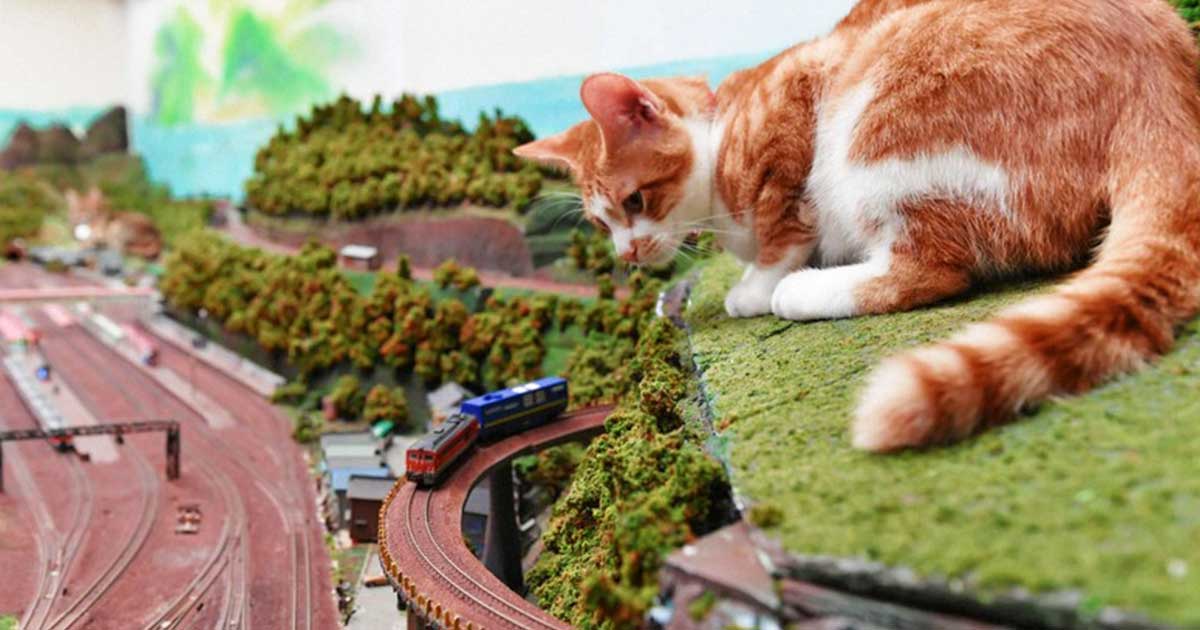
Model Railways vs Cats: An Eternal Battle
It's 2am. You hear a crash from the spare room. Your prized Flying Scotsman is now lying sideways in what was once your meticulously crafted model village. Standing amidst the wreckage, looking rather pleased with themselves, is Mr Whiskers. This scene plays out in hobby rooms across Australia every single day, because cats and model railways go together like, well... cats and anything breakable, really.
After three decades of helping customers at Hearns Hobbies, we've heard every cat-astrophe story imaginable. From the tabby who decided static grass was actually premium cat litter, to the Bengal who systematically derailed every freight wagon like some kind of feline saboteur. The thing is, cats aren't being malicious (mostly). They just see your carefully constructed railway empire as the world's most elaborate cat toy.
Why do cats love model railways so much? Think about it from their perspective - there's moving objects to hunt, tiny trees to knock over, tunnels to explore, and warm transformers to nap on. Your layout is basically Disneyland for cats. Plus, you spend hours focused on it, which naturally makes them want to be involved. It's their way of "helping," just like when they sit on your keyboard while you're trying to work.
But here's the good news - with some clever strategies, you can actually maintain both a model railway AND a cat without losing your sanity. We've compiled real solutions from fellow hobbyists who've survived the fur-covered trenches. Some are practical, some are sneaky, and some are just bribes. All have been battle-tested against actual cats.
Table of Contents
Understanding the Enemy (Your Cat's Perspective)
To defeat your enemy, you must think like your enemy. Or in this case, to protect your model railway from your cat, you need to understand what makes it so irresistible to them. Cats aren't trying to ruin your hobby (well, probably not). They're just following their natural instincts, which unfortunately align perfectly with destroying everything you've carefully built.
First, there's the movement factor. A diesel locomotive chugging around the track triggers every hunting instinct your cat possesses. It moves at just the right speed - not so fast they can't track it, not so slow it's boring. It's basically a very expensive, very fragile mouse substitute. The fact that it makes noise just adds to the appeal. That gentle whirring of motors and clicking of tracks? That's prey sounds to a cat.
Then there's the texture paradise your layout provides. Static grass feels amazing under paw pads. Ballast is perfect for that satisfying scatter when knocked about. Those tiny people figures? They're basically asking to be batted off platforms. Your carefully placed miniature trees might as well have "knock me over" signs on them.
![[SUGGESTED IMAGE: A curious cat sitting on a model railway layout, looking at a small train with intense focus]](https://i.imgur.com/QJxMGQs.png)
Height is another factor. Cats love being up high, and your elevated railway bridges and mountain sections provide perfect vantage points. From up there, they can survey their domain (your hobby room) and plan their next assault on that goods train that's been taunting them. The fact that getting up there requires trampling through your carefully crafted landscape is just a bonus.
Cat Psychology 101
Your model railway hits all five of a cat's favourite things: moving objects to hunt, small items to bat around, elevated surfaces to climb, warm spots to sleep (power supplies), and most importantly - your undivided attention. When you're working on your layout, you're focused and still, making you the perfect climbing frame.
Physical Barriers That Actually Work
Let's talk about the fortress approach. The most effective way to protect your layout is to make it physically inaccessible to cats. Now, before you say "but cats can get anywhere," you're right - they're basically liquid with whiskers. But you can make it difficult enough that they'll find something else to destroy instead.
The gold standard is a dedicated room with a door that actually closes. Revolutionary concept, we know. But if you're lucky enough to have a spare room for your railway, keeping the door shut is your first line of defence. Add a simple hook-and-eye latch at the top (cats haven't figured out those yet), and you're sorted. Just remember to actually close it - cats are patient and will wait for that one time you forget.
For those without a dedicated room, consider building a layout cover. Think of it as a display case but bigger and removable. Use lightweight timber framing with clear acrylic or even flywire mesh. It doesn't need to be pretty - it needs to be cat-proof. One clever customer built hinged plexiglass panels that fold down over his layout like a protective shell. His cat now sits on top of it, watching the trains through the clear cover, plotting but unable to execute.
The "skirt method" works brilliantly for layouts on tables. Attach clear vinyl shower curtains around the edge of your layout table, weighted at the bottom. Cats hate pushing through hanging barriers, especially ones that make crinkly noises. Plus, it keeps the ballast and scatter materials from ending up all over your floor. It's not exactly aesthetically pleasing, but neither is finding your prize locomotive in the cat's water bowl.
Physical Barrier Effectiveness Rating
| Method | Effectiveness | Cat Frustration Level |
|---|---|---|
| Closed door | 95% | Extreme (meowing intensifies) |
| Full acrylic cover | 90% | High (visible confusion) |
| Hanging curtains | 70% | Moderate (suspicious sniffing) |
| Mesh barriers | 60% | Low (might climb it) |
Deterrents and Distractions
Sometimes physical barriers aren't practical, so you need to make your layout less appealing. This is psychological warfare, and cats are worthy opponents. The key is using their own preferences against them without damaging your railway in the process.
Citrus is your secret weapon. Cats absolutely despise citrus scents, and a few strategically placed orange peels around your layout can work wonders. Just replace them every few days before they go manky. Some modellers swear by citrus-scented cleaning products - your trains smell lemony fresh, and cats stay away. Win-win, really.
Double-sided tape is another classic. Cats hate sticky paws more than they hate baths. Place strips of tape along the edges of your layout table or on surfaces where they typically jump up. After a few encounters with the sticky stuff, they'll find somewhere else to perch. Just remember where you put it, or you'll be the one with sticky hands when adjusting scenery.
![[SUGGESTED IMAGE: Various cat deterrents arranged around a model railway layout - orange peels, tape strips, and a spray bottle]](https://www.hearnshobbies.com/cdn/shop/products/S927_f_2.jpg?v=1748898916&width=700)
But here's the real genius move - give them their own railway. No, seriously. Set up a simple oval of track on the floor with a basic battery-powered train. Let them bat at it, chase it, whatever. It's their decoy railway. One customer even built a "cat layout" - a simple loop at floor level with robust, second-hand equipment. His cat loves it, and his actual layout remains untouched. Expensive? Maybe. Cheaper than replacing your limited edition locomotive? Definitely.
Natural Deterrents
- → Citrus peels (orange/lemon)
- → Aluminium foil strips
- → Coffee grounds (used)
- → Lavender sachets
Distraction Techniques
- → Decoy train set
- → Cat TV (bird videos)
- → Window perch nearby
- → Interactive cat toys
Cat-Resistant Layout Design
If you're building a new layout or modifying an existing one, you can actually design with cats in mind. Think of it as defensive architecture, but for model railways. The goal is creating a layout that's either difficult for cats to access or boring enough they won't bother.
Height is your friend here. Cats can jump impressive distances, but they need landing spots. Build your layout at least 120cm high with no convenient stepping stones nearby. Remove any furniture that could serve as a launching pad. That bookshelf next to your layout? That's a cat ladder. Move it. Your railway table should be an island, surrounded by a moat of empty space.
Consider going vertical with multi-level layouts enclosed in clear acrylic. It's like building a model railway aquarium. You can see everything, operate it normally, but cats can only watch from outside. Some modellers have created stunning wall-mounted displays this way, with tracks running through enclosed tubes between scenes. It actually looks pretty futuristic, and cats can't get their paws in there no matter how hard they try.
Smooth surfaces are another defence. Cats need grip to feel secure. If your layout edges are polished wood or smooth plastic, cats won't enjoy walking on them. Add a slight inward slope to the edges - not enough to derail trains, but enough to make cats uncomfortable. One cunning modeller lined his layout edges with smooth aluminum strips. His cat took one walk on it, didn't like the feeling, and never returned.
Think about your scenery choices too. Cats are less interested in flat, boring surfaces. Instead of loose scatter materials they can play with, use fixed, glued-down elements. Replace delicate trees with painted backdrop forests. Use resin water instead of loose materials for rivers. Make your layout as un-fun as possible from a cat's perspective whilst keeping it visually appealing for humans.
Building Smart From Day One
If you're starting fresh, incorporate cat-proofing into your initial design. It's much easier than retrofitting later. Consider modular baseboards that can be covered individually, built-in barriers, and choosing robust structures over delicate ones. Your future self will thank you when Mr Whiskers discovers your hobby room.
Damage Control and Quick Fixes
Despite your best efforts, cats will occasionally breach your defences. When disaster strikes, you need quick fixes and damage control strategies. The key is staying calm (difficult when you find your favourite diesel underneath the couch) and having a recovery plan.
First, invest in proper adhesives and keep them handy. CA glue is your best mate for quick repairs - it bonds fast and works on most materials. Keep different viscosities on hand; thin for cracks, thick for major breaks. That station master figure who lost his head? Two drops of CA glue and he's back on duty, albeit with a slightly stiff neck.
For track damage, keep spare pieces and rail joiners. Cats love batting at track joints until they come apart. Having replacement fishplates means you can fix things quickly rather than shutting down operations. Consider upgrading to stronger track systems if your cat is particularly destructive. Some brands offer more robust connections that can withstand a bit of feline interference.
Create a "cat damage kit" - a box with common repair items ready to go. Include plastic cement, spare couplers, touch-up paint, replacement scenery items, and a small vacuum for scattered ballast. Having everything in one place means you can fix problems quickly before your blood pressure goes through the roof.
Sometimes the damage is actually an opportunity. That building your cat knocked over? Maybe it looks better in its new position. The tree that got bent? Now it's wind-swept, adding realism. We've seen modellers incorporate "cat damage" into their layouts as deliberate weathering. One bloke's cat knocked over a goods wagon, scattering its load. He left it as a "derailment scene" complete with emergency vehicles. Brilliant recovery, that.
Emergency Repair Priority List
| Damage Type | Fix Method | Time to Repair |
|---|---|---|
| Derailed train | Re-rail, check wheels | 30 seconds |
| Knocked over scenery | CA glue reattachment | 5 minutes |
| Scattered ballast | Vacuum and reapply | 20 minutes |
| Broken coupling | Replace with spare | 10 minutes |
The Path to Peaceful Coexistence
Believe it or not, some modellers have achieved harmony between cats and trains. It requires patience, training (of both you and the cat), and accepting that perfection is impossible. But peaceful coexistence is achievable, and dare we say it, cats can even enhance your railway experience.
Start by setting boundaries early. If you get your cat as a kitten, introduce them to the railway room with supervision. Let them explore when trains aren't running. Use positive reinforcement - treats for staying off the layout, gentle redirection when they approach it. Never yell or spray water directly at them near the layout; you'll just create negative associations with the room itself.
Some cats can actually be trained to be "railway assistants." We know one modeller whose cat learned to sit quietly beside the layout during operating sessions, watching the trains go round. The cat gets attention and companionship, the modeller gets a fuzzy supervisor. Another customer trained his cat to "inspect" the railway each morning - the cat walks a specific perimeter path, never stepping on the actual layout. It took months of patient training with treats, but now it's their morning ritual.
Consider designated "cat time" with your railway. Run a sturdy Thomas set or basic freight train while your cat watches. They get their train-watching fix, you maintain control. One family we know has "Whiskers' Express" - a weekly session where their cat sits in a special chair and watches a particular diesel shunter do circuits. The cat now waits for this specific train time rather than invading the layout randomly.
![[SUGGESTED IMAGE: A content cat sitting peacefully next to a model railway layout, watching trains run without interfering]](https://www.hearnshobbies.com/cdn/shop/files/class_2008_2008761_20br_20provincial-33070-extra-large.jpg?v=1741281989&width=1000)
The secret is making everywhere else more appealing than your layout. Install cat shelves at the same height as your railway but across the room. Put a heating pad there in winter. Cats will choose the warm spot every time. Place scratching posts near (but not too near) your hobby space. Give them their own elevated territory that's better than your railway bridges.
Training Tips
- → Start boundaries young
- → Reward good behavior
- → Create positive associations
- → Be consistent always
Compromise Solutions
- → Scheduled viewing times
- → Cat-safe observation spots
- → Decoy entertainment areas
- → Supervised interactions
Horror Stories from the Frontlines
Sometimes you need to hear others' disasters to feel better about your own. We've collected some absolute crackers over the years. These are the tales that make grown modellers weep, but looking back, they're almost funny. Almost.
There's the legendary "Gravy Train Incident" from 2018. A customer's cat knocked over a cup of gravy onto his prized Blue Peter locomotive. The cat then proceeded to chase the gravy-coated engine around the track, thinking it was the world's best moving dinner. The locomotive survived after extensive cleaning, but allegedly still smells faintly of roast dinner. The cat, completely unrepentant, now gets excited whenever trains run.
Another classic: the "Great Scatter Material Migration." One modeller spent weeks perfecting his ballast and static grass layout. His cat decided it was the world's most elaborate litter tray. Not only did she use it as intended (horror!), but she then carefully covered her business by scraping scenery material from across the entire layout. The cleanup took days, the smell lingered for weeks, and static grass was found in odd places for months.
Then there's the "Flying Scotsman Flying" story. A particularly athletic cat launched itself from a bookshelf, aiming for the layout. Mid-flight, it grabbed a Hornby Flying Scotsman and continued its trajectory across the room. The locomotive literally flew about three metres before crash-landing. The cat was fine. The Scotsman needed significant reconstruction. The owner now calls it the "Flying Scots-cat" and added little claw marks to the paintwork as a memorial.
But our absolute favourite is the "DCC Cat Controller." A tech-savvy modeller left his DCC system running while he popped to the kitchen. His cat walked across the controller, somehow programming a complex sequence that had three trains running at different speeds in opposite directions. The resulting collision was spectacular. The weird part? The cat had somehow saved this chaos as a preset. To this day, button 4 on his controller is labeled "Cat's Revenge."
Remember: Every model railway cat disaster is tomorrow's funny story at the hobby shop. Document the destruction - you might win "Best Cat Catastrophe" at the next model railway exhibition!
Frequently Asked Questions
Are certain cat breeds worse for model railways than others?
Oh absolutely. Bengals and Abyssinians are basically furry demolition crews - they're too smart and too athletic for anyone's good. Maine Coons cause chaos just through sheer size - imagine a small lion walking through your carefully crafted village. Ragdolls are generally calmer but when they flop, they FLOP, usually onto something important. British Shorthairs tend to be less interested in moving trains, preferring to judge you silently from afar. That said, we've seen lazy Siamese and hyperactive Persians, so it really depends on the individual cat's personality. The real answer? All cats are potential railway terrorists; some are just sneakier about it.
Can motion sensors or automated deterrents help protect my layout?
Motion-activated deterrents can work, but they're a double-edged sword. Air puff devices are popular - they detect movement and release a harmless burst of air. Cats hate it, but you'll forget it's there and scare yourself silly at 2am. Ultrasonic deterrents are hit-and-miss; some cats ignore them completely, others avoid the room entirely. Motion-activated lights can startle cats initially, but they adapt quickly. The best tech solution we've seen? A modeller who connected a motion sensor to his DCC system - when the cat approaches, all trains automatically stop. No moving target, no interest. Genius, really.
What's the most cat-proof scale for model railways?
N scale is probably your best bet - it's small enough that cats have trouble grabbing individual pieces, and light enough that collisions cause less damage. HO/OO scale is the danger zone - just the right size for batting practice. G scale trains are often too heavy for cats to move easily, but they make excellent sleeping spots. TT scale exists in that sweet spot where it's interesting but not ideal for cat paws. Honestly though, determined cats will mess with any scale. We've seen a cat carry an entire N scale wagon in its mouth like a mouse. Scale is less important than good protective measures.
Should I just give up having both cats and model trains?
Absolutely not! Thousands of modellers successfully manage both. Yes, it requires extra effort, creative solutions, and occasionally accepting that your perfect scenery might get rearranged by paws. But many find their cats actually enhance the hobby experience - they're company during long building sessions, provide entertainment with their train-watching antics, and honestly, some of the best model railway stories involve cats. The key is preparation, patience, and remembering that both hobbies bring joy. Plus, think of it as an engineering challenge - if you can cat-proof a model railway, you can solve any layout problem!
Final Thoughts
After thirty years of witnessing the eternal struggle between model railways and cats, we've learned one universal truth: cats will always win individual battles, but modellers can win the war through superior strategy and sheer bloody-mindedness. Your cat isn't trying to destroy your hobby (probably). They just see your layout as an elaborate playground designed specifically for their entertainment.
The good news is that with proper planning, clever deterrents, and acceptance that perfection is impossible, you can absolutely enjoy both pets and trains. Some of our favourite customers have managed this balance for decades. They've learned to laugh at the chaos, fix the damage quickly, and appreciate the unique stories that come from combining two seemingly incompatible loves.
Remember, every scratch on your locomotive, every displaced tree, and every mysteriously relocated figure is part of your unique model railway story. Years from now, you won't remember the perfect layout that never got disturbed. You'll remember the time Mr Whiskers derailed the express service and somehow looked proud about it. And honestly? That's pretty brilliant.