 is here! Shop now, pay later in 4 easy installments


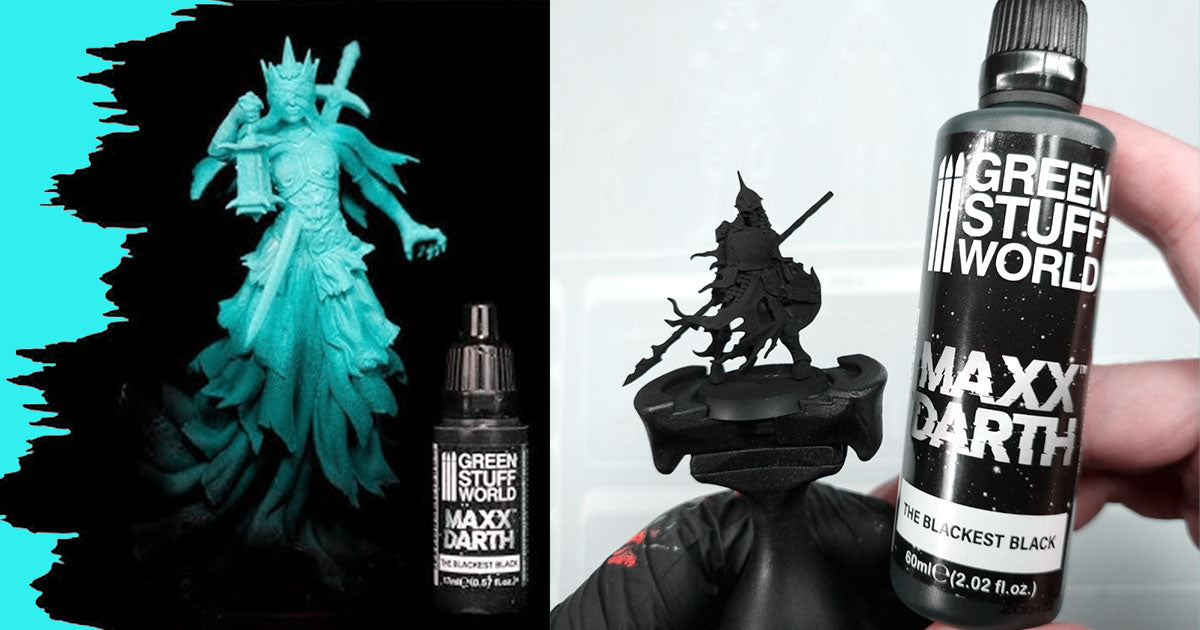
Why Maxx Darth Paint Changes Everything for Scale Modellers
We've all been there. You're working on that perfect shadow, trying to create real depth in your scale model, but your regular black paint just isn't cutting it. It still reflects light, still shows detail where there should be void. That's where Green Stuff World's Maxx Darth comes in - and honestly, it's kind of mind-blowing.
When we first got this product at Hearns Hobbies, the reaction was pretty universal: "Wait, how can black paint be blacker than black?" Sounds like marketing nonsense, right? But here's the thing - this paint absorbs about 98% of light that hits it. That's not just darker; that's approaching the theoretical limits of what paint can do.
The technology behind ultra-black paints isn't new - it's been used in scientific applications for years. But getting something this advanced into a hobby paint bottle that regular modellers can actually use? That's pretty special. And at standard retail prices too, not some exotic specialist product that costs a fortune.
What really gets hobbyists excited isn't just the science though - it's what this means for our projects. Whether you're painting miniatures, working on Gundam models, or detailing scale vehicles, true black opens up techniques that were basically impossible before.
Table of Contents
Understanding Ultra-Black Paint Technology
So what makes Maxx Darth different from your standard acrylic black paint? It's all about light absorption. Regular black paint - even good quality stuff - still reflects somewhere between 5-10% of light that hits it. That's why you can still see surface details, why it looks grey under bright lights, why it never quite achieves that void-like appearance we're after.
Maxx Darth uses special pigments and surface structures that trap light instead of reflecting it. Think of it like the difference between a smooth black surface and black velvet - except taken to an extreme. The paint creates a microscopically rough surface that light enters but can't escape from. It's similar technology to what's used in telescopes and scientific instruments where stray light reflection needs to be eliminated.
Now, before you think this is just marketing hype, the difference is genuinely visible to the naked eye. Put a piece painted with regular black next to one painted with Maxx Darth, and it's like comparing charcoal grey to a black hole. The regular black suddenly looks almost silver by comparison. It's one of those things that photos don't quite capture - you really need to see it in person to appreciate the effect.
What's remarkable is that Green Stuff World has managed to pack this technology into a paint that behaves pretty much like any other hobby paint. It's water-based, cleans up easily, and doesn't require any special equipment or techniques. Well, mostly - there are a few quirks we'll get into later.
![[SUGGESTED IMAGE: Close-up comparison shot showing regular black paint vs Maxx Darth paint on identical surfaces under studio lighting]](https://www.hearnshobbies.com/cdn/shop/files/maxx-darth-black-paint-17-ml.jpg?v=1722426155&width=800)
Practical Applications in Scale Modelling
Alright, so we've got paint that's really, really black. But what do we actually do with it? Turns out, heaps. This stuff opens up techniques that were basically impossible with regular paint, and improves a bunch of existing ones too.
The most obvious use is for deep shadows and recesses. You know those spots on your Gundam kit where panel lines meet, or the deepest parts of engine bays on aircraft models? Regular black wash still lets you see detail in there. Maxx Darth creates actual voids - spots where light just disappears. The effect is incredibly realistic because that's exactly what happens in real life with deep shadows.
Object Source Lighting (OSL) is where this paint really shines - or rather, doesn't shine. If you're painting a miniature holding a torch or standing near lava, the areas that light wouldn't reach need to be properly black. Regular paint always gives away the game because it reflects your room lighting. Maxx Darth maintains the illusion by staying black regardless of viewing angle.
Space modellers, this is your new best friend. Whether you're working on Star Wars kits or realistic spacecraft, nothing sells the vastness of space like true black. Paint your display base with this stuff and your models look like they're floating in the void. It's particularly effective for spacecraft dioramas where you want that authentic deep space feel.
Pro Tip from the Workshop
When using Maxx Darth for panel lining, thin it slightly less than you would regular paint. The ultra-matte finish means it flows differently in recesses. Start with 80% paint to 20% water and adjust from there. Too thin and it loses some of its light-absorbing properties.
Working with Maxx Darth Paint
Here's where things get interesting. Maxx Darth behaves a bit differently from your standard Tamiya blacks or Vallejo paints. Not dramatically different, but enough that you'll want to adjust your technique a bit.
First up, surface prep matters more than usual. Because this paint absorbs so much light, any imperfections become invisible - which sounds good until you realise that includes the imperfections you want to see, like subtle panel lines or surface details. Make sure you've got your detail work done before applying Maxx Darth, because you won't be able to see it afterwards to clean it up.
The paint comes in both 60ml and 17ml bottles from Green Stuff World. If you're just experimenting or doing detail work, the smaller bottle is plenty. But if you're planning something ambitious like a space diorama base, grab the larger size. This stuff is addictive once you start using it, and you'll find excuses to use it everywhere.
Application is pretty straightforward - brush or airbrush both work fine. With brushing, you'll want to use good quality synthetic brushes because the pigment can be a bit harsh on natural hair. The paint has good coverage, but like most ultra-matte paints, it can look patchy while wet. Don't panic - it evens out as it dries.
For airbrushing, thin it about 1:1 with water or acrylic thinner. Some modellers report better results with dedicated airbrush thinner rather than straight water. Start with light coats - this paint builds opacity quickly, and once it's on, it's very forgiving of additional layers. Just remember that each layer increases the light absorption, so you can actually make it "too black" for some applications.
Quick Reference: Maxx Darth Application
| Method | Thinning Ratio | Best Use |
|---|---|---|
| Brush - Detail | Straight from bottle | Panel lines, small shadows |
| Brush - Coverage | 10-20% water | Larger areas, base coating |
| Airbrush | 50% thinner | Smooth coverage, gradients |
| Wash | 70-80% thinner | Recesses, weathering |
Advanced Techniques and Effects
Once you get comfortable with the basics, Maxx Darth opens up some really creative possibilities. These techniques work specifically because of the extreme light absorption - you couldn't pull them off with regular black paint.
Let's talk about forced perspective first. You know how in photography, they use black backdrops to make subjects pop? Same principle works in scale modelling. Paint the inside of building models with Maxx Darth, and suddenly those tiny windows look like they open into vast, dark interiors. It's particularly effective on model train passenger cars where you want to suggest interior depth without actually detailing it.
For figure painters working on gaming miniatures, this paint is incredible for OSL effects. Paint the areas furthest from your light source with Maxx Darth first, then build up your lighting effects on top. The ultra-black base means your lit areas pop dramatically, and the transition from light to shadow looks more realistic than ever.
Here's a technique I've been experimenting with: selective detailing. Because Maxx Darth makes surface details invisible, you can use it to selectively hide parts of your model. Sounds weird, but it's brilliant for creating focal points. Paint less important areas with Maxx Darth, and suddenly the detailed, normally painted sections demand attention. It's like having a spotlight that works in reverse.
Another advanced use is in creating truly black panel lines without the typical wash issues. Mix Maxx Darth with a tiny amount of flow improver (not thinner - you want it to flow better, not be thinner) and apply it carefully to panel lines. Unlike regular panel washes that can stain surrounding areas, Maxx Darth stays exactly where you put it and creates incredibly crisp definition.
![[SUGGESTED IMAGE: Examples of OSL effects on miniatures using Maxx Darth for maximum contrast between lit and unlit areas]](https://www.hearnshobbies.com/cdn/shop/files/maxx-darth-paint-60-ml.jpg?v=1729522227&width=800)
Real-World Comparison Testing
Theory's all well and good, but how does Maxx Darth actually perform compared to other blacks we typically use? I've done some testing with common alternatives to see where this paint really shines and where regular black might still be preferable.
First up, I compared it against Tamiya X-1 Gloss Black - pretty much the opposite end of the spectrum. On identical white plastic pieces, the difference is staggering. The Tamiya black looks almost mirror-like, reflecting room lights and showing every surface detail. The Maxx Darth piece? It's like looking into a hole. Even under bright studio lights, it stays resolutely black.
Next, I tested against various matte blacks - Vallejo Model Color Black, Citadel Abaddon Black, and standard craft acrylic black. While these are all decent matte paints, none come close to the light absorption of Maxx Darth. The difference is most noticeable under bright lighting or when photographing models. Where regular matte blacks start to show grey highlights, Maxx Darth maintains its void-like appearance.
Interestingly, I found that mixing Maxx Darth with regular blacks gives you controlled levels of light absorption. Adding just 10% Maxx Darth to regular black noticeably reduces reflectivity. This is handy when you want very dark shadows but still need to see some surface detail. Think of it as having a dimmer switch for blackness.
One area where regular black still wins is durability. The same surface texture that makes Maxx Darth so black also makes it slightly more fragile. It's not terrible - we're not talking about paint that rubs off if you look at it wrong - but for gaming pieces that get handled constantly, you might want to seal it with ultra-matte varnish or stick to regular black for high-wear areas.
Testing Note
For photography, Maxx Darth can actually be too effective. If you're painting competition pieces that need to photograph well, consider using it sparingly or mixing it with regular black. The extreme light absorption can make it difficult for cameras to capture detail in shadowed areas.
Project Ideas and Inspiration
So you've got a bottle of Maxx Darth sitting on your workbench. What now? Here are some projects where this paint really gets to show off, ranging from simple weekend builds to ambitious long-term pieces.
For Gundam builders, try using Maxx Darth in the joints and inner frame areas. It creates an amazing contrast with metallic frames and makes the mobile suit look more mechanical and realistic. The effect is particularly striking on Real Grade kits where you've got lots of exposed internal detail.
Aircraft modellers, here's one for you: use Maxx Darth inside jet intakes and exhausts. Real jet engines are basically black holes when viewed from the front, and this paint nails that look perfectly. It's transformed how I approach modern jet models. No more trying to paint turbine faces that never look quite right - just black void, exactly like the real thing.
For the tabletop gaming crowd, Maxx Darth is perfect for basing. Create stark, dramatic bases that make your painted miniatures pop. I've seen people use it for lava bases where the cracks are painted with Maxx Darth before adding the glowing lava effects. The contrast between absolute black and bright orange/red is stunning.
Here's a creative one: shadow boxes and dioramas with forced perspective. Build a shallow diorama base, paint the back and sides with Maxx Darth, and suddenly that 6-inch deep box looks like it goes on forever. Add some strategic lighting, and you've got a display piece that stops people in their tracks.
Space Scenes
- • Starfield backgrounds
- • Black holes and void spaces
- • Deep space dioramas
- • Spaceship display bases
Lighting Effects
- • OSL miniatures
- • Glowing eyes/weapons
- • Fire and lava effects
- • Magical auras
Tips and Tricks from Experience
After spending a fair bit of time with Maxx Darth, I've picked up some tricks that aren't immediately obvious. These come from both successes and, let's be honest, a few spectacular failures along the way.
First tip: this paint is thirsty. It seems to dry out in the palette faster than regular acrylics, probably due to the unique pigment structure. Keep a wet palette handy, or add a drop of retarder if you're working on larger areas. Don't leave it sitting in your airbrush either - clean it out properly between sessions or you'll be spending quality time with cleaning brushes.
Speaking of cleaning, while Maxx Darth is water-based and cleans up easily when wet, once it's properly dried it's surprisingly tenacious. This is actually good for the finish, but it means you want to clean your tools promptly. A quick rinse isn't always enough - use proper airbrush cleaner or brush soap to make sure you've got it all out.
Here's something that caught me out: Maxx Darth doesn't play nicely with some primers. It seems to work best over matte primers, particularly grey or black ones. Over gloss primer, it can sometimes bead up or take forever to dry properly. If you're having adhesion issues, try giving your primer a light sand with fine sanding sticks to give it some tooth.
Temperature matters more with this paint than regular acrylics. In the middle of an Australian summer, it can dry almost instantly on the brush. In winter, it might stay workable for ages but take forever to fully cure. I've found the sweet spot is around 20-22°C with moderate humidity. If your workspace runs hot, a small fan helps, but don't blast it directly at your work or you'll get weird texture issues.
Frequently Asked Questions
Can I mix Maxx Darth with other paints?
Absolutely! Maxx Darth mixes well with other water-based acrylics. I've had great results mixing it with Vallejo and other Green Stuff World paints. Just remember that adding any other paint reduces the ultra-black effect proportionally. Even 10% regular black makes a noticeable difference in light absorption. For creating very dark greys or controlling the effect, this is actually useful.
Does Maxx Darth need special varnish or sealing?
It depends on the application. For display models that won't be handled, you can leave it unsealed to maintain maximum light absorption. For gaming pieces or models that'll see some handling, seal it with ultra-matte varnish. Just be aware that any varnish, even ultra-matte, will slightly reduce the black hole effect. Test on a spare piece first to see if you're happy with the trade-off.
Is it worth the price compared to regular black paint?
Look, Maxx Darth isn't cheap compared to craft shop black paint. But for what it does, it's actually pretty reasonable. You're getting genuinely advanced paint technology in a hobby-sized bottle. If you just need black paint for general use, stick with regular stuff. But for specific effects - OSL, space scenes, ultra-deep shadows - nothing else comes close. Think of it as a specialty tool rather than a general-purpose paint.
Can I thin Maxx Darth for airbrushing without losing the effect?
Yes, but there's a limit. Thinning up to about 50/50 maintains most of the ultra-black properties. Beyond that, you start losing the special light absorption. For airbrushing, I use dedicated acrylic thinner rather than water - it seems to preserve the effect better. Some modellers swear by adding a drop of flow improver instead of thinning, which maintains the pigment density while improving flow.
Final Thoughts
Maxx Darth isn't just another black paint - it's a genuinely new tool in our modelling arsenal. When I first heard about "the blackest black" paint, I'll admit I was sceptical. Seemed like marketing fluff. But after using it on various projects, from miniatures to aircraft models, I'm converted. This stuff does things no other paint can do.
Is it essential? No. You can build and paint excellent models without ever touching ultra-black paint. But once you've seen what true black can do for shadows, for space scenes, for lighting effects - it's hard to go back. It's like when weathering products first became widely available. We managed without them before, but now they're just part of the toolkit.
What excites me most is thinking about what's next. If we can get paint this black onto hobby shelves at reasonable prices, what other advanced materials are coming? The gap between professional effects and what hobbyists can achieve keeps shrinking. Products like Maxx Darth from Green Stuff World prove that there's still room for genuine innovation in our hobby.