 is here! Shop now, pay later in 4 easy installments


Why Gundam Panel Lines Ghost After 6 Months (And the Acetone Myth)
We've all been there. You finish panel lining your latest Master Grade kit, and it looks absolutely mint. Those crisp black lines really make the details pop. Fast forward six months, and suddenly your Gundam's sporting this weird, hazy white residue around every panel line. What gives?
The ghosting phenomenon has plagued Gunpla builders for years, sparking countless forum debates and home-brew solutions. Some swear by acetone, others blame humidity, and a few reckon it's just bad luck. After watching hundreds of builders struggle with this issue at Hearns, we've learned what actually causes panel line ghosting – and more importantly, how to prevent it.
Here's the thing that'll save you heaps of frustration: ghosting isn't random. It's chemistry in action, and once you understand what's happening at a molecular level, preventing it becomes pretty straightforward. The real kicker? That acetone "fix" everyone recommends might actually be making things worse in the long run.
Whether you're working on your first High Grade or you're knee-deep in a Real Grade build, understanding panel line chemistry will transform your results. We'll dig into the science without getting too technical, bust some persistent myths, and share the techniques that actually work for Australian conditions.
Table of Contents
The Science Behind Panel Line Ghosting
Panel line ghosting happens when chemical reactions between your panel liner and the plastic create visible residue. It's not mold, it's not dust – it's literally chemistry happening on your kit's surface. Understanding this process is key to preventing it.
Most panel line products contain solvents that help the ink flow into those tiny grooves. These solvents don't just evaporate – they actually interact with the plastic on a molecular level. Over time, this interaction can cause plasticizers (chemicals that keep plastic flexible) to migrate to the surface, creating that telltale white haze.
The ghosting typically appears after 3-6 months because that's how long these chemical reactions take to become visible. Temperature and humidity accelerate the process, which is why Australian builders often see it sooner during our humid summers. Brisbane builders, you know exactly what I'm talking about.
Different plastics react differently too. Bandai's newer kits use a slightly different plastic formulation than older ones, which is why some builders notice more ghosting on recent releases. The plastic isn't worse – it's just more reactive to certain solvents. This is actually a quality improvement for durability, but it does mean we need to adjust our techniques.
![[SUGGESTED IMAGE: Close-up comparison showing clean panel lines vs ghosted panel lines on Gundam parts]](https://www.hearnshobbies.com/cdn/shop/products/75-t87189_8a174513-748f-4893-85b2-83b07474037b.jpg?v=1735044882&width=900)
Common Causes of Ghosting
Let's bust a myth right up front – ghosting isn't caused by using "cheap" panel liners. We've seen it happen with premium Tamiya products just as often as budget options. The real culprits are more subtle and often combine to create perfect ghosting conditions.
Excess product tops the list. When you flood panel lines with too much liner, the excess doesn't just sit there innocently. It seeps into microscopic surface imperfections, creating larger areas for chemical reactions. That satisfying capillary action that draws liner into grooves? It's also pulling solvents deep into the plastic structure where they cause long-term issues.
Incomplete cleaning ranks second. Those cotton swabs soaked in thinner that we use for cleanup? If you're too aggressive or use too much thinner, you're actually spreading dissolved plastic particles across the surface. These particles oxidize over time, contributing to that ghostly appearance. It's kinda like spreading invisible contamination that only shows up months later.
Environmental factors can't be ignored either. High humidity accelerates chemical reactions, while temperature fluctuations cause plastic to expand and contract, pumping solvents in and out of the surface. UV exposure breaks down both the panel liner and plastic surface, creating perfect conditions for ghosting. Display your kits near a window? That's asking for trouble.
Quick Tip
Test your panel liner on spare parts or hidden areas first. Different batches of plastic can react differently, even within the same kit. What works perfectly on runners might ghost on the actual parts.
The Acetone Myth Explained
Ah, acetone – the miracle cure that isn't. Browse any Gunpla forum and you'll find dozens of posts recommending acetone for removing ghosted panel lines. Sure, it works... temporarily. But here's what those posts don't tell you about the long-term damage.
Acetone is an aggressive solvent that literally melts plastic. When you wipe ghosted lines with acetone, you're not just removing the residue – you're dissolving the top layer of plastic along with it. This creates an even more porous surface that's primed for future ghosting. It's like sanding your car's paint to remove a water spot. Yeah, the spot's gone, but now you've got bigger problems.
The surface damage from acetone is often invisible at first. Under magnification though, acetone-treated plastic looks like the moon's surface – full of tiny craters and rough patches. These imperfections trap more panel liner next time, accelerating the ghosting process. We've seen builders caught in endless cycles of ghosting and acetone treatment, each round making the problem worse.
What's really frustrating is that acetone became popular because it genuinely does remove ghosting quickly. But quick fixes in modelling often lead to long-term headaches. The builders who've been in the hobby for decades? They'll tell you acetone is for removing paint from metal parts, not for cleaning plastic. There's wisdom in that experience.
![[SUGGESTED IMAGE: Microscopic view or diagram showing plastic surface damage from acetone use]](https://www.hearnshobbies.com/cdn/shop/products/s-l600_791d062c-33fb-4a11-bd5a-791860bde059.jpg?v=1735880734&width=600)
Prevention Techniques That Actually Work
Prevention beats cure every single time with panel line ghosting. The techniques that work aren't complicated – they just require a bit more patience than slapping on liner and calling it done. These methods come from builders who display kits for years without a hint of ghosting.
First up: the gloss coat barrier method. Applying a thin layer of clear gloss coat before panel lining creates a protective barrier between plastic and liner. The smooth surface also helps panel liner flow better, requiring less product for crisp lines. Just make sure your gloss coat is fully cured – 24 hours minimum, 48 is better. Rushing this step is like building on wet concrete.
The "less is more" application technique revolutionizes results. Instead of flooding lines, touch your panel liner to the groove and let capillary action do the work. One tiny drop spreads surprisingly far. For cleanup, barely dampen your cotton swab with thinner – it should feel almost dry. Gentle circular motions remove excess without disturbing the lined areas.
Post-lining sealing makes all the difference. Once your lines are perfect and fully dried (give it 12 hours minimum), seal everything with another thin clear coat. This locks the panel liner in place and prevents solvent migration. Matte or semi-gloss topcoats work great and give that professional finish.
Temperature control during application matters more than most builders realize. Work in consistent 20-25°C conditions if possible. Avoid panel lining on super hot days when solvents evaporate too quickly, or in cold conditions where they penetrate too deeply. Your garage might be convenient, but those temperature swings aren't doing your kits any favours.
Prevention Quick Reference
| Step | Product | Drying Time |
|---|---|---|
| Base Gloss Coat | Clear Gloss Spray | 24-48 hours |
| Panel Lining | Panel Line Accent | 12 hours |
| Final Topcoat | Matte/Semi-Gloss | 24 hours |
Fixing Already Ghosted Panel Lines
So your kit's already ghosted. Don't panic – and definitely don't reach for that acetone. There are safer methods that actually address the root cause rather than just masking symptoms. These techniques come from restoring vintage kits where ghosting is almost guaranteed.
The safest approach uses isopropyl alcohol (70% concentration, not the 99% stuff). Dampen a microfibre cloth and gently wipe affected areas in one direction. The alcohol removes oxidized residue without attacking the plastic. It might take several passes, but patience here prevents permanent damage. Between passes, let the surface dry completely to assess progress.
For stubborn ghosting, the light sanding method works wonders. Start with 3000 grit wet sandpaper, moving to 4000, then polish with a cloth. You're removing just microns of plastic along with the ghosting. The key is keeping everything wet and working in small sections. This method requires refinishing with clear coat, but the results last.
Sometimes the nuclear option is necessary – complete strip and redo. Use appropriate paint strippers designed for models to remove all coatings and panel lines. Clean thoroughly, then start fresh with proper prevention techniques. It's time-consuming but guarantees ghost-free results. Plus, you get to apply everything you've learned.
One trick that's saved many builders: the eraser method. A clean white eraser (not the pink ones) can remove light ghosting without chemicals. The mild abrasive action lifts residue while polishing the surface. Test in a hidden area first, and work gently. It sounds too simple, but sometimes the old-school solutions work best.
![[SUGGESTED IMAGE: Before and after comparison of ghosting removal using safe methods]](https://www.hearnshobbies.com/cdn/shop/products/75-T87140-1000x1000.jpg?v=1734701261&width=1000)
Choosing the Right Panel Line Products
Not all panel liners are created equal, and choosing the right one can dramatically reduce ghosting risk. The market's flooded with options, but understanding their chemistry helps narrow down the best choices for long-term display stability.
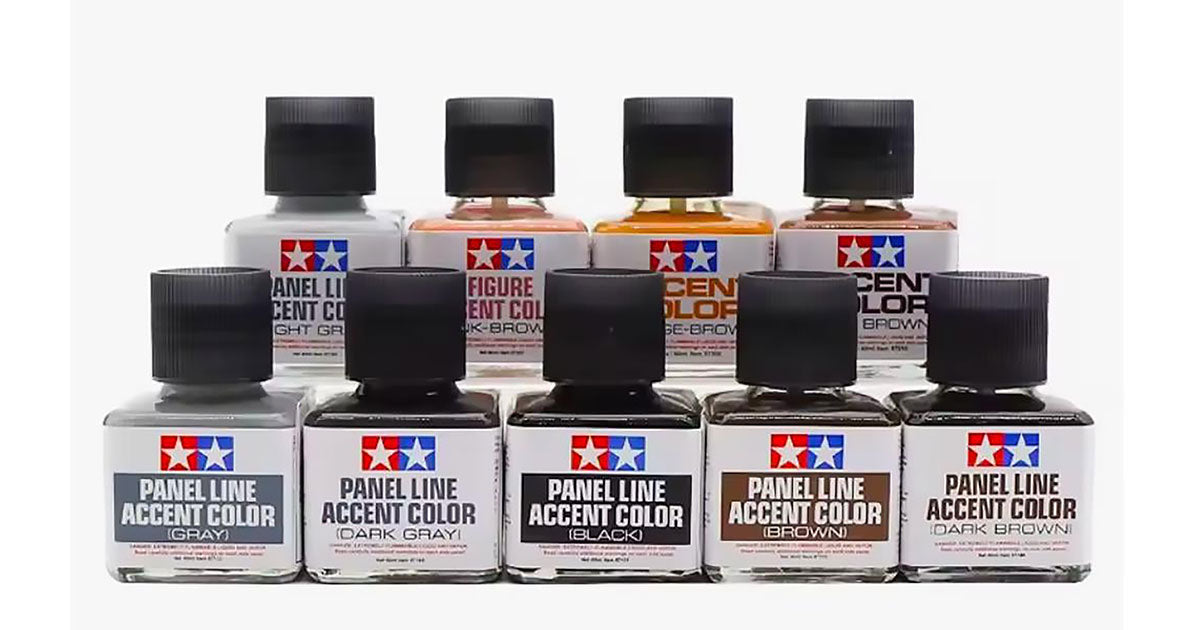
Tamiya Panel Line Accent Color remains the gold standard for good reason. Its enamel-based formula flows beautifully and the solvents are relatively mild. Black and dark grey work on most kits, while brown suits earth-toned suits. The key is using their specific thinner for cleanup – other thinners can cause unexpected reactions.
Water-based options like certain Gundam Markers offer the safest approach for beginners. They won't attack plastic and ghosting is extremely rare. The trade-off is they don't flow as smoothly and might need multiple applications. But for your first few kits or precious limited editions, that safety margin is worth it.
Acrylic washes provide a middle ground. Mix your own using acrylic paints thinned with water and a drop of dish soap. The soap breaks surface tension for better flow, while water won't harm plastic. Cleanup is easy with damp cotton swabs. Many competition builders swear by this method for its control and safety.
The products to avoid? Anything with aggressive solvents like lacquer thinners or markers meant for other materials. That Sharpie might seem convenient, but the solvents will eat your plastic over time. Same goes for India ink – beautiful results initially, but the acidic components cause long-term problems. Stick to products specifically designed for scale models.
Product Warning
Never mix different types of panel liners on the same kit. Enamel over acrylic? Fine. But enamel over lacquer or mixing brands can cause unexpected chemical reactions leading to severe ghosting or worse – melted plastic.
Environmental Factors and Storage
Where and how you display your Gunpla impacts ghosting as much as your building techniques. Australian conditions throw some unique curveballs – our UV levels are intense, humidity varies wildly, and indoor climate control isn't always perfect. Understanding these factors helps create display conditions that preserve your work.
UV exposure accelerates every chemical process that causes ghosting. Direct sunlight is obviously terrible, but even indirect daylight contains enough UV to cause problems over time. Display cases with UV-filtering glass or acrylic provide excellent protection. Alternatively, keep kits away from windows or use UV-filtering window film.
Humidity control matters more than most builders realize. Ideal range sits between 40-60% relative humidity. Too dry and plastics become brittle; too humid and chemical reactions accelerate. Small dehumidifiers work wonders for display cabinets, while silica gel packets help in individual cases. During Brisbane's humid summers, this becomes critical.
Temperature stability prevents the expansion/contraction cycles that pump solvents through plastic. Avoid displaying kits near heating vents, air conditioner outlets, or exterior walls that heat up during the day. That spot above your computer might seem perfect, but the constant temperature changes from your rig heating up and cooling down create ideal ghosting conditions.
Air circulation helps prevent localized chemical buildup but avoid direct airflow. A gentle air exchange prevents stagnant conditions where off-gassing chemicals concentrate. Some builders use tiny computer fans in display cases, running at lowest speed. Just ensure dust filtration – nothing ruins panel lines faster than dust settling into them.
Ideal Display Conditions
- • Temperature: 18-24°C
- • Humidity: 40-60%
- • UV exposure: Minimal
- • Air flow: Gentle circulation
- • Dust: Filtered/controlled
Warning Signs
- • Plastic feels tacky
- • Slight discoloration
- • Hazy appearance
- • Sweet chemical smell
- • Joint stiffness changes
Long-Term Maintenance Tips
Preventing ghosting isn't a one-and-done deal – it requires ongoing attention. But don't worry, we're not talking about hours of maintenance. A few minutes every month keeps your collection pristine for years. These routines come from collectors with 20+ year old kits that still look fresh off the bench.
Monthly inspections catch problems early. Use a bright LED light at an angle to spot developing ghosting – it shows up as a slight haze before becoming obvious. Check areas around heavy panel lining first, especially on white or light-colored plastic. Document any changes with photos; your phone makes this dead easy.
Gentle cleaning prevents buildup of dust and airborne chemicals that contribute to ghosting. Use a soft brush (makeup brushes work brilliantly) for regular dusting. Every few months, wipe down with a barely damp microfibre cloth. Never use furniture polish or cleaning products – they contain chemicals that accelerate ghosting. Plain water or specialized model cleaners only.
Rotation might sound excessive, but it works. If you've got multiple kits displayed, occasionally swap their positions. This prevents any one kit from bearing the brunt of environmental factors. Plus, it keeps your display fresh and lets you appreciate different kits up close. Some builders plan seasonal rotations tied to their cleaning schedule.
Consider "resting" special kits periodically. Competition pieces or rare limited editions benefit from storage in controlled conditions between display periods. Wrap in acid-free tissue, place in airtight containers with silica gel, and store in stable temperatures. It's like putting your kit in suspended animation – zero risk of ghosting during storage.
Frequently Asked Questions
Can I prevent ghosting on already-built kits without panel lines?
Absolutely! If you're planning to add panel lines to an older build, strip any existing topcoats first using appropriate removal products. Clean thoroughly with isopropyl alcohol, then follow the gloss coat barrier method before panel lining. This "retrofit" approach works great for upgrading straight builds or fixing kits you did before learning proper techniques. Just take your time with the prep work – rushing here guarantees ghosting later.
Does panel line color affect ghosting likelihood?
Yep, darker colors ghost more noticeably, especially on light plastic. Black panel liner on white parts is the worst combination for visible ghosting. Grey or brown liners tend to ghost less dramatically. For white or light-colored mobile suits, consider using grey liner instead of black – it's more forgiving and often looks more realistic anyway. The chemical process is the same, but the visual impact varies significantly.
Why do some builders never experience ghosting?
Lucky environment combined with good technique. Builders in dry climates with stable temperatures see less ghosting naturally. Those who've always used barrier coats might not even know ghosting exists. Also, some older panel line formulations were less prone to ghosting – builders using the same products for decades might be using "safer" chemistry without realizing it. There's also survivorship bias – builders who had bad ghosting experiences often quit the hobby, so you mostly hear from the successful ones.
Is ghosting covered under warranty or considered a defect?
Nope, ghosting is considered user error, not a manufacturing defect. Bandai and other manufacturers design their plastic for durability and ease of assembly, not necessarily for chemical resistance to aftermarket products. That's why following proper techniques is so important – you're essentially performing chemistry experiments on your kits. No manufacturer will replace a kit because your panel lines ghosted, but follow the prevention techniques we've covered and you'll never need to worry about it.
Final Thoughts
Panel line ghosting might seem like this mysterious curse that randomly strikes unsuspecting builders, but as we've seen, it's just chemistry doing its thing. Once you understand what's happening at a molecular level, preventing it becomes routine rather than luck. The acetone quick-fix might be tempting, but now you know why patience and proper technique yield far better results.
The techniques we've covered aren't just theory – they're proven methods used by builders who've kept kits pristine for decades. Whether you're lining your first Entry Grade or adding detail to a prized Master Grade, these same principles apply. Start with barrier coats, use quality products sparingly, and seal your work properly.
Remember, every experienced builder has dealt with ghosting at some point. It's practically a rite of passage in the hobby. The difference between frustration and success is understanding why it happens and taking simple steps to prevent it. Your future self will thank you when those panel lines still look crisp years down the track.