 is here! Shop now, pay later in 4 easy installments


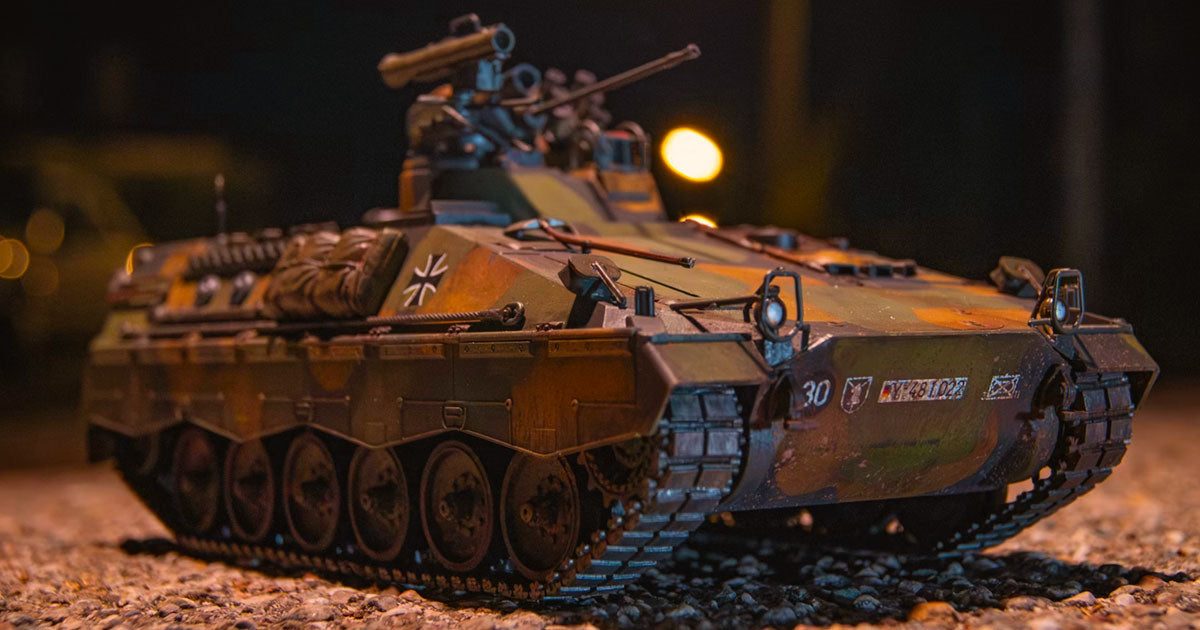
Panel Line Techniques Beyond Basic Wash Application
We've all been there - carefully applying a wash to our Gundam kit or aircraft model, only to end up with messy streaks and pooling that looks nothing like the crisp detailing on the box art. Panel lining seems simple enough until you actually try it.
Here's the thing - those basic wash techniques everyone starts with? They're just scratching the surface. After years of working on everything from HG Gundams to military armour, I've picked up techniques that transform panel lines from afterthoughts into features that really make models pop. And yeah, some of these methods might seem a bit unconventional at first.
The Australian summer heat actually taught me heaps about panel lining - nothing quite like having your carefully applied wash dry instantly in 38-degree weather to make you rethink your whole approach. These days, I work in the cooler morning hours, but those frustrating experiences led to discovering techniques that work regardless of conditions.
What we're gonna explore today goes way beyond slapping on some Tamiya Panel Line Accent and calling it done. We're talking about methods that let you control exactly how your panel lines look, from subtle suggestions of depth to bold cartoon-style definitions that'd make any mecha anime proud.
Table of Contents
Pre-Shading and Reverse Washing
Pre-shading changed everything for me. Instead of adding panel lines after painting, you're building them into the paint job itself. The technique involves airbrushing dark colours along panel lines before applying your main colour coat.
Start with a black or dark grey primer - I prefer Tamiya's fine surface primer for this. Using a fine needle airbrush (0.2mm works great), trace along all the panel lines with pure black. Don't worry about being perfectly neat; slight overspray actually helps with the effect. Then, when you apply your base colour, spray from directly above at a slight distance. The paint naturally thins out near the panel lines, letting that dark pre-shade show through subtly.
Reverse washing takes a different approach entirely. Apply your panel line colour over the entire part - yep, the whole thing. Once it's dry, use a cotton bud barely dampened with appropriate thinner to remove the excess, leaving colour only in the recesses. This technique works brilliantly on Real Grade kits where the detail is so fine that traditional washes tend to pool.
The real trick with reverse washing? Surface preparation. A gloss coat is absolutely essential - try doing this on matt paint and you'll end up removing everything, including your sanity. I learned that the hard way on a Master Grade Zaku that took three repaints to fix.
![[SUGGESTED IMAGE: Close-up comparison showing pre-shaded panel lines versus standard wash application on model parts]](https://www.hearnshobbies.com/cdn/shop/products/75-t87189_8a174513-748f-4893-85b2-83b07474037b.jpg?v=1735044882&width=900)
Scribing Custom Panel Lines
Sometimes the panel lines that come with a kit just aren't enough. Or they're in weird places. Or you've got a big flat surface that looks boring. That's where scribing comes in - literally carving your own panel lines into the plastic.
You'll need proper tools for this. Those Godhand scribing tools aren't cheap, but trust me, trying to scribe with a knife blade is asking for crooked lines and tears. Start with scribing tape - it's basically thin strips of tape that guide your scriber. BMC and Madworks make good ones, though in a pinch, thin strips of masking tape work too.
The actual scribing technique took me ages to get right. Light, repeated passes beat trying to gouge out a line in one go. Think of it like drawing - you're building up the line gradually. And here's something nobody tells you: different plastics scribe differently. Bandai plastic tends to be harder and needs more passes, while Tamiya kits have softer plastic that scribes easier but can tear if you're not careful.
Planning your scribe lines is crucial. I use pencil first, sketching where I want lines to go. Symmetry matters heaps - nothing ruins a model faster than wonky custom panel lines. Look at real aircraft and military vehicles for inspiration. Panel lines follow logical patterns based on access hatches, structural supports, and maintenance points.
After scribing, you'll need to clean up. The scribing process creates tiny plastic shavings that'll mess with your paint job. A soft brush and some sanding with progressively finer grits (400, 600, then 800) smooths everything out. Some builders use liquid putty to refine their scribed lines, letting it flow in then sanding the excess.
Scribing Safety Tip
Always scribe away from yourself and keep your fingers clear of the scribing path. These tools are incredibly sharp - I've got the scars to prove it. Use a cutting mat and good lighting. Your workspace setup matters as much as your technique.
Multi-Tone Panel Line Effects
Who says panel lines have to be one colour? Multi-tone techniques add incredible depth, especially on larger 1/32 scale aircraft or ship models where you've got room to work.
The basic concept involves using different colours for different types of panel lines. Access hatches might get dark grey, structural lines could be brown, and heat-affected areas near engines might get a purple-black mix. This sounds complicated, but it's actually pretty straightforward once you understand the logic.
On military aircraft, I'll often use a warm brown for panel lines on undersides (picking up reflected ground colours) and cool grey-black for upper surfaces. The contrast is subtle but adds realism. For sci-fi subjects, you can go wild - blue panel lines on white armour, red accents on black sections, whatever sells the aesthetic you're after.
Application order matters heaps here. Start with your lightest colour and work darker. Each layer should be completely dry before moving to the next. Vallejo washes work well for this because they're water-based and won't reactivate previous layers if you're careful.
![[SUGGESTED IMAGE: Model showing multi-tone panel lines with different colours for various panel types]](https://images.unsplash.com/photo-1713098526657-e46867b97a1c?q=80&w=1331&auto=format&fit=crop&ixlib=rb-4.1.0&ixid=M3wxMjA3fDB8MHxwaG90by1wYWdlfHx8fGVufDB8fHx8fA%3D%3D)
Dry Application Techniques
Sometimes liquid washes just don't cooperate. Maybe it's humidity, maybe it's the paint type, or maybe you're working on a vertical surface where everything wants to run. That's when dry techniques save the day.
Pencil panel lining sounds amateur, but done right, it's incredibly effective. Not just any pencil though - you want watercolour pencils or weathering pencils. The pigment in these flows into panel lines when you run a barely damp brush over them. The control is amazing - you can build up intensity gradually or keep things super subtle.
The technique I use most? Apply the pencil directly into the panel line, then use a dry cotton bud to remove excess from the raised surfaces. The pigment stays trapped in the recesses. On Maschinen Krieger kits with their distinctive panel work, this creates perfect definition without the harshness of black wash.
Pigment powders offer another dry option. Mix them with a tiny bit of white spirit to create a paste, work it into panel lines with a fine brush, then remove excess once dry. The beauty here is you can mix colours on the fly - add rust pigments near exhaust areas, or earth tones on lower hull panels of tanks.
Graphite powder (literally ground pencil lead) gives metallic subjects incredibly realistic panel lines. Apply it dry with a soft brush, then buff the raised areas with a cloth. The graphite settles into recesses and creates this subtle metallic sheen that's perfect for natural metal aircraft finishes.
Dry Technique Quick Reference
| Technique | Best For | Difficulty |
|---|---|---|
| Watercolour Pencil | Precise control, vertical surfaces | Beginner |
| Pigment Paste | Weathered effects, colour variety | Intermediate |
| Graphite Powder | Metallic finishes | Advanced |
Oil Paint Panel Lining Methods
Oil paints scare alot of modellers, but honestly, they're more forgiving than acrylics for panel lining. The extended working time means you can take your time getting things just right. Plus, the way oils flow and blend creates incredibly realistic effects.
The basic oil wash starts with artist oils - doesn't need to be fancy, student grade works fine. Thin them with odourless turpentine (please, work in a ventilated area, even the "odourless" stuff has fumes). The consistency should be like dirty water, really thin. Apply it liberally over a gloss-coated surface, let it sit for about 10 minutes, then remove excess with a clean brush barely dampened with turps.
But here's where oils really shine - dot filtering combined with panel lining. Place tiny dots of different oil colours randomly on your model. Using a flat brush dampened with turps, streak these dots downward. As you do this, guide the paint into panel lines. You're simultaneously creating colour variation and defining panel lines. It's brilliant on Dragon armor kits where you want that lived-in look.
Temperature affects oil paint behaviour dramatically. In Australian summers, oils dry faster than you'd expect. Work in smaller sections, or add a drop of linseed oil to slow drying. Winter's actually ideal for oil work - the extended drying time lets you blend and adjust to perfection. I've spent entire afternoons tweaking oil washes on Miniart's detailed kits.
The cleanup game with oils is different too. Unlike acrylics where you've got minutes before things set, oils give you hours or even days to make adjustments. Made a mistake? Come back tomorrow with a clean brush and turps, and fix it. This forgiving nature makes oils perfect for complex diorama pieces where you're working on multiple elements.
![[SUGGESTED IMAGE: Step-by-step demonstration of oil paint dot filtering technique on a model tank]](https://images.unsplash.com/photo-1686678404141-eedab552cd40?q=80&w=1331&auto=format&fit=crop&ixlib=rb-4.1.0&ixid=M3wxMjA3fDB8MHxwaG90by1wYWdlfHx8fGVufDB8fHx8fA%3D%3D)
Weathering Integration Techniques
Panel lines shouldn't exist in isolation - they're part of your model's whole story. Integrating them with weathering effects creates models that look properly used, not just assembled.
Grime accumulation happens naturally along panel lines. After your basic panel line wash, come back with a slightly lighter shade and apply it irregularly. Some panel lines should be dirtier than others. Think about it - panels that get opened frequently might be cleaner from handling, while areas near exhausts accumulate more crud. This selective application brings incredible realism to helicopter models where maintenance patterns are super visible.
Chipping along panel lines tells another story. Use a fine brush with Vallejo's chipping medium or the hairspray technique, focusing chips where panels meet. These are natural stress points where paint fails first. The contrast between clean panel line wash and chipped edges creates fantastic visual interest.
Rain streaking and panel lines work together beautifully. Apply your streaking effects so they originate from panel lines - that's where water naturally channels on real vehicles. Streaking products in rust or grime colours, applied sparingly below panel lines, suggest years of weathering. This technique transformed my Trumpeter submarine from toy-like to museum quality.
Salt weathering around panel lines creates interesting texture. Before painting, brush salt water along panel lines and let it crystallize. Paint over it, then brush off the salt. You get natural paint wear exactly where moisture would accumulate on real vehicles. Combine this with traditional panel lining for depth that photographs incredibly well.
Weathering Balance
Less is often more with weathering integration. It's tempting to go heavy, but subtle effects usually look more realistic. Build up gradually - you can always add more, but removing weathering means starting over. Test techniques on spare parts or cheap kits first.
Advanced Surface Preparation
The secret to professional panel lines? It's all in the prep. Seriously, surface preparation makes or breaks your panel line work, regardless of which technique you use.
Gloss coating isn't just recommended - for most techniques, it's essential. But not all gloss coats are equal. Tamiya X-22 Clear thinned 50/50 with levelling thinner creates an incredibly smooth surface. Spray it in thin, wet coats - you want it to self-level. In humid conditions (looking at you, Queensland summers), add a bit more thinner and work faster.
Some modellers swear by Future floor polish (now called Pledge Revive It). Airbrushed straight or slightly thinned, it creates a rock-hard gloss surface perfect for panel lining. The stuff's self-levelling properties are amazing, though it can pool in detail if you're heavy-handed. Plus, ammonia-based window cleaner removes it if you stuff up.
Panel line depth matters more than you'd think. Shallow panel lines need different treatment than deep ones. For shallow lines, like those on older Hasegawa kits, a thinner wash works better. Deep panel lines can handle thicker applications. Sometimes I'll deepen shallow lines with a scriber before painting - controversial, but effective.
Pre-washing is something I picked up from figure painters. Before any paint goes on, wash the entire model with panel line accent. Let it dry, then prime over it. The panel lines remain slightly darker even through primer and paint. It's subtle but adds depth that straight painting can't achieve. Works brilliantly on Bandai's Star Wars kits where you want that screen-accurate weathered look.
Between colour coats and panel lining, consider a barrier coat. Clear orange or smoke transparent paints, heavily thinned and airbrushed, create subtle tinting that makes panel lines appear more integrated. This technique comes from the car modelling world but translates perfectly to military subjects.
Gloss Coat Options
- • Tamiya X-22 Clear
- • Future/Pledge
- • Mr. Color GX100
- • Alclad Aqua Gloss
- • Vallejo Gloss Varnish
Surface Prep Steps
- • Clean with alcohol
- • Apply barrier coat
- • Gloss coat (2 thin layers)
- • 24-hour cure time
- • Panel line application
Fixing Common Panel Line Problems
We've all been there - panel lines that look perfect until they dry, then turn into a disaster. Good news is, most panel line problems are fixable without stripping everything and starting over.
Tide marks - those ugly rings left when wash dries - plague every modeller. The fix? Work faster with thinner washes, or switch to oils that don't leave tide marks. If you've already got them, a cotton bud with clean thinner can usually blend them out. Sometimes I'll turn tide marks into intentional weathering by adding streaks emanating from them.
Capillary action gone wild is another common issue. You apply wash to one panel line and it flows everywhere, pooling in places you don't want. Prevention's better than cure here - proper gloss coating stops this. But if it happens, quickly wick away excess with a clean brush. On Entry Grade Gundams with their simpler construction, I've found thicker washes actually work better as they don't flow as readily.
Panel lines that disappear under flat coat frustrate heaps of builders. The flat particles fill in subtle panel lines, especially if sprayed heavy. Solution? Apply panel lines after flat coating, then spot-apply flat coat to blend. Or use a satin finish instead - gives that realistic sheen without obscuring detail.
Silvering in panel lines happens when wash gets under decals. Microscale's Micro Sol actually helps here - brush it into affected panel lines and it'll often reseat the decal. Worst case, carefully slice along the panel line with a new blade, add more setting solution, and press down. The panel line hides the cut.
Sometimes panel lines are just too stark. Black on white starship models can look cartoony. The fix is filtering - thin coats of the base colour with a drop of panel line colour mixed in, airbrushed over everything. This knocks back the contrast while maintaining definition. Think of it as adding atmosphere between you and the model.
Frequently Asked Questions
What's the best panel line product for beginners working on Gunpla?
For Gunpla specifically, Gundam Markers are hard to beat for beginners. The fine-tip panel line markers give you precise control without dealing with thinning ratios or cleanup solvents. Grey works better than black on white parts - less stark. Once you're comfortable, graduate to Tamiya Panel Line Accent. It flows better into fine details, especially on Real Grade or Master Grade kits. Just remember to gloss coat first if you've painted - the enamel thinner in Panel Line Accent will attack bare Bandai plastic or acrylic paint.
How do I fix panel lines that have completely disappeared under weathering?
This is recoverable! First, identify where the panel lines should be - sometimes you can still see slight depressions. Use a scriber or even a sharp pencil to carefully trace along these depressions. Then apply a pin wash - that's wash applied with a very fine brush directly into the line rather than flooding the area. 000 size brushes work perfectly for this. The weathering actually helps here as it provides tooth for the wash to grab onto. Seal everything with a light coat of varnish when done.
Can I panel line over decals, or should decals go on after?
Both methods work, but panel lining first is generally safer. Apply your panel lines, seal with gloss coat, then apply decals. This prevents wash from seeping under decal edges. If you must panel line over decals (sometimes necessary for complex schemes), ensure decals are absolutely sealed with a good gloss coat first. Use the thinnest wash possible and work quickly to minimize contact time. Quality decals handle this better than kit-supplied ones. Always test on spare decals first if you're unsure.
Why do my panel lines look great on some colours but terrible on others?
Colour theory at work! Contrast is everything with panel lines. Dark colours need lighter panel lines - try dark grey or even brown instead of black. Light colours can handle black but often look better with dark grey or brown for realism. Metallic paints are tricky - they can repel wash. The solution? Clear primer or gloss coat over metallics before panel lining. Red and yellow are notorious for making black panel lines look harsh - brown or orange-brown works much better. Test on paint mules or the inside of parts first.
Is scribing worth learning if I'm happy with kit panel lines?
Honestly? For most builders, existing panel lines are fine. But scribing opens up customization options you didn't know you wanted. Start small - add a single access panel or divide a large, boring surface. Basic scribing tools aren't too expensive, and the skill transfers to fixing damaged panel lines or adding detail to simplified kits. Plus, once you can scribe, you can fix mistakes like glue damage or sand-through areas. It's like learning to pin wash - not essential, but it levels up your building.
Final Thoughts
Panel lining's come a long way from just slopping black wash over everything and hoping for the best. These advanced techniques might seem like overkill at first, but here's the thing - once you nail them, they become second nature. You'll find yourself combining techniques without thinking, creating effects that make people ask "how'd you do that?"
The real game-changer for me was realizing panel lines aren't just about making details visible. They're about telling a story - whether it's the pristine precision of a fresh-off-the-line mobile suit or the weather-beaten character of a battle-worn tank. Every technique we've covered serves that storytelling purpose.
Start with one new technique on your next build. Maybe it's pre-shading on that Tamiya Zero you've been putting off, or trying oils on a Dragon Tiger tank. Don't try everything at once - that's a recipe for frustration. Build your skills gradually, and before long, you'll have an arsenal of techniques that turn good models into showstoppers.