 is here! Shop now, pay later in 4 easy installments


How Your Hobby Workspace Evolves From Kitchen Table to Dedicated Den
We've all been there - that moment when your partner walks into the dining room and discovers you've transformed their nice oak table into a paint-splattered disaster zone. Or when you're frantically shoving half-built models into boxes because dinner guests arrive in ten minutes. The evolution from borrowed family spaces to dedicated hobby sanctuary is a journey every serious hobbyist knows, and it's messier than a knocked-over jar of Nuln Oil.
After watching thousands of customers at Hearns Hobbies progress through this workspace evolution over three decades, we've noticed distinct stages that everyone goes through. It starts innocently enough - just a small model kit on the coffee table. Before you know it, you're measuring the garage, researching ventilation systems for your airbrush booth, and explaining to your spouse why you absolutely need that industrial shelving unit.
The funny thing is, most of us follow remarkably similar patterns in this evolution. We make the same mistakes, have the same arguments about space, and experience the same joy when we finally get that first proper cutting mat that nobody else is allowed to touch. Whether you're into RC cars, model trains, or tabletop miniatures, the workspace journey is surprisingly universal.
Today we're diving into this evolution - from those early days of newspaper-protected surfaces to the ultimate hobby den with labeled storage containers and proper task lighting. We'll explore each stage, the telltale signs you're ready to level up, and most importantly, how to negotiate these transitions without ending up in the doghouse. Because let's face it, explaining why you need a fourth storage unit for spare parts requires diplomatic skills.
Table of Contents
Stage 1: The Kitchen Table Bandit
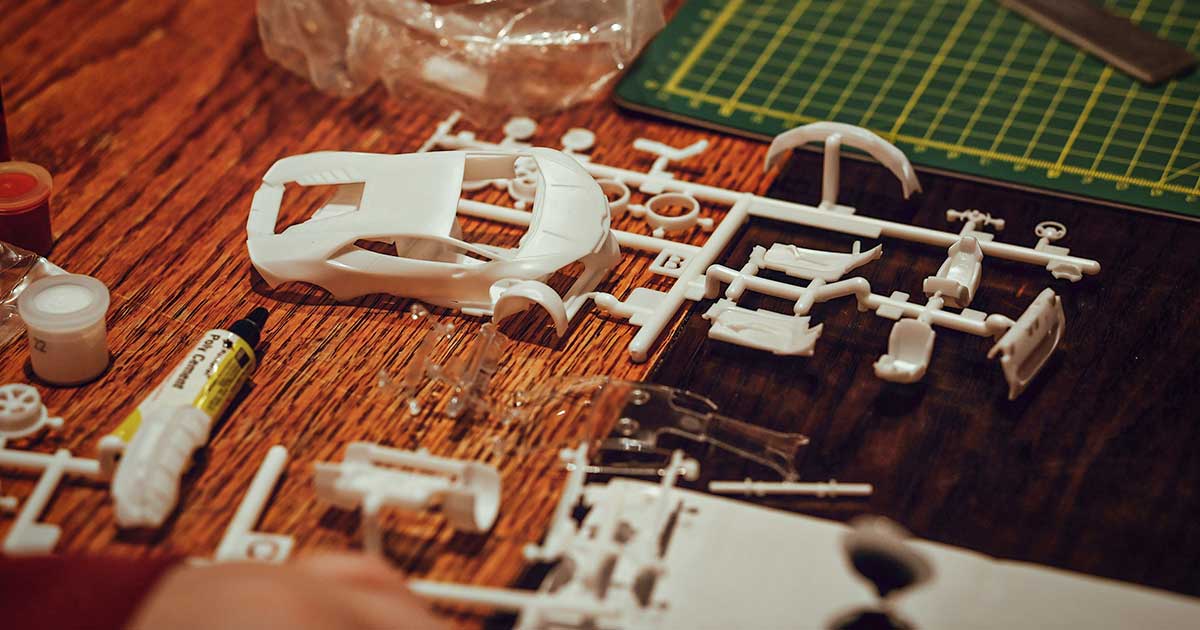
Every hobby journey starts here, doesn't it? You've just bought your first starter kit, and the kitchen table seems like the obvious workspace. After all, it's just one small project. You'll be done in an hour, two tops. Famous last words that every hobbyist has uttered before discovering that "quick build" is a lie manufacturers tell.
The Kitchen Table stage is characterized by constant setup and teardown. You become an expert at the ten-minute scramble when someone yells "dinner's ready!" Your glue hasn't dried, there are tiny decals everywhere, and somehow you've managed to spread paint across three placemats. You promise it won't happen again. It absolutely will happen again.
This stage teaches you valuable lessons though. You learn that hobby knives and good furniture don't mix. You discover that cats are magnetically attracted to any small parts you've carefully laid out. Most importantly, you realize that newspaper isn't actually that great at protecting surfaces - especially when thinners are involved.
The telltale signs you're in Stage 1? Your hobby supplies live in a shoebox. You use kitchen scissors instead of proper sprue cutters. Your painting water jar is whatever mug was in the cupboard (and yes, someone will accidentally drink from it). You're constantly apologizing for the mess, and every project begins with laying down protective covering that never quite protects enough.
![[SUGGESTED IMAGE: A kitchen table covered in newspaper with model parts, paint jars, and tools spread across it, showing the typical chaos of beginning hobbyists]](https://plus.unsplash.com/premium_photo-1677185249071-ded7c7107fb5?q=80&w=1170&auto=format&fit=crop&ixlib=rb-4.1.0&ixid=M3wxMjA3fDB8MHxwaG90by1wYWdlfHx8fGVufDB8fHx8fA%3D%3D)
Stage 2: The Portable Station Pioneer
Congratulations! You've survived enough dinner interruptions to justify buying a portable hobby station. Usually this means a plastic toolbox or craft caddy that theoretically contains everything you need. You've upgraded from kitchen scissors to actual model tools, and you own at least three different types of glue. Progress!
The Portable Station stage is marked by mobility and compromise. You can work anywhere - the kitchen table, the coffee table, even the back patio on nice days. Your brushes live in a converted pencil case, your paints are organized in a fishing tackle box, and you've discovered the joy of a proper self-healing cutting mat (that you religiously roll up after each session).
But here's where it gets tricky. Your collection is growing faster than your storage solution. That tackle box that seemed massive? It's now overflowing. You've got weathering powders mixed with spare parts, and finding anything requires archaeological excavation. You start leaving "just a few things" out permanently. The portable station isn't so portable anymore.
Stage 2 hobbyists can be identified by their impressive Tetris skills - fitting an entire workshop into a space the size of a briefcase. You've memorized which paint colors you own (because you can't see them all at once), and you've definitely bought duplicates of things you forgot you already had. The phrase "I'll just leave this here to dry" becomes your mantra.
The Portable Station Reality Check
You know you've outgrown the portable station when: Setting up takes longer than actual hobby time, you need multiple trips to carry everything, finding the right paint requires unpacking three containers, and you've started eyeing that unused corner of the room with intent.
Stage 3: The Corner Claim
This is where things get serious. You've negotiated for permanent space - maybe it's a corner of the spare bedroom, a section of the home office, or that awkward alcove nobody knew what to do with. You've got a dedicated desk (probably from IKEA), your first proper task lamp, and shelves that are already somehow full.
The Corner Claim represents commitment. You're no longer a casual hobbyist; you're someone who needs dedicated workspace. Your airbrush has a permanent home, your paint rack is displayed like a rainbow of possibility, and you've definitely spent more time organizing than actually building recently. But that's fine - organization is part of the hobby, right?
This stage brings new challenges though. Suddenly you're dealing with proper storage dilemmas. Those unbuilt kits need homes. Your growing collection of reference books needs shelving. And let's not discuss the "miscellaneous" drawer that contains everything from random sprues to that decal sheet from 2019 you're definitely going to use someday.
Stage 3 hobbyists have usually discovered online forums and YouTube tutorials, leading to tool acquisition syndrome. You now own specialized items like pin vices, panel line scribers, and at least one tool you're not entirely sure how to use but looked essential in that tutorial. Your workspace has personality - maybe some posters, definitely works-in-progress on display, and probably a graveyard of failed projects hidden in a box marked "maybe fixable."
Corner Claim Essentials
| Item | Why You Need It | What Actually Happens |
|---|---|---|
| Pegboard | Vertical tool storage | Becomes decoration when tools pile on desk anyway |
| Parts organizers | Sort small items | One labeled drawer, rest marked "misc" |
| Good lighting | See fine details | Reveals how messy everything really is |
| Paint rack | Easy color selection | Realize you own six identical greys |
Stage 4: The Spare Room Takeover
It starts innocently. "I'll just use this spare room for bigger projects." Six months later, there's a 4x8 train layout, three display cabinets, and what can only be described as a paint library. The bed that used to be in here? It's in the garage now. Priorities.
The Spare Room stage is where hobbies become lifestyles. You've got multiple work surfaces for different activities - one for assembly, another for painting, maybe a third for terrain building. Your airbrush station is permanent, complete with extraction fan. There's probably a mini-fridge in the corner because going to the kitchen interrupts the flow.
This is also when you discover infrastructure needs. Suddenly you're an expert on electrical loads because you're running multiple lamps, a compressor, maybe a Dremel, and wondering if you need a dedicated circuit. You've definitely spent a weekend installing better shelving, and you've had at least one argument about whether guests need a bedroom when they could just use the couch.
Stage 4 hobbyists have embraced their obsession. Your reference library rivals small bookshops. You've got project boxes labeled with cryptic codes only you understand. There's a whiteboard with a project queue that's honestly more fantasy than plan. And somewhere in this room is every tool you've ever bought, though finding specific ones remains challenging.
![[SUGGESTED IMAGE: A converted spare room showing multiple workstations, shelving units full of supplies, display cases, and obvious signs of a serious hobby space]](https://images.unsplash.com/photo-1741543616503-65d1de51d8c9?q=80&w=1170&auto=format&fit=crop&ixlib=rb-4.1.0&ixid=M3wxMjA3fDB8MHxwaG90by1wYWdlfHx8fGVufDB8fHx8fA%3D%3D)
Stage 5: The Garage Migration
When even a whole room isn't enough, hobbyists naturally gravitate toward the garage. It's perfect - concrete floors that don't mind spilled paint, no carpet to worry about, and space for those larger projects like RC car tracks or full railway layouts. Plus, you can use spray cans without fumigating the house.
The Garage Migration phase comes with unique challenges though. Temperature control becomes your nemesis - paint doesn't like freezing, plastic warps in heat, and your fingers don't work well in winter. You become obsessed with insulation, heating options, and whether that dehumidifier is really necessary (it is). Oh, and explaining why the car lives outside now? That's always fun.
But the freedom! You can run power tools at midnight, create dust clouds while sanding, and nobody complains about the smell of cement. Your workspace expands to fill available space - workbenches along every wall, overhead storage for kit boxes, and that corner dedicated to failed projects you'll "definitely fix someday."
Stage 5 hobbyists have usually gone semi-professional. Maybe you're doing commission work, selling at swap meets, or running a YouTube channel from your garage studio. You've got industrial shelving, proper ventilation, and more storage solutions than a small warehouse. The garage door opening has become your natural light source for photography, and yes, the neighbours think you're a bit odd.
Garage Pros
- ✓ Space for messy projects
- ✓ Concrete floors are forgiving
- ✓ Natural ventilation options
- ✓ Room for large layouts
- ✓ Power tool freedom
Garage Cons
- ✗ Temperature extremes
- ✗ Dust and debris issues
- ✗ Moisture concerns
- ✗ Car lives outside now
- ✗ Spouse may revolt
Stage 6: The Purpose-Built Paradise
The ultimate evolution - you're either building a shed, converting the loft, or (in extreme cases) adding an extension to the house. This isn't just a workspace; it's a temple to your hobby. Custom workbenches at the perfect height, built-in storage systems, dedicated zones for each activity, and probably better equipped than some professional workshops.
Purpose-built spaces are designed around workflow. Your airbrush booth has proper extraction venting outside. The paint storage is climate-controlled. There's a photography corner with permanent lighting setup. You've got a clean zone for electronics and a dirty zone for weathering. Everything has not just a place, but the perfect place.
At this stage, you've probably invested more in the workspace than your first car cost. There's a sound system for those long building sessions, a coffee station (because efficiency), and guest seating for when fellow hobbyists visit your shrine. You've definitely given tours, possibly made YouTube videos about your setup, and certainly made other hobbyists jealous.
The funny thing about reaching Stage 6? You still run out of space. That perfectly organized paradise gradually fills up. New hobbies creep in - suddenly you need room for 3D printing or laser cutting. The cycle begins again, just at a grander scale. But now you're planning Workspace 2.0 with the experience of someone who's been through the evolution.
The Psychology of Workspace Organization
Here's something nobody talks about - the mental game of workspace organization. We all start with the best intentions. Everything will be sorted, labeled, and returned to its proper place after use. Then reality hits, and you're searching through seventeen containers for that one tiny part you "definitely put somewhere safe."
The truth is, there are two types of hobbyists: the ones who maintain pristine workspaces and absolute liars. Even the most organized among us have that drawer of shame, that box of "I'll sort this later," or that pile of sprues we're keeping "for kitbashing" but never use. The psychology is fascinating - we buy organizers to feel in control, then immediately overwhelm them with stuff.
There's also the paralysis that comes with a too-perfect workspace. Some hobbyists spend so much time organizing that they never actually build anything. The workspace becomes the hobby. They've got the most beautiful tool wall that never sees use, pristine paint racks with unopened bottles, and kits displayed like museum pieces rather than projects.
Then there's the creative chaos crowd - those who insist they know exactly where everything is in their disaster zone. And surprisingly, they often do! Their workspace looks like a hobby shop exploded, but they can reach into the madness and pull out exactly what they need. Different brains, different systems, all valid approaches.
The Organization Paradox
The more storage solutions you buy, the more stuff you acquire to fill them. It's like the hobby equivalent of Parkinson's Law - hobby supplies expand to fill the space available for their storage. That's why even Stage 6 hobbyists with purpose-built workshops still complain about lack of space.
Common Workspace Evolution Mistakes
Let's talk about the mistakes we all make during this evolution. First up - buying furniture before understanding your actual needs. That fancy workbench looked perfect online, but it's the wrong height, too shallow, and those drawers don't fit any of your storage boxes. Measure twice, buy once should be every hobbyist's mantra.
Another classic error is underestimating growth rate. You think that 24-pot paint rack is plenty. Six months later, you've got paints balanced on paints, with overflow collections in three different boxes. Same with tool storage - that neat little organizer seemed massive until you discovered specialized tools exist for everything.
Lighting is where most of us fail spectacularly. We make do with that ancient desk lamp until our eyes practically scream for mercy. Proper lighting isn't just about seeing detail - it affects your posture, your accuracy, and how long you can comfortably work. Yet we'll spend hundreds on kits while squinting under a 40-watt bulb from 1987.
The biggest mistake though? Not involving your family in the planning. That spare room takeover might seem brilliant to you, but if you haven't negotiated it properly, you'll face guerrilla warfare every time you expand. Smart hobbyists make allies - maybe build something for the kids, create a gift for your partner, or at least keep the mess contained. Workspace evolution is as much about relationship management as it is about storage solutions.
Evolution Timeline Reality Check
| Stage | Expected Duration | Actual Duration |
|---|---|---|
| Kitchen Table | Few weeks | 6 months of denial |
| Portable Station | Permanent solution | 3 months before overflow |
| Corner Claim | Year or two | Already eyeing spare room |
| Spare Room | Forever | Until you need garage space |
Frequently Asked Questions
How do I convince my partner that I need dedicated hobby space?
Start small and prove you'll keep it organized (even if that's optimistic). Show how a dedicated space means less mess elsewhere - no more paint on the dining table or model parts in the living room. Emphasize it's cheaper than therapy and healthier than many other hobbies. Most importantly, offer something in return - maybe reorganize the garage while claiming your corner, or build something they've been wanting. The key is presenting it as improving the whole household, not just feeding your plastic addiction. And honestly? Set realistic boundaries and stick to them... initially.
What's the minimum investment for a proper hobby workspace?
You can create a functional workspace for around $200-300 if you're smart about it. Get a simple desk or table from marketplace ads, add a decent LED lamp (about $40), a cutting mat (around $30), and some basic storage containers from discount shops. The rest can grow organically. Don't blow your budget on furniture before you know what you actually need. That said, invest in good lighting and a comfortable chair early - your eyes and back will thank you. Everything else can be upgraded gradually as you figure out your workflow.
Should I go for permanent workspace or keep things portable?
If you're hobbying more than three times a week, permanent space will change your life. The setup/cleanup time with portable solutions kills momentum and limits what projects you'll tackle. However, if you're genuinely space-limited or only build occasionally, a well-organized portable setup beats a cramped permanent space. Consider a hybrid approach - permanent storage with a portable work surface. This way your tools and paints have homes, but you can still work wherever suits. Most hobbyists naturally evolve from portable to permanent as the addiction... er, passion grows.
How do I organize workspace when I have multiple hobbies?
Zone your space by activity rather than trying to create one universal workspace. Model building needs different setups than RC maintenance or miniature painting. Use modular storage that can shift between zones - rolling carts are brilliant for this. Keep common tools centralized but activity-specific items separated. Label everything obsessively because you'll forget which hobby those weird parts belong to. Accept that you'll need more space than single-hobby people, and maybe use that as justification for claiming the entire garage. Multiple hobbies means you're never bored, just perpetually out of storage space.
Final Thoughts
The evolution from kitchen table to dedicated hobby den isn't just about acquiring space - it's about acknowledging that this "temporary interest" has become a permanent part of your life. Each stage of workspace evolution represents deeper commitment to the hobby, greater investment in your skills, and usually, a growing collection that would horrify your past self.
What's beautiful about this journey is how universal it is. Whether you're into model trains, RC cars, miniatures, or scale models, we all follow remarkably similar paths. We all promise to keep it small, we all outgrow every storage solution, and we all eventually have that conversation about why we need "just a bit more space." It's almost like there should be a support group, except we'd probably just enable each other.
Remember, there's no "right" stage to be at. Some hobbyists are perfectly happy at the portable station level for decades. Others leap straight to garage takeover within months. Your workspace should match your commitment level, available resources, and family dynamics. The only real requirement? That it makes you want to create, build, and enjoy this wonderful, space-consuming, wallet-draining, absolutely brilliant hobby of ours.