 is here! Shop now, pay later in 4 easy installments


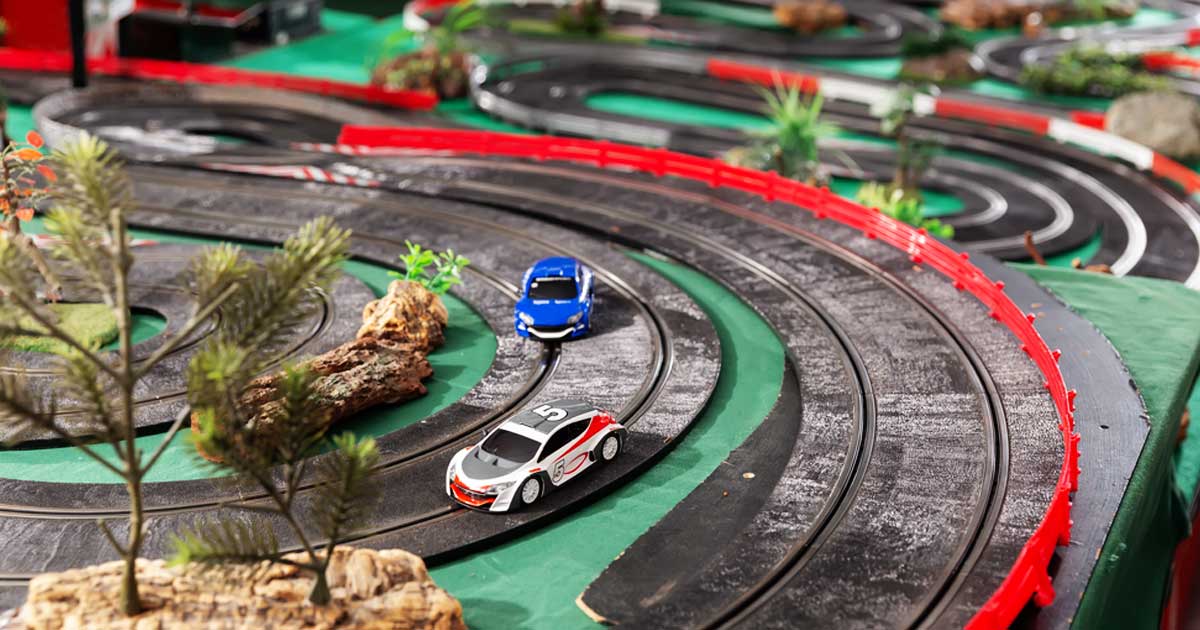
When Setting Up Takes Longer Than Racing: The Slot Car Truth Nobody Talks About
Right, let's talk about the elephant in the room - or rather, the partially assembled slot car track spread across your lounge floor for the third consecutive weekend. You bought that brilliant Scalextric set imagining thrilling races and epic overtakes. Instead, you've spent two hours trying to work out why Lane 2 has more dead spots than a teenager's mobile phone coverage.
We've seen it hundreds of times at Hearns Hobbies - someone walks in with that slightly defeated look, carrying a box of track pieces and asking if we've got "something that just bloody works." The truth? Setup time is the dirty secret of slot car racing that nobody warns you about. Those glossy product photos show gleaming Carrera cars zooming around perfect layouts, but they don't show the hour beforehand spent cleaning track connections and swearing at stubborn clips.
This isn't a complaint, honestly. Slot car racing is genuinely brilliant fun once you're actually racing. It's just that the hobby comes with an unwritten rule: for every ten minutes of high-speed thrills, you'll spend twenty minutes fiddling with track sections, checking power connections, and wondering why cars that worked perfectly last week now refuse to move. It's like owning a classic car - half the experience is the maintenance, whether you signed up for that or not.
So let's have an honest chat about setup time, why it takes longer than anyone expects, and more importantly, how to make the whole process less frustrating. Because yes, it's worth it when you finally nail that perfect lap, but getting there shouldn't feel like assembling flat-pack furniture without instructions.
Table of Contents
The Ten Minute Setup Myth
Product boxes are liars. Beautiful, glossy liars. That slot car set packaging promises "quick assembly" and "ready to race" - technically true in the same way climbing Everest is "just a walk." Sure, you CAN have the track assembled in ten minutes if you're an ex-Formula 1 pit crew member with supernatural patience and track pieces that somehow haven't developed attitude problems from being stored in the garage.
The reality? Your first setup of any Scalextric or Carrera track will take at least 45 minutes, possibly longer if you're attempting anything beyond a basic oval. That's assuming nothing goes wrong, which it will. One customer at Hearns confessed he spent three hours setting up his first track layout, only to discover he'd assembled it backwards and had to start again. The kids had given up and were playing Xbox by the time he finished.
Even experienced racers rarely get their tracks assembled in under 20-30 minutes for anything decent-sized. This isn't because they're slow - it's because proper setup means checking connections, ensuring track pieces sit level, securing power feeds, and testing for dead spots before anyone starts racing. Rush it, and you'll spend even longer troubleshooting problems mid-race when someone's car mysteriously stops on the back straight.
The thing is, manufacturers CAN'T really advertise "allows 45 minutes for assembly, possibly more if stored badly" on the box. Nobody would buy it. So we get "quick and easy setup" instead, which technically isn't wrong - it's just that "quick" and "easy" are relative terms. Compared to building your own model railway, slot car setup IS quick. Compared to actually racing? Not so much.
Reality Check: Setup Times
Advertised time: 10 minutes
First-time setup: 45-90 minutes
Experienced setup (temporary track): 20-30 minutes
Permanent track (initial build): Several hours to days
Permanent track (subsequent use): 5 minutes checking and cleaning
Why Setup Actually Takes Forever
Let's break down where all that time actually goes. First, there's the physical assembly - connecting dozens of track pieces together whilst maintaining some semblance of a sensible layout. Track pieces never want to connect as smoothly as they did in the shop, particularly if they've been stored for a while. The little metal tabs that carry power between sections develop minds of their own, bending slightly out of alignment or oxidising just enough to make good contact impossible.
Then there's the space problem. You've planned this beautiful layout in your head - sweeping curves, dramatic elevation changes, maybe even a bridge section if you're feeling fancy. Reality hits when you realise your lounge floor isn't quite as big as you remembered, and that coffee table needs moving, and actually the dog bed is right where the main straight should go. Suddenly you're redesigning the entire layout on the fly, which means disconnecting pieces you've already assembled and starting sections over.
Power distribution is another time-sink nobody warns you about. Most starter sets come with one powerbase, which is fine for small layouts but becomes problematic once you expand beyond about 15-20 feet of track. Power loss through metal-to-metal connections means the far end of your track runs slower than the sections near the powerbase. Fixing this means adding extra power taps, which means more connections to check and more potential failure points.
And here's something nobody tells beginners: track cleanliness matters way more than you'd think. Even brand new slot cars struggle on dusty rails. If your track's been in storage, those metal rails have oxidised slightly, creating invisible resistance that kills performance. You need to clean every single rail section before racing, which adds another 10-15 minutes minimum to your setup time. Skip this step and you'll spend even longer troubleshooting mysterious slowdowns during actual racing.
![[SUGGESTED IMAGE: Close-up of slot car track connections showing the metal tabs and rail connectors that need to align properly]](https://www.hearnshobbies.com/cdn/shop/files/f6cfa82e75.jpg?v=1735045971&width=1200)
The Track Connection Battle
Track connections are where setup time really gets eaten up. Each piece of track has metal tabs that slot into the next piece, creating both a physical connection and an electrical path for power. In theory, this is brilliant. In practice, it's where most problems start. Those tabs bend, corrode, accumulate grime, and generally make life difficult.
Modern Scalextric Sport track uses a different connection system than older Scalextric, which uses a different system than Carrera, which is completely incompatible with everything else. Mix track types (which people do when expanding collections), and you're in for a proper headache. We've had customers at Hearns trying to make incompatible track work together using increasingly creative solutions involving aluminium foil and electrical tape.
Curved sections are particularly problematic. The tighter the curve, the more stress on those connection tabs, and the more likely they are to lose proper contact. Six-inch radius curves - the tightest commonly available - are notorious for developing dead spots at the connections. Some manufacturers' curves come with rail depths that vary slightly between batches, meaning cars scrape on some sections and barely make contact on others.
The fix for dodgy connections? Taking the track apart, cleaning every single metal tab with an eraser or fine sandpaper, maybe bending them slightly back into alignment, then reconnecting everything and hoping it works better this time. This easily adds 20-30 minutes to setup, and you won't know you need to do it until AFTER you've assembled everything and discovered half the track has power issues. At which point you're too invested to pack it all away, so you soldier on, muttering darkly about engineering tolerances.
Common Connection Problems
| Problem | Cause | Time to Fix |
|---|---|---|
| Tabs won't connect | Bent from storage/use | 5 minutes per section |
| Intermittent power loss | Oxidised contacts | 15-20 minutes cleaning |
| Track won't stay together | Worn clips/catches | Potentially permanent problem |
| Lane imbalance | Poor contact one side | 30+ minutes troubleshooting |
Power Supply Mysteries
Ah, power issues - the gift that keeps on giving. Your slot car set comes with a powerbase unit that plugs into the wall and feeds electricity to the track. Simple enough, except slot car circuits are basically long, thin electrical circuits with multiple resistance points, and electricity behaves in ways that seem deliberately designed to frustrate hobbyists.
The basic physics: power enters at the powerbase and travels along the track rails through those metal connection tabs we just discussed. Every connection point adds a tiny bit of resistance. By the time power reaches the far end of a large layout - say 30 feet from the powerbase - voltage has dropped noticeably. Cars run slower, acceleration suffers, and one lane often ends up faster than the other due to slight variations in connection quality.
Professional tracks solve this with multiple power taps - additional feed points around the layout that inject fresh power at strategic locations. Home racers either don't know about this solution or can't be bothered implementing it because it means additional wiring, more connections to maintain, and potential for getting polarity wrong (which results in cars that run backwards in certain sections, trust us).
Then there's the powerbase itself. Most sets come with adequate power supplies for their included track, but expand that layout and you quickly exceed what the transformer can deliver. Cars slow down, particularly if both lanes are running simultaneously. The solution is upgrading to a higher-capacity power supply, but most people don't realise this is even an option until they've spent hours trying to work out why their expanded layout performs worse than the smaller original setup.
Power Supply Quick Checks
Before assuming track problems, verify your power supply is actually working:
• Check wall plug is switched on (yes, really)
• Inspect powerbase connections for corrosion
• Test with a multimeter if available (should show ~12-18V DC)
• Try swapping controllers between lanes
• Look for indicator lights on the powerbase unit
These five checks take two minutes and solve about 30% of "my track won't work" problems.
The Dreaded Dead Spots
Right, so you've assembled your track, checked connections, confirmed the power supply works, and finally placed your gleaming slot car on the circuit for its maiden lap. You squeeze the controller trigger. The car zooms forward magnificently for about three feet, then stops dead as if hitting an invisible wall. Welcome to dead spots, the bane of every slot car enthusiast's existence.
Dead spots are sections of track where electrical contact fails completely or becomes so poor that cars stall. They're caused by oxidised rails, misaligned connections, debris in the slot, bent pickup shoes on the cars themselves, or sometimes just because the slot car gods are having a laugh at your expense. The frustrating bit? Dead spots often appear in sections that worked perfectly fine last week, as if they've developed spontaneously overnight.
Finding dead spots means running cars slowly around the entire circuit, noting exactly where they stall, then methodically checking those specific track sections. This takes ages because you need to test both lanes separately (dead spots often affect just one lane), and you can't just drive fast and hope - you need to creep around slowly enough to catch every problem section. For a decent-sized layout, this testing process easily adds 15-20 minutes to setup.
Fixing dead spots involves cleaning the rails in problem areas, checking and improving connections to adjacent track pieces, ensuring the track sits properly flat (elevation changes can cause pickup shoe contact issues), and sometimes just cursing until you feel better. One trick racers use: marking problem sections with tape so you know which bits to focus on during your next setup. It doesn't fix the issues, but at least you waste less time rediscovering them.
![[SUGGESTED IMAGE: A slot car stopped on a track section, demonstrating the frustration of a dead spot, with cleaning supplies and tools visible nearby]](https://www.hearnshobbies.com/cdn/shop/files/c4510_1.jpg?v=1735048563&width=1200)
Temporary vs Permanent Tracks: The Trade-Off
Here's where we get to the heart of the setup time issue - are you building a temporary track that gets assembled and dismantled regularly, or a permanent installation that stays put? Each approach has massive implications for how much time you'll spend on setup.
Temporary tracks - the ones you assemble on the lounge floor for weekend racing then pack away before Monday - are what most people start with. They're flexible, require no dedicated space, and let you try different layouts. The downside? You're repeating the entire assembly process every single time you want to race. Track pieces get bent from storage. Connections loosen. Rails oxidise between sessions. What took 30 minutes to set up the first time takes 45 minutes the next because you're fixing problems that developed whilst everything was packed away.
Permanent tracks, mounted on boards or tables, eliminate most of this repeated assembly time. Once built, they're ready to race within minutes - just a quick dust-off and connection check. The initial investment is substantial though. You need dedicated space, materials for a base (plywood, carpet, barriers), time to build it properly (we're talking hours or days, not minutes), and commitment that this layout is staying put. Plus, permanent tracks can't easily change configuration, so you're stuck with your design choices.
The middle ground - semi-permanent tracks - involves building sections on portable boards that bolt together. You get some flexibility whilst reducing setup time compared to floor-based temporary circuits. Multiple people at Hearns have built 4x8 foot board sections that fit in their garages or spare rooms, with the track semi-permanently mounted to carpet-covered plywood. They store the boards vertically when not in use, then connect them for race days. Setup time: 10-15 minutes vs. 30-45 for fully temporary tracks.
The real question is what you value more - flexibility or convenience. Temporary tracks let you experiment with layouts and reclaim your space when needed. Permanent tracks save hours of setup time over the long run but demand dedicated space and upfront effort. Most experienced racers eventually go permanent once they're sure they're committed to the hobby, simply because setup time becomes the main barrier to actually racing.
Temporary Track Reality
- Setup time: 30-60 minutes each session
- Storage between uses damages track
- Connections degrade faster from repeated assembly
- Layout can change each time
- No dedicated space required
Permanent Track Reality
- Initial build: 8-40 hours
- Subsequent setup: 5-10 minutes
- Much better reliability
- Fixed layout forever
- Requires dedicated space
Making Setup Faster: Practical Solutions
Alright, enough complaining about the problem - let's talk solutions. You can't eliminate setup time entirely (unless you go fully permanent), but you can definitely reduce it with some smart approaches. First up: invest in proper storage. Track pieces stored loose in a box will bend, tangle, and generally misbehave. Get some storage bags or containers designed for slot car track, or at minimum sort pieces by type in separate boxes.
Mark your track sections with tape or labels indicating which parts of your usual layout they belong to. Sounds obsessive, but it saves heaps of time when you're not trying to remember which curve goes where. Some racers number their pieces and keep a simple diagram showing the assembly order. Fifteen minutes of initial organisation saves hours over multiple setups.
Keep a dedicated setup kit with all your track maintenance tools together: track eraser or fine sandpaper, spare clips, electrical tape, a multimeter if you're technical, and a small screwdriver. Having everything in one box means you're not hunting through the garage for tools mid-setup. Chuck in some cable ties or clips for securing any loose wiring, and maybe a small brush for sweeping debris from the slot.
Clean as you assemble, not after. When connecting each section, give the rails a quick wipe. It adds a few seconds per piece but eliminates the need for a separate 15-minute cleaning session after everything's together. For permanent tracks, weekly dusting prevents the massive cleaning sessions that would otherwise be needed. Prevention is faster than cure, even in slot car racing.
Consider standardising on one layout that works well and stick with it for a while rather than constantly changing designs. The tenth time you build the same circuit, you'll have it down to 15 minutes because you know exactly which pieces go where, which connections are troublesome, and where power loss typically occurs. Variety is nice, but consistency dramatically reduces setup time.
Setup Time Reduction Checklist
Before you start:
• Gather all track pieces and sort by type
• Assemble your tool kit in one location
• Clear adequate floor space (more than you think you need)
During assembly:
• Wipe rails as you connect pieces
• Test electrical connections after every 4-5 pieces
• Keep a diagram or photo of your layout handy
After racing:
• Label problem sections for next time
• Store track pieces properly, not just chucked in a box
• Make notes about what worked and what didn't
When Racing Finally Happens: Was It Worth It?
![[SUGGESTED IMAGE: Two slot cars racing side-by-side on a beautifully set up track, capturing the excitement that makes the setup time worthwhile]](https://www.hearnshobbies.com/cdn/shop/products/c4239_1_james-bond-007-tld-aston-martin-v8_render.jpg?v=1722265959&width=1200)
So you've invested 45 minutes (or three hours, depending on how things went) getting your slot car track assembled, tested, and actually working. The cars are on the grid, controllers in hand, and you're finally ready to race. The question everyone eventually asks: is all that setup time actually worth it?
Honestly? Yeah, it really is. Once you're racing, slot cars deliver thrills that few hobbies can match. The satisfaction of nailing a perfect lap, the tension of wheel-to-wheel battles in tight corners, the joy of gradually improving your times as you learn the circuit - all of it justifies the setup hassle. It's like spending ages preparing for a camping trip; the packing is tedious, but the actual camping makes it worthwhile.
The setup-to-racing ratio improves dramatically over time too. Your first session might be 90 minutes setup for 30 minutes racing, which feels rubbish. But by the fifth session, you're down to 25 minutes setup for an hour of racing, which is much more reasonable. Permanent tracks flip this entirely - five minutes setup for unlimited racing time. The initial pain lessens with experience and proper planning.
Plus, there's something satisfying about the setup process itself once you stop fighting it and accept it as part of the hobby. Working out electrical issues develops problem-solving skills. Fine-tuning track connections teaches patience and attention to detail. Even cleaning rails becomes meditative after a while (okay, that might be a stretch). The point is, setup isn't wasted time - it's part of the complete slot car experience.
And here's the thing nobody mentions: the setup phase builds anticipation. By the time you've invested an hour getting everything perfect, you're properly excited to race. That first lap after all the preparation feels earned. It's not instant gratification like video games - it's delayed gratification, which arguably feels better when it arrives. Your brain has time to get properly hyped whilst your hands are busy connecting track pieces.
Frequently Asked Questions
How long should it realistically take to set up a slot car track?
For a basic starter set with simple oval layout, expect 20-30 minutes if everything cooperates. Larger layouts with multiple sections can easily take 45-60 minutes, particularly if you encounter connection or power issues. Your first setup will always take longest - subsequent assemblies of the same layout get progressively faster as you learn which pieces go where and which connections need special attention. Permanent tracks reduce this to 5-10 minutes for pre-race checks and cleaning.
Why do some track sections work perfectly sometimes but have dead spots other times?
Track connections are sensitive to environmental conditions and handling. Temperature and humidity affect how plastic track expands and contracts, which can alter how well metal tabs align. Dust and oxidation build up on rails between uses. Even just moving track pieces around can slightly bend connection tabs out of alignment. This is why regular cleaning and proper storage matter - you're fighting against natural deterioration processes. Some racers keep their most reliable track sections for critical parts of the layout like power feed areas and tight corners.
Is it worth building a permanent track table, or should I stick with temporary floor setups?
This depends entirely on your space situation and commitment level. If you have a spare room, garage space, or even a large cupboard where a board can live, permanent tracks save enormous amounts of time over months and years. The initial build takes serious effort - expect a full weekend at minimum for a proper job - but subsequent setups drop to minutes rather than hours. However, if space is limited or you're still experimenting with layouts and scale preferences, temporary tracks offer flexibility that permanent installations can't match. Many experienced racers recommend starting temporary and going permanent once you're certain about the hobby and your preferred layout style.
My track worked fine last month but now cars keep stopping - what changed?
The most common culprits are oxidation on metal rails and connections, dust accumulation in the slot, and degraded pickup shoes on your cars. Even in storage, metal components oxidise and contacts degrade. The solution is systematic cleaning: wipe all rails with a track eraser or fine cloth, check every connection point, and inspect your cars' pickup shoes for wear or dirt buildup. Sometimes the power supply itself develops issues - test with a multimeter if you've got one. Track that sits unused for weeks needs more thorough prep before racing than track used regularly, just like any mechanical system.
Final Thoughts: Embracing the Setup
Look, nobody's going to pretend that spending 45 minutes assembling track pieces is as fun as actually racing. It's not. Setup time is the tax we pay for the privilege of running miniature race cars around our homes at ridiculous speeds. But here's what three decades at Hearns Hobbies has taught us: the customers who stick with slot car racing are the ones who make peace with setup time rather than fighting against it.
Think of setup as part of the complete hobby experience rather than an obstacle to it. The preparation builds anticipation. The problem-solving develops skills. The satisfaction of finally getting everything working perfectly creates a sense of achievement that instant-play hobbies can't deliver. Yes, it's frustrating when connections won't cooperate or dead spots appear in sections that worked fine last week. But overcoming these challenges is what transforms casual dabbling into genuine hobby engagement.
The setup time issue also creates a lovely side effect - it forces you to commit to racing sessions. You're not going to invest an hour setting up track for a ten-minute blast then pack it all away. Once assembled, you're racing for a proper session, which means better value from your time investment and more opportunities to improve your skills and enjoy the hobby properly. In a world of instant gratification, there's something quite nice about activities that demand patience and preparation before delivering their rewards.