 is here! Shop now, pay later in 4 easy installments


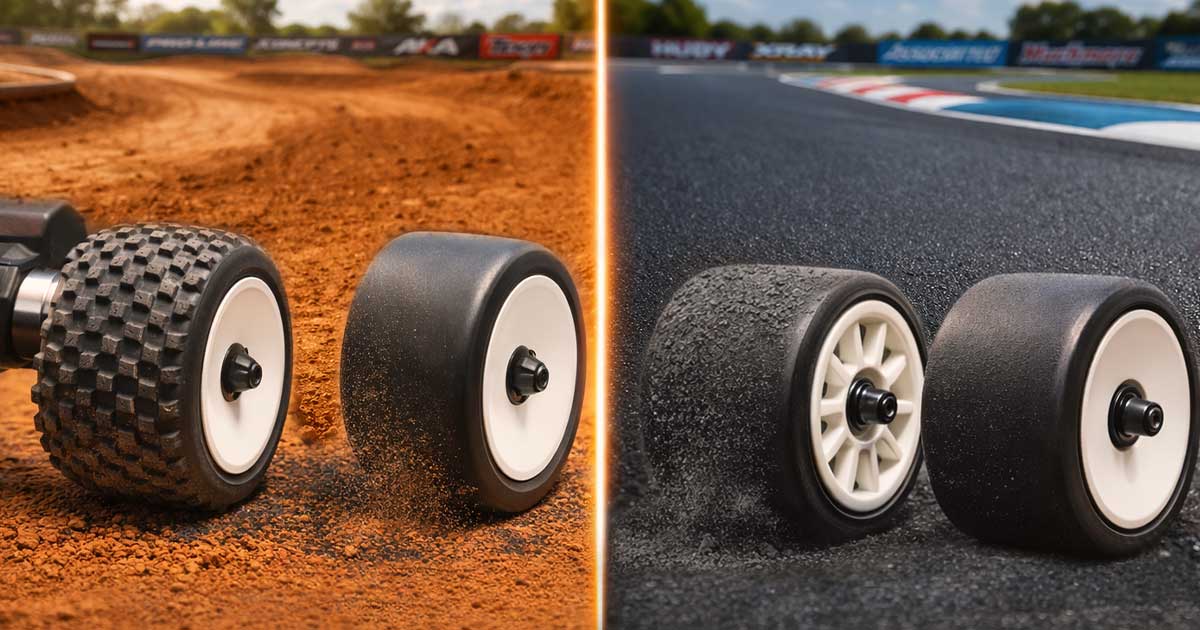
On-Road vs Off-Road Tyre Sanding Explained
In our previous guide, we explored whether RC racers sand their tyres smooth and when it can actually improve traction.
But sanding tyres isn’t a one-size-fits-all technique.
In fact, on-road and off-road RC tyres are sanded for completely different reasons. The tyres themselves are different, the track surfaces are different, and the performance goals are different too.
In this follow-up guide, we’ll explain:
-
How off-road racers sand tyres
-
Why on-road racers regularly true their tyres
-
The tools used in both setups
-
The key differences between the two approaches
Understanding these techniques can help you get better grip, more consistent handling, and longer tyre life from your RC car.
Table of Contents
Sanding Off-Road RC Tyres


Off-road tyre sanding usually involves modifying the tread pattern, not changing the tyre diameter.
On high-grip clay tracks, aggressive tread patterns such as thread tyres can sometimes generate too much bite. This can make the car feel edgy or inconsistent through corners.
Some racers solve this by sanding the threads down to create a smoother tyre surface.
This technique:
-
Reduces aggressive tread
-
Creates a more consistent contact patch
-
Replicates the behaviour of slick tyres
-
Helps worn tyres last longer during practice
Before modern clay tyres became common, racers often bought thread tyres and sanded them down to create homemade slicks.
Today, many manufacturers offer tyres designed specifically for clay racing. Brands commonly used include:
-
Pro-Line Racing
-
JConcepts
-
AKA Racing
-
Sweep Racing
These RC tyres are designed with the correct compound and tread profile for clay tracks, reducing the need to modify them.
Sanding On-Road RC Tyres


On-road tyre sanding is very different.
Instead of changing tread patterns, racers sand tyres to remove centre bead when new and remove graining after running. By removing tyre graining you are giving a fresh surface and maximum contact patch.
On-road racers often true tyres to:
-
Remove centre bead created from the moulding process
-
Remove any contaminates from the curing process
-
Restore contact patch by removing graining, after every run.
-
Maintain consistent lap time.
Key Differences Between On-Road and Off-Road Tyre Sanding
| Feature | Off-Road Tyres | On-Road Tyres |
|---|---|---|
| Main Purpose | Reduce or modify the behaviour of the tyres. | Restore contact patch |
| Track Surface | Dirt, clay, gravel | Asphalt, carpet |
| Tyre Type | Rubber tyre with pattern | rubber slicks, or treaded |
| Frequency | Occasional | When new and after every run |
| Tools Used | Power drill & Abrasive | Tyre sander and abrasive |
In simple terms:
-
Off-road sanding changes the tread
-
On-road sanding restores contact patch
Tools Used for RC Tyre Sanding
The most common tool used for tyre sanding is a tyre sander.
A tyre sander spins the tyre while sanding it evenly, allowing racers to precisely control tyre speed to get the surface result they require
Benefits of using a tyre sander include:
-
Checking buckled wheel
-
Prepping tyre from new
-
Improve contact patch
-
Increased on track performance
Serious racers almost always rely on tyre sanders for maximum performance.
Watch: RC Tyre Setup Tips from Hearns Hobbies
RC Tyre Compounds Guide – Grip, Speed & Control | Hearns Hobbies
Hearns Hobbies explains that tyre compound and surface matching are critical for performance, often making a bigger difference than motor upgrades or suspension tuning.
Understanding the relationship between tyre compound, surface, and preparation can dramatically improve lap times and overall driving control.
Frequently Asked Questions
Is sanding RC tyres common in racing?
Yes, especially in on-road racing. Many racers sand tyres regularly using tyre truers to maintain consistent tyre diameter and performance.
Can sanding off-road tyres improve grip?
Sometimes. On high-traction clay tracks, sanding down thread can create a smoother tyre surface that produces more consistent grip and reduce traction rolling.
Do professional RC racers sand tyres?
Yes. On-road racers often true tyres before races, while off-road racers may sand tyres when experimenting with setups or preparing slick-style tyres.
What tool is used to sand RC tyres?
Most racers use a tyre truer, which spins the tyre while sanding it evenly. This ensures the tyre stays balanced and round.
Can sanding tyres extend their life?
Yes, in some cases. Sanding worn tyres can smooth uneven surfaces and make them usable for additional practice runs.
What tyres are best for off-road racing?
For off-road racing, tyres with spike tread patterns are typically used to provide traction on loose dirt and clay surfaces.
What tyres are best for on-road racing?
On-road racers typically use slick rubber tyres or treaded tyres designed for asphalt or carpet tracks.
Final Thoughts
Tyre setup is one of the most important performance factors in RC racing.
While sanding tyres might seem like a simple trick, it serves two completely different purposes depending on the type of RC car you're running.
Understanding the difference between on-road tyre sanding and off-road tread modification can help you:
-
Improve traction
-
Fine-tune handling
-
Extend tyre life
-
Gain more consistent lap times
And like most things in RC racing, the best way to learn is to experiment and see what works best for your local track conditions.