 is here! Shop now, pay later in 4 easy installments


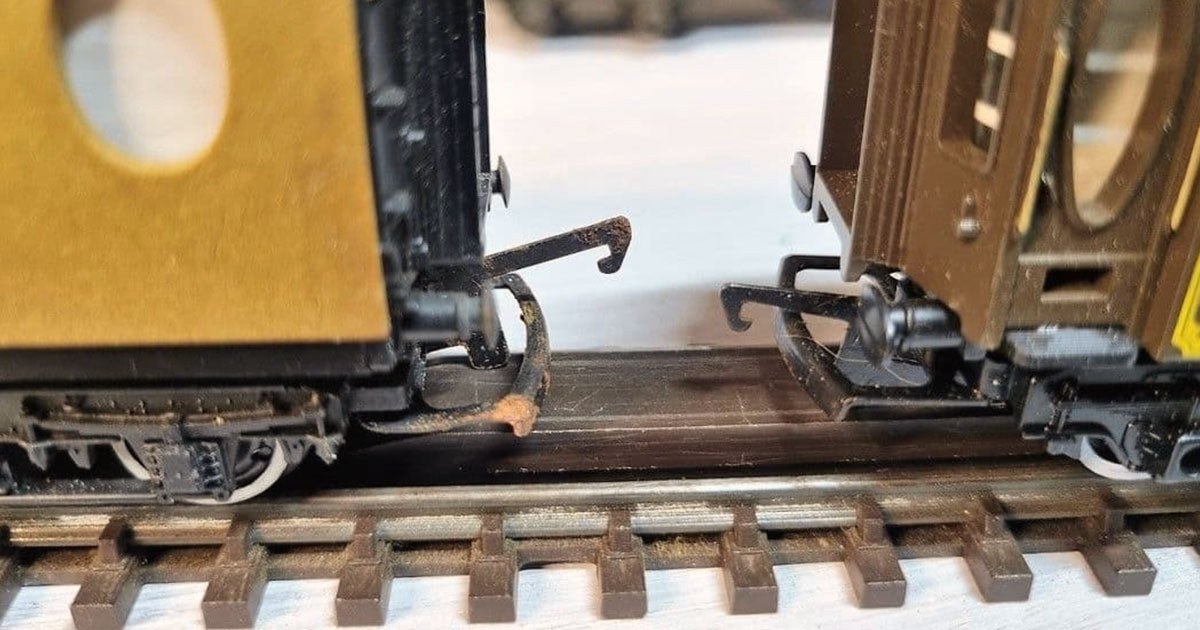
What Makes Model Train Couplers Randomly Uncouple
There's nothing quite as frustrating as watching your perfectly assembled freight train suddenly separate mid-journey. One moment your HO scale locomotive is hauling a consist smoothly around the layout, and the next, half your wagons are stranded on the mainline while the engine carries on oblivious.
Random uncoupling plagues model railways of all scales and eras. We see it happen with everything from vintage Hornby sets to state-of-the-art DCC layouts. The good news? Most uncoupling issues stem from a handful of common causes that, once identified, are relatively straightforward to fix.
At Hearns Hobbies, we've helped countless modellers solve their coupling woes over the years. Sometimes it's a simple height adjustment, other times it requires a bit more detective work. But here's the thing - random uncoupling isn't actually random at all. There's always a reason, and understanding these reasons transforms a frustrating mystery into a solvable problem.
Whether you're running N scale or OO gauge, the physics of coupling remain surprisingly consistent. Today we'll dig into what actually causes these separations, how to diagnose the specific issues on your layout, and most importantly, how to fix them for good. Because let's face it - model railways should be about enjoying the hobby, not constantly reconnecting wagons.
Table of Contents
Understanding Model Train Coupler Types
Before we can fix coupling problems, we need to understand what we're working with. Model train couplers have evolved significantly over the decades, and each type brings its own quirks and potential failure points. Knowing your coupler type helps narrow down the likely culprits when things go wrong.
The traditional horn-hook coupler (often called the NMRA coupler) dominated the hobby for decades. These simple devices work through a basic hook-and-loop mechanism. While reliable when properly adjusted, they're prone to accidental uncoupling when trains reverse direction or encounter any vertical movement. Many older train sets still use these, and mixing them with modern couplers often creates compatibility headaches.
Kadee-style knuckle couplers revolutionised model railroading by mimicking prototype operations. These magnetic couplers offer realistic appearance and remote uncoupling capabilities. However, their more complex mechanism means more potential failure points. Spring tension, trip pin height, and magnetic sensitivity all need to be just right. When they work, they're brilliant - but when they don't, diagnosis requires methodical checking.
European modellers often encounter different systems entirely. Peco and Bachmann use various proprietary designs, while many continental manufacturers favour close-coupling mechanisms. These systems prioritise appearance over operation, using shorter coupling distances that look great but can cause issues on tighter curves. Understanding your specific system's limitations helps set realistic expectations.
![[SUGGESTED IMAGE: Comparison photo showing different coupler types - horn-hook, knuckle, and European close-coupling systems side by side]](https://www.hearnshobbies.com/cdn/shop/products/36-053_d33df0f5-ba1e-4576-9c14-a1bc76412359.jpg?v=1744320331&width=700)
Track-Related Uncoupling Issues
Your track forms the foundation of reliable operations, and even minor imperfections can trigger uncoupling. We often find modellers blaming their couplers when the real culprit lies in the trackwork. Understanding how track problems cause uncoupling helps target your troubleshooting efforts effectively.
Vertical misalignments rank among the most common causes. When rail joints don't align perfectly, the resulting bump lifts couplers momentarily. This vertical movement can disengage even well-adjusted couplers, especially with longer trains where the effect compounds. Check your track joints with a straight edge - even a millimetre's difference can cause problems.
Horizontal kinks create different issues. These often occur where track sections meet at slight angles rather than flowing smoothly. As couplers navigate these kinks, lateral forces can overcome the coupling mechanism. Flexible track proves particularly susceptible, especially when secured too tightly to the baseboard. Sometimes loosening and realigning a section solves chronic uncoupling that's plagued a spot for months.
Grade transitions deserve special attention. Where level track meets an incline, the change in angle creates vertical forces on couplers. The sharper the transition, the more likely uncoupling becomes. Professional layouts use vertical easements - gradual transitions that spread the grade change over a longer distance. Even on smaller layouts, smoothing these transitions with careful ballasting and track laying prevents many problems.
Quick Track Test
Run a single wagon slowly through suspected problem areas. Watch the couplers closely - any visible lifting, twisting, or lateral movement indicates track issues. Mark these spots with small pieces of tape for systematic correction.
Mechanical Coupler Problems
Even perfect track won't help if the couplers themselves have issues. Mechanical problems range from simple wear to manufacturing defects, and each requires a different approach. Let's explore the most common mechanical failures we encounter.
Height mismatches cause more uncoupling than any other mechanical issue. When couplers don't align vertically, they're fighting physics with every curve and grade change. The NMRA sets standards for coupler height, but manufacturing tolerances mean not every model meets them perfectly. A simple height gauge becomes invaluable here - checking and adjusting each vehicle prevents countless headaches.
Spring tension in knuckle couplers needs that Goldilocks touch - not too tight, not too loose. Weak springs allow couplers to open under train dynamics, while overly strong springs prevent proper coupling in the first place. Age affects spring tension too. Those decade-old wagons might couple fine when stationary but separate under load. Sometimes a tiny drop of light oil rejuvenates sticky mechanisms, though replacement often proves more reliable.
Worn or damaged coupling faces create subtle but persistent problems. Look closely at where couplers actually touch - worn spots, chips, or deformation prevent solid engagement. This wear accelerates with heavy use, particularly on frequently coupled vehicles like your favourite shunting wagons. Filing can sometimes restore the profile, but replacement usually provides better long-term results.
Trip pin adjustment on magnetic couplers requires precision. These pins should clear the rails by about the thickness of a business card. Too low and they snag on track features; too high and magnetic uncoupling fails. But here's what many don't realise - bent trip pins cause random uncoupling too. Even slight angles can catch on ballast or track joints. A pair of smooth-jaw pliers and patience usually straightens things out.
![[SUGGESTED IMAGE: Close-up photo showing proper coupler height alignment using an NMRA gauge, with one coupler clearly too high or low for comparison]](https://www.hearnshobbies.com/cdn/shop/products/00156.jpg?v=1744321966&width=1000)
Weight Distribution and Train Dynamics
Here's something that surprises many modellers - weight distribution affects coupling reliability just as much as the couplers themselves. The physics of model trains differs from their full-size counterparts, and understanding these differences helps prevent uncoupling.
Light wagons prove especially problematic. Without sufficient weight, they bounce and skip over track imperfections, lifting couplers out of engagement. The NMRA recommends specific weights based on wagon length, but in practice, adding weight until smooth running occurs works well. Small lead weights or even coins secured inside wagons transform their tracking.
Weight placement matters too. Centre-weighted wagons might meet weight standards but still rock excessively. Distributing weight over the vehicle's length, particularly near the ends, stabilises coupling. This becomes critical with longer wagons like passenger carriages where the leverage effect amplifies any rocking motion.
Train makeup influences coupling reliability more than most realise. Placing heavy wagons at the front with lighter ones trailing creates a whiplash effect around curves. The heavy wagons want to straighten while lighter ones get pulled sideways, stressing couplers beyond their design limits. Mixed freight trains benefit from thoughtful arrangement - interspersing weights throughout the consist reduces these forces.
Buffer lock on close-coupled stock presents unique challenges. When buffers override on tight curves, they can lift one vehicle relative to its neighbour, disengaging couplers. European outline modellers know this frustration well. Sometimes slightly lengthening couplers or adjusting buffer springs solves it, though avoiding minimum radius curves with close-coupled stock remains the best prevention.
Optimal Weight Guidelines
| Scale | Base Weight | Per Inch/CM |
|---|---|---|
| N Scale | 10g | +2.5g per inch |
| HO/OO | 30g | +15g per inch |
| O Scale | 140g | +30g per inch |
Operational Factors
Sometimes the way we operate our trains creates uncoupling issues. Speed, acceleration, and handling all play roles in coupling reliability. Understanding these operational factors helps you run trains that stay together.
Sudden speed changes stress couplers tremendously. When you slam the throttle open, the locomotive lurches forward while wagons resist through inertia. This creates massive tension that can overcome marginal couplers. Modern DCC controllers with momentum settings help here, smoothing acceleration to prototypical rates. But even with older DC controls, gradual throttle movements prevent most operation-induced uncoupling.
Backing movements (propelling trains) create unique challenges. Couplers designed primarily for tension sometimes struggle under compression. Buffers help on British outline stock, but North American equipment lacks this protection. Light touch becomes essential - creeping rather than shoving prevents buckling that leads to uncoupling. Some operators add weight to the leading vehicle when propelling to improve tracking.
Curve negotiation at speed multiplies forces on couplers. As trains enter curves, drag increases dramatically, especially with longer consists. The lead vehicles slow while trailing ones maintain momentum, creating compression waves through the train. These forces peak with S-curves where the train simultaneously experiences opposing lateral forces. Realistic speeds through curves prevent many mysterious uncouplings.
Temperature changes affect coupling reliability too. In the Australian climate, layouts in sheds or garages experience significant temperature swings. Plastic expands and contracts, potentially altering coupler engagement. Metal couplers prove more stable but can still bind when tolerance stack-up coincides with temperature extremes. Climate control helps, but understanding these effects prevents surprise failures during heatwaves.
![[SUGGESTED IMAGE: Model train navigating an S-curve on a layout, demonstrating the lateral forces and compression that can cause coupling issues]](https://www.hearnshobbies.com/cdn/shop/files/20089481_3_1051x700_be2397ee-297a-4965-a2d7-f17821236e7e.jpg?v=1751942224&width=1000)
Systematic Diagnostic Process
Finding the cause of random uncoupling requires methodical investigation. Throwing parts at the problem rarely works - systematic diagnosis identifies root causes efficiently. Here's the process we recommend to modellers struggling with persistent uncoupling.
Start with isolation testing. Run problem wagons individually, then in pairs, gradually building consists until uncoupling occurs. This identifies whether specific vehicles cause issues or if problems emerge only in certain combinations. Keep notes - patterns often emerge that aren't obvious during casual observation. That problematic goods wagon might only uncouple when coupled to specific other vehicles.
Location mapping proves invaluable. When uncoupling occurs, mark the exact spot with removable tape. After several running sessions, patterns emerge. Multiple uncouplings at the same location indicate track issues, while random locations suggest rolling stock problems. Some modellers create layout maps marking chronic problem areas, helping focus maintenance efforts.
Speed testing reveals operational factors. Run the same consist at various speeds through problem areas. If uncoupling only occurs above certain speeds, forces and dynamics are likely culprits. Conversely, very slow speed uncoupling often indicates mechanical binding or height mismatches that become apparent only under minimal draft forces.
The substitution method helps identify specific problem vehicles. Replace suspected wagons with known good ones, testing systematically. If problems persist, look elsewhere. If they disappear, you've found your culprit. This method works particularly well when diagnosing whether old rolling stock needs coupler upgrades.
Diagnostic Checklist
- ☐ Check coupler heights with gauge
- ☐ Test spring tension and movement
- ☐ Inspect track at problem locations
- ☐ Verify wagon weights
- ☐ Run speed variation tests
- ☐ Document patterns and locations
Fixing Common Coupling Issues
Once you've diagnosed the problem, fixing it becomes straightforward. Most solutions require basic tools and materials available from any hobby shop. Let's work through the most effective fixes for common coupling issues.
Height adjustment solves a huge percentage of problems. Coupler mounting boxes often include shims for fine adjustment. Adding thin washers between the coupler box and wagon floor raises couplers, while filing the mounting post lowers them. For quicker fixes, adjustable coupler boxes let you dial in perfect height. The investment pays off quickly in reduced frustration.
Spring replacement rejuvenates tired couplers. Knuckle coupler springs weaken over time, especially on frequently used vehicles. Replacement spring sets cost very little but transform coupling reliability. When installing new springs, a tiny dab of plastic-compatible grease on pivot points ensures smooth operation for years. Some modellers upgrade to phosphor bronze springs for longer life.
Track fixes often require patience but deliver lasting results. For joint problems, ensure rail joiners grip tightly and rails align perfectly. Filing rail ends square and using fresh joiners helps. At problem joints, soldering rails to coppper sleepers creates bulletproof connections. For kinks, sometimes lifting and relaying a section works better than trying to adjust in place.
Weight addition transforms light vehicles. Lead shot, tungsten putty, or purpose-made weights all work well. Secure weights properly - nothing causes problems faster than loose weight shifting during operation. For smaller scales, tungsten provides maximum weight in minimal space. Hide weights under loads or inside vehicle bodies to maintain appearance.
Quick Fixes
- • Adjust trip pins with pliers
- • Add washers for height
- • Clean coupling faces
- • Lubricate pivots lightly
Permanent Solutions
- • Replace worn couplers
- • Upgrade to metal wheels
- • Properly weight all stock
- • Fix track geometry
Long-Term Prevention Strategies
Preventing future uncoupling issues proves far easier than constantly fixing them. Establishing good practices from the start saves countless hours of frustration. These strategies help maintain reliable coupling throughout your layout's life.
Regular maintenance schedules catch problems before they cause operational issues. Monthly visual inspections of frequently used stock identify wear early. Check coupler height, spring tension, and trip pin clearance. Clean coupling faces with isopropyl alcohol to remove dirt and oxidation. This routine takes minutes but prevents most gradual degradation issues.
Standardisation simplifies everything. Choose one coupler system and stick with it across your fleet. Converting everything to compatible couplers eliminates mixing issues. Yes, conversion requires effort upfront, but the operational reliability gained justifies the work. Many clubs mandate specific coupler types for exactly this reason.
Track maintenance deserves equal attention. Regular track cleaning maintains good electrical contact, but also check physical alignment. Temperature changes and layout settling can create new problem spots over time. Annual surveys with a straight edge and track gauge identify developing issues before they affect operations. Document any adjustments for future reference.
Operational discipline prevents many issues. Establish realistic speed limits for different track sections. Use momentum settings on DCC systems or practice smooth throttle control with DC. When switching, move slowly and steadily. These practices not only prevent uncoupling but create more realistic operations that enhance the hobby experience overall.
Documentation helps long-term reliability. Keep records of which vehicles couple well together and which combinations prove problematic. Note any modifications made to specific wagons. This information proves invaluable when problems resurface or when adding new stock to the fleet. Some modellers maintain spreadsheets tracking coupler types, weights, and modification history for each vehicle.
Frequently Asked Questions
Why do my trains only uncouple going uphill?
Uphill uncoupling usually indicates insufficient coupler engagement or weight distribution issues. As trains climb, couplers experience more tension while gravity tries to separate wagons. Check that all couplers fully engage when coupled - you should hear a definitive click with knuckle types. Adding weight to lighter wagons helps them track better under load. Also verify your grade transitions aren't too abrupt. Installing vertical easements at the bottom and top of grades reduces stress on couplers significantly.
Can mixing old and new couplers cause random uncoupling?
Absolutely. Different coupler generations often have subtle dimensional differences, even within the same manufacturer's range. Older horn-hook couplers rarely mate well with modern knuckles, creating marginal connections that fail under stress. Even within knuckle couplers, design evolution means a 1980s coupler might not engage perfectly with current production. The solution? Gradual fleet conversion to a single modern standard. Many modellers use conversion couplers as an interim solution, allowing old and new stock to operate together during the transition.
Should I convert to metal couplers for better reliability?
Metal couplers offer advantages in durability and precision, particularly for frequently coupled vehicles or heavy trains. They maintain their shape better than plastic and provide more consistent coupling. However, they're not a magic solution for all problems. Proper adjustment remains critical, and metal couplers can actually highlight existing issues like height mismatches more severely than forgiving plastic ones. Consider metal couplers for locomotives and frequently used wagons, but ensure your track and maintenance standards justify the investment. For most freight operations, quality plastic couplers properly maintained work perfectly well.
How tight should curves be to avoid coupling problems?
Curve radius directly impacts coupling reliability, with tighter curves creating more problems. For HO scale, aim for 18-inch (457mm) radius minimum, though 24-inch (610mm) or larger dramatically improves reliability. N scale can use 11-inch (280mm) radius, but 15-inch (380mm) works better. Remember, these are minimums - the broader your curves, the fewer coupling issues you'll experience. Close-coupled passenger stock demands even broader curves. When planning layout expansions, prioritising broader curves over more track often creates better operational reliability. S-curves need special attention - always include a straight section at least one car-length long between opposing curves.
Final Thoughts
Random uncoupling might feel like one of model railroading's great mysteries, but as we've seen, there's always a logical explanation. Whether it's track geometry, mechanical wear, weight distribution, or operational factors, systematic investigation reveals the culprit. The key is patience and methodical testing rather than randomly replacing parts.
Remember, even the most experienced modellers deal with coupling issues occasionally. Teh difference is they've learned to quickly diagnose and fix problems rather than living with unreliable operations. Every layout presents unique challenges based on track design, climate, and operational patterns. What works perfectly on one layout might need adjustment on another.
The good news is that once you understand the principles behind reliable coupling, maintaining a trouble-free fleet becomes second nature. Regular maintenance, proper standards, and thoughtful operations prevent most issues before they start. Your trains should spend their time hauling goods and passengers, not sitting derailed on the mainline.
Take the time to properly sort your coupling issues now, and you'll enjoy years of reliable operation ahead. Start with the basics - check heights, add weight where needed, and fix obvious track problems. Build from there as you gain experience. Before long, random uncoupling will be nothing more than a distant memory, replaced by the satisfaction of smooth, reliable train operations.