 is here! Shop now, pay later in 4 easy installments


Building Memory Lane Through Miniature Railway Scenery Design
There's something magical about watching a miniature train wind through a landscape that feels frozen in time. We've all experienced that moment when a particular scene – maybe a weathered station platform or a row of terrace houses – suddenly transports us back decades. At Hearns Hobbies, we see modellers transform blank baseboards into windows to the past, recreating not just places but entire eras through carefully crafted railway scenery.
Model railway scenery does more than fill space around tracks. It tells stories, preserves memories, and creates emotional connections that turn simple layouts into cherished heirlooms. Whether you're recreating your childhood hometown or building the railway junction your grandfather worked at, scenery transforms mechanical train operations into living, breathing worlds.
The art of nostalgic scenery design goes beyond technical skills. It requires understanding how details trigger memories – the way afternoon light hits a signal box, the specific shade of rust on corrugated iron, or the particular arrangement of a country platform's milk churns. These elements combine to create scenes that resonate deeply with viewers who recognise their own past reflected in miniature.
This guide explores how to capture specific time periods and personal memories through thoughtful scenery design. We'll delve into research techniques, material selection, and the subtle details that distinguish a generic layout from one that genuinely transports viewers to another time. More importantly, we'll show you how accessible these techniques are with today's scenery products and a bit of creative thinking.
Table of Contents
Researching Your Chosen Era
Creating authentic period scenery starts with solid research. The difference between a layout that feels "old-timey" and one that genuinely captures 1950s suburban Melbourne lies in understanding the specific details of your chosen era. Fortunately, we live in an age where historical information is more accessible than ever, though knowing where to look and what to look for makes all the difference.
Start with photographic archives. State libraries across Australia maintain extensive collections of historical photographs, many now digitised and searchable online. Look beyond the obvious railway images – street scenes, shop fronts, and aerial views reveal crucial details about building styles, street furniture, and vegetation patterns. Pay attention to backgrounds in family photos too; that snapshot of Uncle Barry might incidentally show perfect details of a 1960s milk bar.
Local historical societies prove invaluable for specific regional details. These groups often possess knowledge that never made it into formal archives – which shops occupied particular buildings, local business signage styles, or how the town looked before major developments. Many societies welcome model railway enthusiasts, understanding that layouts can preserve local history in unique ways. Consider joining your local group; the annual membership often costs less than a single building kit.
Don't overlook period newspapers and magazines. Publications from your chosen era reveal not just what existed, but what was considered modern or noteworthy. Advertisements show contemporary products, building materials, and colour schemes. Even the typography and graphic design elements can inspire authentic signage for your layout. Online newspaper archives make this research increasingly straightforward, though nothing beats flipping through original copies at libraries or antique shops.
![[SUGGESTED IMAGE: Collection of vintage Australian railway photographs and historical documents spread on a table, showing research materials for model railway scenery planning]](https://cdn.pixabay.com/photo/2013/12/01/22/54/locomotive-222174_1280.jpg)
Signature Elements of Different Time Periods
Each era carries distinctive visual signatures that immediately establish time and place. Understanding these markers helps you create scenes that viewers instantly recognise, even if they can't articulate exactly why a layout "feels" like 1970s Queensland or 1940s rural Victoria. These period markers extend far beyond just the rolling stock you choose to run.
The steam era (pre-1960s) featured infrastructure built for permanence. Station buildings showcased local materials – sandstone in Sydney, bluestone in Melbourne, timber in Queensland. Goods sheds dominated yard scenes, while water towers and coaling stages punctuated the landscape. Roads were narrower, often unsealed beyond town centres. Telegraph poles marched alongside tracks, and manually operated signals required signal boxes at regular intervals. Period-appropriate structures from manufacturers help capture this substantial, built-to-last aesthetic.
The transition era (1960s-1970s) mixed old and new in fascinating ways. Diesel locomotives shared tracks with surviving steam engines. Modern prefab buildings appeared alongside Victorian-era structures. Concrete replaced timber for many railway structures, while asbestos sheeting became ubiquitous for industrial buildings. Car parks expanded as rail passenger services declined. This era's mixed character offers modellers wonderful opportunities for variety – you can justify almost anything as "transitional."
Modern era layouts (1980s onwards) reflect efficiency and standardisation. Heritage buildings might survive as community centres or cafes, while working railway infrastructure became increasingly utilitarian. Graffiti appeared on rolling stock and lineside structures. Safety signage proliferated, and high-visibility clothing became mandatory for railway workers. Contemporary accessories help establish this more regulated, safety-conscious environment.
Period Detail Checklist
When establishing your era, consider: building materials and architectural styles, street and platform surfaces, vehicle types and conditions, signage styles and materials, vegetation maturity and management practices, infrastructure wear patterns, and contemporary advertisements or posters. These elements work together to create convincing period atmosphere.
Building Selection and Modification
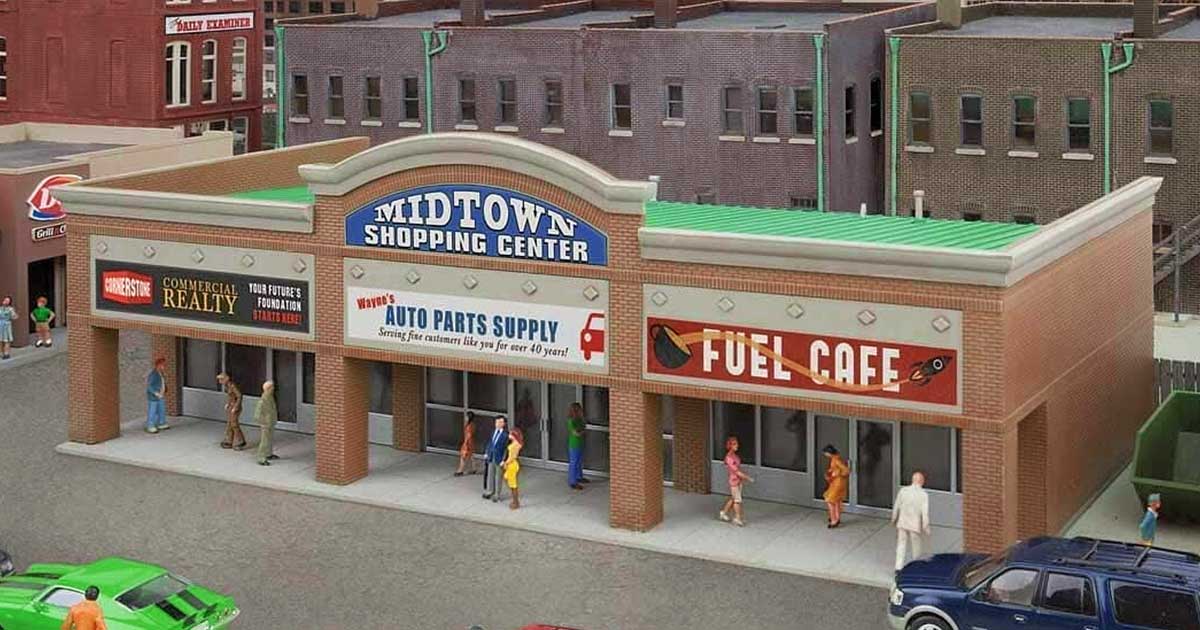
Buildings anchor your layout in time more definitively than almost any other scenic element. While ready-made structures provide excellent starting points, thoughtful selection and modification transforms generic buildings into specific places with genuine character and history.
Start by understanding architectural evolution in your chosen region. Australian architecture reflects waves of prosperity and fashion – Victorian boom-time grandeur, Federation-era nationalism, interwar art deco optimism, and postwar pragmatism. Even humble railway buildings followed these trends. A 1880s goods shed differs markedly from its 1950s replacement, not just in style but in construction methods and materials. Study real examples from your chosen era and location.
Modification techniques range from simple to ambitious. Changing roofing materials instantly ages or modernises a structure – corrugated iron replaced shingles across rural Australia, while terracotta tiles gave way to Colorbond in suburbs. Window and door replacements tell stories too. That Victorian-era station might have received aluminium window frames during 1970s "modernisation." Adding or removing architectural details like verandahs, awnings, or decorative elements can shift a building's era by decades.
Don't forget commercial evolution. Shops change purpose over time – yesterday's bank becomes today's cafe, the old picture theatre transforms into retail space. These conversions leave traces: filled-in doorways, mismatched additions, ghostly painted signs on brick walls. Creating these layers of history adds tremendous authenticity. Consider how card building kits can be combined or modified to show these evolutionary changes.
![[SUGGESTED IMAGE: Before and after comparison of a model railway building showing period-appropriate modifications, such as updated signage, weathering, and architectural details]](https://www.hearnshobbies.com/cdn/shop/files/modern_shopping_center_i_933-4115_big.jpg?v=1749677185&width=700)
Creating Period-Appropriate Natural Features
Nature provides subtle but powerful period indicators often overlooked by modellers focused on structures and rolling stock. Vegetation patterns, landform modifications, and water features all evolved with human activity, creating distinctive markers that reinforce your chosen era. Understanding these natural progressions helps create more convincing historical scenes.
Australian vegetation tells stories of settlement and change. Early railway lines often featured imported deciduous trees around stations – oaks, elms, and poplars that settlers planted for shade and nostalgia. By the 1970s, native plant movements saw eucalypts and acacias returning to public spaces. Weed species also indicate eras: prickly pear dominated until biological control in the 1920s, while Patterson's curse and blackberries marked abandoned railway margins from the 1960s. Your choice of model trees should reflect these patterns.
Landforms reveal human intervention across time. Early railways followed natural contours, creating distinctive curved alignments. Later lines, built with better equipment, featured more cuttings and embankments. Quarries and borrow pits from construction often became water-filled landmarks. Erosion patterns changed too – well-maintained embankments from the steam era might show degradation in modern scenes as maintenance budgets shrank. These subtle terrain variations add authenticity that viewers sense even if they don't consciously recognise it.
Water features evolved with environmental awareness and engineering capabilities. Steam-era layouts need water infrastructure – tanks, dams, and drainage channels. Creeks might be heavily modified with concrete channels in urban areas, while rural streams could show everything from pristine bush settings to eroded banks from overgrazing. Modern layouts might feature retention basins and restored wetlands. Water effect products help create period-appropriate aquatic features.
Vegetation Timeline Reference
| Era | Typical Station Vegetation | Lineside Growth |
|---|---|---|
| 1900-1940s | Exotic shade trees, formal gardens | Cleared, maintained verges |
| 1950s-1970s | Mixed native/exotic, less formal | Some regrowth, introduced weeds |
| 1980s-present | Native focus, drought-tolerant | Significant regrowth, varied management |
Colour Palettes and Weathering Techniques
Colour creates immediate period atmosphere, yet it's where many layouts falter. Real-world colours fade, shift, and accumulate layers over time. Understanding how materials age and weather in Australian conditions helps create scenes that feel genuinely lived-in rather than artificially aged. The key lies in observing real examples and understanding the processes that create authentic patinas.
Australian sun brutally fades colours, but not uniformly. Red oxide primers fade to pink, while deep blues become powder blue. Painted timber weathers to silver-grey, starting from the most exposed surfaces. Galvanised iron develops distinctive patterns – initially bright, then dull grey, eventually showing rust streaks from fixings. These patterns follow logic: horizontal surfaces weather faster than vertical ones, north-facing walls fade more than southern aspects. Study real buildings of similar age to understand these patterns.
Urban and rural environments weather differently. City buildings accumulate soot and grime in patterns following prevailing winds and traffic flows. Rural structures might show red dust accumulation, bird droppings concentrated under favourite perches, or green algae on shaded walls. Coastal locations add salt corrosion to the mix. Your weathering products should reflect your layout's geographic setting.
Era-specific colour schemes evolved with technology and fashion. Pre-war buildings often featured dark colours – deep reds, bottle greens, and browns that hid soot. The 1950s brought optimistic pastels, while the 1970s embraced earth tones. Corporate standardisation from the 1980s introduced consistent colour schemes across railway infrastructure. Even graffiti follows period patterns – simple tags in the 1980s evolved into elaborate pieces by the 2000s. These colour stories reinforce your chosen era.
![[SUGGESTED IMAGE: Close-up of weathered model railway buildings showing realistic aging effects like faded paint, rust streaks, and accumulated grime appropriate to Australian conditions]](https://cdn.shopify.com/s/files/1/1008/9754/files/static-grass-tufts-12-mm-realistic-green.jpg?v=1740164033)
Small Details That Make Big Differences
The magic of nostalgic model railways often lives in tiny details that trigger powerful memories. These seemingly minor elements – a particular style of rubbish bin, the way milk bottles sat on doorsteps, or specific advertising posters – create authenticity that resonates with viewers who lived through your chosen era. Accumulating these details transforms good scenic work into genuinely evocative memory pieces.
Platform furniture evolved dramatically across decades. Steam-era platforms featured ornate cast-iron seats, decorative lamp posts, and elaborate canopies. The 1960s brought functional steel and concrete, while modern stations use vandal-resistant stainless steel and recycled plastic. Rubbish bins tell similar stories – from simple drums to concrete cylinders to modern recycling stations. Platform accessories matching your era establish period credibility instantly.
Advertising and signage provide period timestamps while adding visual interest. Enamel signs dominated until the 1960s, hand-painted signs served local businesses, and neon appeared in larger towns from the 1950s. Modern vinyl graphics only emerged in the 1980s. Ghost signs on brick walls – faded painted advertisements – tell stories of long-gone businesses. Railway-specific signage also evolved: cast-iron station names gave way to vitreous enamel, then painted steel, and finally modern reflective materials.
Vehicle details reinforce your temporal setting powerfully. Beyond just selecting period-appropriate cars, consider their condition and parking patterns. A 1950s scene might show pristine FJ Holdens, while the same cars in a 1970s scene would display rust, mismatched panels, and aftermarket accessories. Bicycles leaning against platform fences, delivery trucks at goods sheds, and even prams outside shops all contribute to period atmosphere. These small vehicle models deserve careful selection.
Memory Trigger Details
Focus on sensory memory triggers: bread delivery boxes outside shops, phone boxes with different era designs, playground equipment styles, postboxes and their collection time plates, shop awning styles and materials, street lighting evolution, and domestic details like Hills Hoists or TV antennas. These instantly transport viewers to specific decades.
Lighting and Atmospheric Effects
Lighting transforms static models into living scenes, but period-appropriate illumination requires understanding how lighting technology evolved. The warm glow of gas lamps, the harsh brightness of early electric bulbs, and the cool efficiency of modern LEDs each create distinct atmospheres that reinforce your chosen era. Strategic lighting design can make viewers feel like they're seeing a scene from their childhood.
Street and platform lighting evolved from gas to electricity at different rates across Australia. Major city stations electrified by the 1920s, while rural locations might have retained gas lamps into the 1950s. Early electric lighting used incandescent bulbs that created pools of yellow light with dark areas between. Mercury vapour lamps from the 1960s cast ghostly blue-white light, while modern sodium lamps produce characteristic orange glows. LED lighting systems can replicate these different colour temperatures.
Building lighting tells stories about prosperity and purpose. Steam-era stations often featured minimal lighting – perhaps just the booking office and waiting room. The postwar boom brought fluorescent tubes that blazed from shop windows. The 1970s energy crisis saw many lights extinguished, while modern security concerns mean buildings stay illuminated all night. Interior lighting visible through windows adds tremendous life – the warm glow from a signal box, the flicker of a period-appropriate TV, or the harsh fluorescents of a takeaway shop.
Atmospheric effects extend beyond simple illumination. Morning mist clinging to valleys, dust hazes during harvest season, or smoke from wood fires all evoke specific times and places. Modern layouts might show light pollution washing out stars, while historical scenes could feature the Milky Way clearly visible. Even the angle and quality of lighting can suggest time of day and season, helping establish the temporal setting of your miniature world.
![[SUGGESTED IMAGE: Model railway scene photographed during evening/dusk showing period-appropriate lighting effects including warm station lights, street lamps, and atmospheric lighting creating nostalgic mood]](https://www.hearnshobbies.com/cdn/shop/products/mini-lighting-set-with-switch-and-cr927-battery.jpg?v=1732953914&width=800)
Incorporating Personal Memories
The most meaningful layouts transcend generic historical accuracy to capture specific, personal memories. Whether recreating your hometown station or building the layout your grandfather described from his railway days, these personal connections transform model railways from hobbies into family treasures. The techniques for capturing personal memories combine research, creativity, and often a bit of detective work.
Start by mining family archives for details. That box of old photos might reveal invaluable information – the exact shade of the local station building, the style of garden your grandmother maintained, or the delivery van from the corner shop. Look beyond the subject of photos to study backgrounds. Even blurry details can provide proportions, positions, and relationships between elements. Combine multiple photos to build comprehensive mental images of lost places.
Interview relatives while you still can. Older family members often remember details that photographs miss – which way doors opened, what the station smelled like, or where unofficial shortcuts ran. They might recall specific trains, favourite railway workers, or local events that brought the community to the station. These stories inform not just what you model, but how you populate and operate your layout. Record these conversations; they're as valuable as any reference book.
Don't aim for museum-quality reproduction – instead, capture the feeling of places and times. That corner milk bar might combine features from several real shops to create something that feels more authentic than slavish copying. Include anachronistic details if they enhance personal meaning. Maybe your layout needs that specific car your father drove, even if it's slightly too modern for your chosen era. These deliberate choices create layouts that speak to heart as well as head.
Memory Research Tips
- • Check electoral rolls for business names
- • Search Trove for local newspaper mentions
- • Contact local historical societies
- • Study aerial photos from different eras
- • Visit locations if still accessible
Personal Detail Ideas
- • Family business signage
- • Specific vehicle registrations
- • Pet cemetery behind station
- • Favourite fishing spots
- • School crossing locations
Frequently Asked Questions
How do I research buildings that no longer exist?
Start with state library photograph collections, which often have searchable online databases. Local historical societies frequently maintain photo archives and detailed knowledge about demolished structures. Council planning archives sometimes retain building applications showing original elevations and floor plans. Real estate advertisements in period newspapers through Trove can reveal interior layouts and features. For scratch-building projects, combine multiple sources to reconstruct accurate plans. Even Google Street View's timeline feature might show buildings before recent demolition.
What's the best way to weather buildings for Australian conditions?
Australian weathering differs from European or American techniques due to our intense UV, red dust, and varied climates. Start with faded base colours rather than adding fade later. Use warm grey and tan weathering powders rather than black for accumulated dirt. Rust appears quickly on exposed metal but develops slowly on galvanised surfaces. Bird droppings concentrate under eaves and popular perches. Apply weathering products directionally – following prevailing winds and rain patterns. Study real buildings in similar environments for authentic patterns.
How can I make modern buildings look period-appropriate?
Backdating modern structures requires understanding what changes over time. Replace modern windows with period-appropriate styles – double-hung sash for Victorian era, steel-framed for 1950s. Change roofing materials from Colorbond to corrugated iron or tiles. Remove modern additions like air conditioners, security cameras, and disabled access ramps. Add period details like chimney pots, TV antennas appropriate to the era, or awnings over windows. Adjust signage to period styles and materials. Sometimes a modern kit provides better proportions than available period kits, making modification worthwhile.
Should I model a specific date or a general era?
This depends on your goals and operating preferences. Specific date modelling (say, winter 1962) provides clear guidelines but limits rolling stock and scenic options. General era modelling (early 1960s) offers more flexibility while maintaining period consistency. Consider a "compression" approach – representing several years within believable parameters. This allows favourite locomotives that barely overlapped in real life or seasonal variations in scenery. Whatever you choose, document your decision to maintain consistency as the layout develops. The model railway reference books can help establish accurate timelines.
Final Thoughts
Creating miniature worlds that capture memory lanes requires equal parts research, observation, and intuition. We've explored how thoughtful scenery design can transport viewers across decades, triggering powerful memories and emotional connections. The techniques we've discussed – from understanding period signatures to incorporating personal details – transform simple model railways into time machines that preserve and celebrate our shared heritage.
Remember that perfection isn't the goal; connection is. A layout that captures the spirit of grandpa's stories about his railway days means more than one that precisely reproduces every rivet. Whether you're modelling the branch line that closed before you were born or recreating the station where you caught trains to school, these miniature memory lanes preserve experiences that photographs alone cannot capture.
The journey of building memory lane never truly ends. As you research, build, and refine your layout, new memories surface and fresh details emerge. Family members contribute stories, historical societies uncover photographs, and suddenly that generic goods shed becomes the specific building where your great-uncle worked. This evolution makes model railway scenery uniquely rewarding – it grows richer with time, just like the memories it preserves.