 is here! Shop now, pay later in 4 easy installments


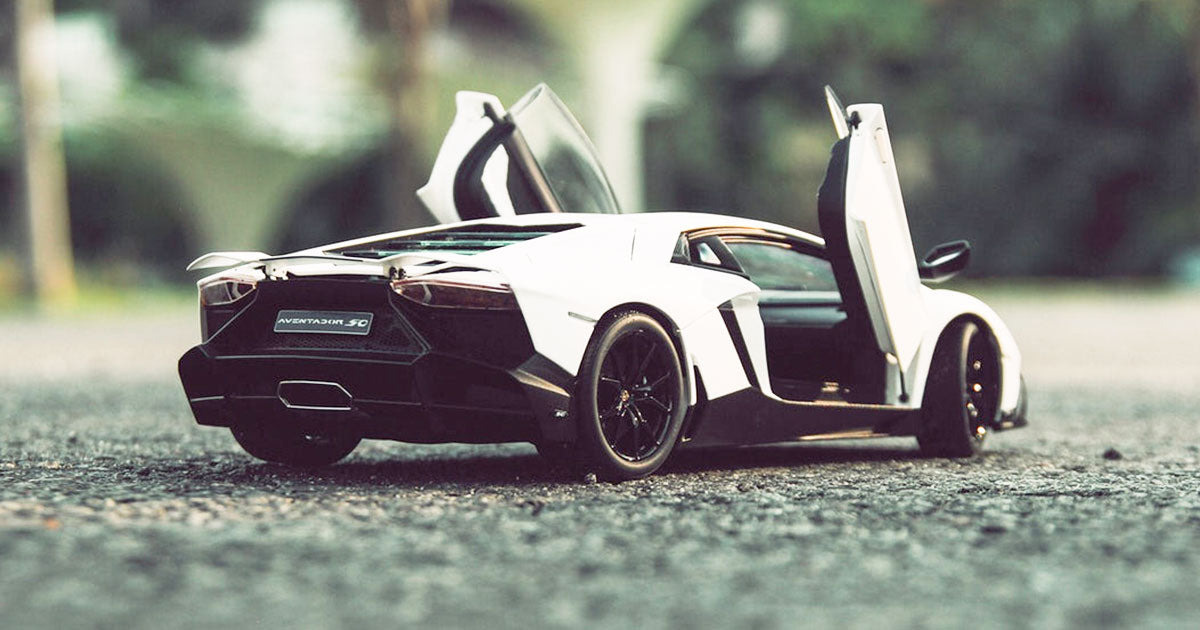
Zinc Pest And Why Some Diecast Doors Sag After 2019
You've just noticed it. That beautiful diecast scale model you bought a couple years ago - the doors don't sit right anymore. They're drooping, maybe the bonnet's warped, and if you look closely, there's a weird white powder forming around the hinges. Welcome to the nightmare that's been quietly destroying modern diecast collections: zinc pest.
At Hearns Hobbies, we've been fielding more questions about deteriorating models lately, and there's a disturbing pattern. Models manufactured after 2019, particularly from certain factories, are showing signs of zinc pest at an alarming rate. This isn't your grandfather's zinc pest either - it's hitting newer models faster and more aggressively than anything we saw in the 1990s outbreak.
The thing is, most collectors don't even know what zinc pest is until it's too late. You might think that sagging door is just a loose hinge or maybe the model got too warm sitting on your shelf. But zinc pest - or zinc rot as some call it - is actually the metal itself breaking down at a molecular level. And once it starts, there's no stopping it.
We're seeing pristine collections worth thousands of dollars literally crumbling to dust. High-end models that should last generations are failing within 24 months. It's heartbreaking for collectors who've invested serious money in what they thought were heirloom pieces. Today we'll dig into why this is happening, how to spot it early, and what you can do to protect your collection.
Table of Contents
Understanding Zinc Pest: The Silent Killer
Zinc pest sounds like something from a horror movie, and honestly, for diecast collectors it kind of is. The technical term is intergranular corrosion, but what's actually happening is the zinc alloy (zamak) used in diecast models is breaking down from the inside out. Impurities in the metal - usually lead, cadmium, or tin - cause the zinc to expand and crumble into a powdery mess.
Here's the kicker: this process can take years to show visible signs. Your model might look perfect on the outside while the metal's already compromised internally. By the time you notice that first crack or that door starting to sag, the damage is already extensive. It's like termites in your house - when you see the damage, they've been there a while.
The chemistry behind it is pretty straightforward. Pure zinc is stable, but the zamak alloys used in diecast (typically Zamak 3 or Zamak 5) need to be incredibly pure. We're talking 99.99% pure. Even tiny amounts of impurities - we're talking parts per million here - can trigger the breakdown process. And once it starts, it spreads through the metal like cancer.
This can be particularly nasty for smaller scale collectors is the precision required at this scale. When you're dealing with door hinges that are maybe 2mm wide, even minimal expansion can cause visible problems. Larger scales might hide early zinc pest symptoms, but at let's say 1:43, every fraction of a millimetre counts.
![[SUGGESTED IMAGE: Close-up comparison showing healthy zinc alloy surface versus early stage zinc pest with white powdery deposits and micro-cracks]](https://cdn.pixabay.com/photo/2021/02/10/06/52/lamborghini-aventador-6001105_1280.jpg)
Why Post-2019 Models Are Particularly Vulnerable
So why are we seeing this explosion of zinc pest in models made after 2019? The answer's complicated, but it basically comes down to changes in global manufacturing and material sourcing. COVID threw a massive spanner in the works of international supply chains, and the diecast industry wasn't immune.
During 2019-2020, many factories switched suppliers for their raw materials. Cost pressures meant some manufacturers started sourcing cheaper zinc alloys, maybe from suppliers who couldn't guarantee the same purity levels. Quality control got sketchy when factories were operating with skeleton crews or shutting down intermittently. The perfect storm for zinc pest.
There's also been a shift in where models are being produced. Some factories that had been making diecast for decades closed or changed hands. New facilities might not have the same institutional knowledge about preventing zinc pest. We're talking about processes that need to be precise - contamination can happen from something as simple as using teh wrong lubricant on the casting equipment.
Environmental regulations have changed too. Some of the additives that used to help stabilize zinc alloys have been banned or restricted. Manufacturers had to reformulate their alloys, and not all of them got it right. It's like changing a recipe - sometimes the new version just doesn't work as well as the original.
Industry Insight
Multiple industry sources confirm that zinc alloy prices increased by over 40% between 2019-2021, leading some manufacturers to seek alternative suppliers. This cost-cutting measure has had devastating consequences for model quality and longevity.
Identifying Early Signs of Zinc Deterioration
Catching zinc pest early won't save the model, but it can prevent you from buying more from problematic batches. The first signs are subtle - so subtle that most collectors miss them entirely. You really need to know what you're looking for.
Door sag is usually the canary in the coal mine for diecast models. The hinges are tiny and bear constant stress from the door's weight. As the zinc expands, these hinges are the first to show strain. Look for doors that don't align properly with the body anymore, or gaps that seem wider than they should be.
White powdery residue is another dead giveaway. This isn't dust - it's actually zinc oxide, the corrosion product of the deteriorating metal. Check around hinges, in panel gaps, and especially underneath the model. Sometimes you'll see it before any visible warping occurs. If you spot this powder, that model's already doomed.
Cracks and fissures typically appear next. They often start at stress points - where different parts join, around screw posts, or at thin sections of castings. Under magnification, affected areas might show a crystalline or granular texture instead of smooth metal. The surface might also feel rough or gritty where it should be smooth.
Early Warning Signs Checklist
| Sign | Location | Severity |
|---|---|---|
| Door misalignment | Hinges, door edges | Early stage |
| White powder | Joints, underneath | Active decay |
| Surface cracks | Stress points | Advanced |
| Part separation | Glued joints | Critical |
Which Brands and Models Are Most Affected
Now, this is where things get a bit tricky. We can't name specific brands without solid proof, and manufacturers obviously don't advertise when they've had zinc pest issues. But collectors have been sharing their experiences, and certain patterns have emerged from post-2019 releases.
Generally speaking, mid-tier brands seem most affected. The premium manufacturers like BBR and MR Collection typically use higher-grade materials and stricter quality control. Budget brands often use different alloys or plastic parts that aren't susceptible to zinc pest. It's the middle market where cost pressures and quality expectations collide.
Models with complex opening features suffer most. Every hinge, every moving part, every separate casting increases the chances of contamination during manufacturing. That's why doors are usually the first to go - they're separate castings attached with tiny metal pins. Simpler sealed models fare better.
Certain production batches seem particularly problematic. Collectors have noticed that models from specific months in 2020 and early 2021 show higher failure rates. This aligns with when factories were dealing with the most disruption. If you're buying models from this period, extra vigilance is warranted.
![[SUGGESTED IMAGE: Display showing various 1:43 diecast models with arrows pointing to common failure points like door hinges, hood attachments, and base plate connections]](https://cdn.pixabay.com/photo/2017/07/17/04/48/car-2511371_1280.jpg)
Prevention and Storage Strategies
Here's the brutal truth: you can't prevent zinc pest if the alloy's already contaminated. Once those impurities are in there, it's just a matter of time. But you can slow the process down and protect models that haven't started deteriorating yet.
Temperature stability is crucial. Zinc pest accelerates with temperature fluctuations, so keeping your collection in a climate-controlled environment helps. We're talking consistent temps around 20-22°C if possible. Avoid storing models in garages, sheds, or anywhere that gets hot in summer. Those 40-degree days we get in Melbourne? They're murder on contaminated zinc.
Humidity control matters too. High humidity speeds up corrosion, while very low humidity can make the metal brittle. Aim for 45-55% relative humidity. Display cases with silica gel packets can help maintain stable conditions. Just remember to replace the packets when they're saturated.
Handle with care, literally. Oils from your skin can accelerate corrosion on already-compromised metal. If you must handle affected models, wear cotton gloves. And never try to force sagging doors back into position - you'll just crack the weakened metal faster. Once zinc pest starts, the kindest thing is minimal handling.
Storage Best Practices
Store models in individual compartments to prevent cross-contamination. If one model develops zinc pest, at least it won't physically touch others. Consider photographing your collection regularly - if deterioration occurs, you'll have documentation for insurance or seller claims.
Dealing with Already Damaged Models
So what do you do when you've discovered zinc pest in your collection? First up, isolate affected models immediately. While zinc pest isn't contagious in the traditional sense, the corrosion products can be messy and you don't want that powder spreading around your display cases.
Document everything. Take detailed photos showing the damage, noting purchase dates and any batch numbers. If the model's relatively new, you might have recourse through the retailer or manufacturer. Some collectors have successfully gotten replacements for models that failed within 12-24 months, though policies vary widely.
For valuable models, professional restoration might be an option - sort of. Some specialists can create replacement parts using 3D printing or traditional modelmaking techniques. It's expensive and the model will never be original again, but for rare or sentimental pieces, it beats watching them crumble. The base and main body might be salvageable even if the doors and small parts are toast.
Unfortunately, severely affected models are basically write-offs. Once zinc pest has progressed to visible cracking and crumbling, the structural integrity is gone. Some collectors keep them as reference pieces or for spare parts that aren't affected (like rubber tyres or plastic interiors). But realistically, advanced zinc pest means that model's collecting days are over.
Immediate Actions
- • Isolate affected models
- • Document damage thoroughly
- • Contact seller if recent
- • Check similar models
- • Adjust storage conditions
Long-term Decisions
- • Evaluate restoration options
- • Consider parts salvage
- • Update insurance records
- • Revise collecting focus
- • Share with community
The Future of Diecast Collecting
Where does this leave diecast collecting? Well, it's definitely changed the game. Collectors are becoming more cautious, especially with newer releases. The days of buying a model and assuming it'll last forever are gone. Now it's about being selective and informed.
Some manufacturers have recognised the problem and are taking steps. We're hearing about improved quality control, better supplier vetting, and returns to proven alloy formulations. The reputable brands understand that zinc pest outbreaks destroy customer confidence. One bad batch can tarnish a manufacturer's reputation for years.
There's also been innovation in materials. Some companies are experimenting with different alloys or even composite materials for highly detailed parts. Resin models are becoming more popular partly because they're immune to zinc pest. Sure, resin has its own issues, but at least it won't disintegrate on your shelf.
The collector community has adapted too. Online forums now routinely share zinc pest reports, creating early warning systems for problematic releases. Some collectors have shifted focus to larger scales where the problem's less noticeable, or to vintage models from eras with better quality control.
![[SUGGESTED IMAGE: Modern display case setup showing proper storage with humidity control devices, individual model compartments, and temperature monitoring]](https://cdn.pixabay.com/photo/2015/08/20/11/41/hot-wheels-897303_1280.jpg)
Protecting Your Investment Moving Forward
So how do you keep collecting without fear? It starts with being a more informed buyer. Research before purchasing, especially for post-2019 models. Check collector forums, ask other hobbyists, and buy from reputable dealers who'll stand behind their products.
Diversification helps too. Don't put all your eggs in one basket - or all your money in one scale or era. Mix newer models with proven vintage pieces. Include some resin or plastic models that won't suffer from zinc pest. Consider smaller scales where individual models represent less financial risk.
Insurance is worth considering for serious collections. Make sure your policy covers gradual deterioration, not just sudden damage. Document your collection thoroughly with photos and receipts. Some collectors even x-ray valuable models to create baseline records of their internal condition.
Ultimately, collecting is about enjoyment, not just investment. Yes, zinc pest is a real problem that's affecting modern diecast. But don't let fear stop you from pursuing your passion. Be smart about it - buy quality, store properly, and stay informed. The hobby's survived zinc pest outbreaks before, and it'll survive this one too.
Smart Collecting Tips
Join online communities focused on your collecting interests. Fellow collectors often provide the earliest warnings about quality issues. Australian collectors have been particularly good at sharing information about which batches to avoid.
Frequently Asked Questions
Can zinc pest spread from one model to another?
No, zinc pest isn't contagious like a disease. It's caused by impurities already present in the metal when it was cast. However, the white powder (zinc oxide) can be messy and potentially corrosive to other metals, so it's still smart to isolate affected models. Think of it more like keeping a leaky battery away from your other electronics.
Should I return or sell models from affected batches that haven't shown symptoms yet?
That's a personal ethics call. If you know a specific batch has widespread problems, disclosure is the right thing to do. Some collectors are willing to buy knowing the risks, especially for rarer models. If the model's still under warranty or return period, absolutely exercise those rights. Just be honest if selling - karma in the collecting community has a way of coming back around.
Are sealed models less likely to develop zinc pest than opened ones?
The packaging makes no difference to zinc pest development - the contamination happened during manufacturing. However, sealed models might show symptoms later simply because they're handled less and stored more carefully. Some collectors think keeping models sealed prevents zinc pest, but if the alloy's contaminated, it's deteriorating whether you can see it or not. Regular inspection is actually better than leaving models sealed and unchecked.
Final Thoughts
Zinc pest in modern diecast is a real problem that's catching many collectors off guard. Those sagging doors on your post-2019 models aren't just a minor annoyance - they're symptoms of a fundamental manufacturing failure that's destroying collections worldwide.
The diecast hobby has weathered these storms before. Manufacturers will adapt, quality control will improve, and collectors will keep collecting. In the meantime, stay informed, store smart, and don't let fear of zinc pest stop you from enjoying this fantastic hobby. After all, the joy of that perfect model on your shelf - even if it doesn't last forever - is still worth it.