 is here! Shop now, pay later in 4 easy installments


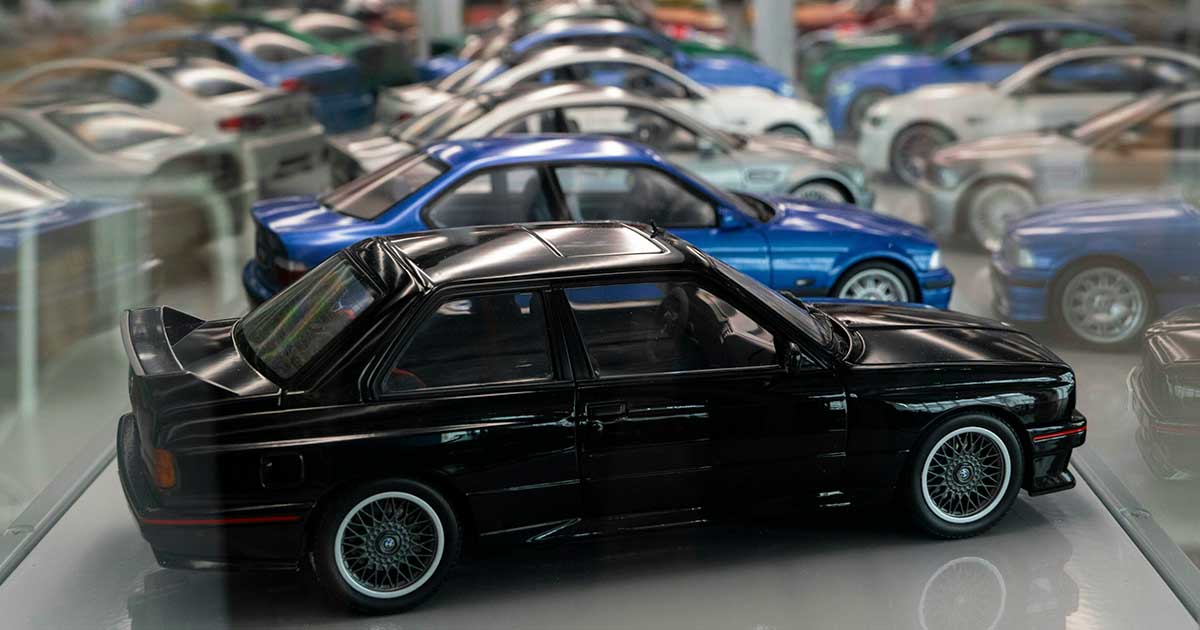
Explaining Your Diecast Collection to Normal People
You know that moment. Someone's visiting your place, they spot your display cabinet full of diecast models, and their face does that thing. Half confusion, half concern, like they've just discovered you collect toenail clippings or something equally mental. "Are those... toy cars?" they ask, and suddenly you're defending your entire adult existence to someone who thinks a 1:18 scale Ferrari is just an expensive Hot Wheels.
We've all been there. After thirty years serving collectors at Hearns Hobbies, we've heard every awkward conversation starter. From "aren't you a bit old for toys?" to "my kids would love playing with these!" – the struggle to explain why grown adults spend serious money on miniature vehicles is real. The thing is, most people genuinely don't understand the difference between a BBR Models masterpiece and something from the $2 shop.
So how do you explain your passion without sounding like you've lost the plot? How do you convey that your Classic Carlectables Bathurst winners aren't toys, they're precision scale replicas with historical significance? And more importantly, how do you do it without boring them to tears with details about tampo printing and zinc alloy construction?
This guide's for every collector who's fumbled through explaining why they won't let visiting kids "have a quick play" with their limited edition models. We'll cover the approaches that actually work, the ones that definitely don't, and maybe help you feel less weird about that spreadsheet tracking your collection's value. Because let's face it – we all have that spreadsheet.
Table of Contents
Why Normal People Don't Get It
The fundamental disconnect starts with the word "toy." To most people, anything that looks like a miniature car falls into the same category as the toy vehicles they stepped on barefoot at 3am when their kids were young. They see your meticulously detailed models through the lens of childhood playthings, missing everything that makes them special.
It doesn't help that diecast collecting occupies this weird middle ground. We're not quite as socially acceptable as scale model builders (who at least "make" something), not as obviously adult as wine collectors, and definitely not as mainstream as vinyl record enthusiasts. We collect things that look like toys but cost like jewellery, and that breaks most people's brains.
The price point really throws people off. When someone discovers your Tecnomodel cost more than their weekly grocery shop, they assume you're either loaded or completely mad. They don't see the hand-assembled details, the photo-etched parts, or the fact that only 299 others exist worldwide. They just see what looks like an expensive toy car, and their mental filing system has no category for that.
Then there's the space issue. One or two models on a desk? That's decoration. A full display case covering an entire wall? Now you're that weird car person. The sheer volume of a proper collection can be overwhelming to visitors who maybe own three decorative items total. They walk into your hobby room and suddenly feel like they're in a very specific, very expensive museum.
![[SUGGESTED IMAGE: A well-organized diecast collection display showing various scales and models in a professional display case with proper lighting]](https://images.unsplash.com/photo-1707406768629-580a49c251a7?q=80&w=1170&auto=format&fit=crop&ixlib=rb-4.1.0&ixid=M3wxMjA3fDB8MHxwaG90by1wYWdlfHx8fGVufDB8fHx8fA%3D%3D)
The Perception Gap
What they see: Expensive toy cars taking up space
What we see: Precision-engineered scale replicas preserving automotive history
The reality: Both perspectives are kinda valid, which is why explaining is so bloody difficult
The Five Types of Reactions You'll Face
After years of watching collectors navigate social situations, we've identified five distinct reaction types you'll encounter. Knowing which one you're dealing with helps you tailor your response and maybe, just maybe, avoid that awkward silence.
The Concerned Friend looks at your collection with genuine worry. They're calculating how much you've spent and wondering if you need an intervention. These people care about you but can't fathom why anyone would drop serious cash on 1:18 scale models. They'll ask questions like "but what do you DO with them?" and "couldn't you invest that money?" They mean well, honestly, but they're exhausting.
The Secret Admirer acts dismissive in public but lingers near your display when they think nobody's watching. They'll make jokes about your "toy cars" then quietly ask where you got that James Bond Aston Martin. These people are one good conversation away from starting their own collection – they just need permission to admit miniature things are cool.
The Child Wrangler immediately sees your collection as potential entertainment for their kids. "Oh, little Timmy would LOVE these!" No, Karen, little Timmy would love destroying them. These people need swift, firm education about the difference between collectible diecast and actual toy vehicles. Have cheaper "touchable" models ready as decoys – it's just easier.
The Gatecrasher immediately starts handling your models without asking, usually while eating or drinking something. They'll pick up your rarest piece with greasy fingers while telling you about the "sick cars" they had as a kid. These people require active management and possibly physical barriers. This is why many collectors develop a "no touchy" reflex that would make museum guards proud.
The Genuinely Interested asks real questions and listens to answers. They might not get the obsession, but they respect the passion. They'll notice details, ask about specific models, and remember what you tell them. These unicorns should be treasured and possibly converted to the hobby. They're also usually the ones who'll spot that rare model at a garage sale and text you immediately.
Quick Response Guide
| Reaction Type | Your Best Response |
|---|---|
| Concerned Friend | Compare to their expensive hobbies/interests |
| Secret Admirer | Show them the coolest piece and its story |
| Child Wrangler | Explain value while offering alternative toy |
| Gatecrasher | Physically intervene, redirect attention |
| Genuinely Interested | Share your passion freely |
Explanations That Actually Work
Right, so you need to explain your diecast collection without sounding mental. The key is finding comparisons that resonate with whoever you're talking to. Everyone collects something, even if they don't realise it. That person judging your 1:24 scale cars? They've probably got 47 throw pillows or a kitchen full of gadgets they never use.
The "investment angle" works surprisingly well with certain people. Mention that some limited edition models appreciate in value, that you track market prices, that there's actual money in rare pieces. Don't overdo it though – you're not running a hedge fund, you're collecting tiny cars. But framing it as "alternative investment" makes it sound less frivolous to finance-minded folks.
For creative types, emphasise the artistry. Talk about the engineering required to capture every detail at 1:43 scale, the hand-painted elements, the photo-etched parts. Compare it to miniature sculpture or functional art. Show them the engine detail under a removable bonnet, the working steering, the accurate interior. Once they see the craftsmanship, they usually get it.
The "museum at home" explanation resonates with history buffs. Your collection preserves automotive history in tangible form. Each model represents a moment in design evolution, racing heritage, or cultural significance. That movie car replica isn't just a toy – it's a piece of cinema history you can hold.
![[SUGGESTED IMAGE: Close-up detail shot of a high-end diecast model showing intricate engine bay or interior details]](https://www.hearnshobbies.com/cdn/shop/files/RT26701.jpg?v=1734702993&width=1200)
Effective Comparisons
- "Like vinyl records but for cars"
- "Similar to collecting art, just smaller"
- "Investment pieces that happen to look cool"
- "Historical artifacts in miniature"
- "Engineering marvels at small scale"
Keywords That Work
- "Scale replica" not "toy car"
- "Limited edition" not "expensive"
- "Collectible" not "model"
- "Display piece" not "shelf filler"
- "Investment grade" when applicable
What Never to Say (Trust Us)
Some explanations make things worse. Way worse. "They're not toys, they're collectibles!" sounds defensive and slightly unhinged. Everyone knows they're not actual toys – you don't need to shout about it. The lady doth protest too much, and all that. Plus, getting angry about the toy comparison just makes you look unstable about your tiny cars.
Never, ever mention how much your collection is worth unless specifically asked. Nothing kills a conversation faster than "that cabinet holds about fifteen grand worth of models." Even if it's true, especially if it's true, keep that information to yourself. Your mother-in-law doesn't need ammunition for Christmas dinner conversation.
Avoid getting too technical too quickly. Yes, you know the difference between zamac and resin construction, the historical significance of Greenlight's tooling choices, and why BBR Models are worth the premium. But diving into manufacturer minutiae makes people's eyes glaze over. Save the deep lore for fellow collectors who actually care about tampo printing quality.
Don't compare your collection to your kids' inheritance. "Little Jimmy will thank me when these are worth a fortune" sounds awful on multiple levels. It implies you're hoarding toys instead of saving actual money, and it suggests poor Jimmy's inheritance is sitting in display cases instead of a trust fund.
The Forbidden Phrases
"You wouldn't understand" - Condescending and off-putting
"It's a lifestyle" - You collect model cars, not join a cult
"Each one has a story" - Unless that story is actually interesting
"They're precision engineered masterpieces" - Bit much, mate
"My precious collection" - You're not Gollum
Handling Specific Situations
The Dinner Party Reveal: Someone's giving house tours and suddenly everyone's in your hobby room staring at walls of diecast. Keep it light: "Yeah, I collect cars – just smaller ones that don't need rego or petrol." Self-deprecating humour works wonders. Point out one interesting piece – maybe that Back to the Future DeLorean – and let that be the conversation starter. Don't feel obligated to explain every single model.
The Work Colleague Discovery: They've seen your desk Mini GT and now they're asking questions. This is actually an opportunity – a single desk model is approachable, not overwhelming. "I'm into cars but can't afford the real ones" usually gets a laugh. If they seem interested, mention you collect specific brands or eras. If not, change the subject to their interests.
The Parent Visit: Your parents will either completely support your hobby or worry you're reverting to childhood. For supportive parents, share what makes you happy about collecting. For worried ones, emphasise the community aspect – you're not just buying models, you're part of a legitimate collecting community with shows, forums, and social connections. Maybe don't mention the Facebook arguments about wheel accuracy.
The New Date Situation: This one's tricky. Having one or two quality models visible shows you have interests and passions. Having every surface covered in cars might be... intense for a first impression. Start small, gauge their reaction, and remember – if they can't handle your hobbies, they probably can't handle you. Better to know early, really.
The Insurance Assessor: Actually, just show them the spreadsheet. They'll appreciate the organisation. Make sure you've got photos of everything, purchase receipts where possible, and current market values. This is the one situation where being obsessively detailed about your collection pays off literally.
Emergency Response Kit
| Situation | Quick Save Response |
|---|---|
| "Can I touch it?" | "I've got some you can handle over here" (decoys) |
| "How much did this cost?" | "Less than a night out in Sydney" |
| "Bit childish, isn't it?" | "So is fantasy football but here we are" |
| "My kid would love these" | "There's a great toy section at Hearns for kids" |
The Partner Conversation
This deserves its own section because it's the most important conversation you'll have about your collection. Your partner needs to understand this isn't just a phase or mild interest – it's a genuine passion that brings you joy. But you also need to acknowledge their perspective, especially if diecast models are slowly colonising every flat surface in your shared home.
Start with boundaries and compromise. Maybe the 1:18 scale collection stays in the spare room, but you get one nice display case in the living room. Perhaps you agree on a monthly budget that works for both of you – treating it like any other hobby expense. Some couples even find success with "one in, one out" rules, though that's harder when Hearns has a sale on.
Include them when possible. Not everyone wants to spend Saturday at a model show, but maybe they'd enjoy the drive to pick up that special order. Some partners actually get into the hunt – checking clearance sections and op shops for hidden gems. My mate's wife has better spotting skills than he does now, though she still calls them "his little cars."
Be honest about the financial side. If you're hiding purchases or lying about costs, you've got bigger problems than explaining a hobby. Most partners are surprisingly understanding when you're upfront. "I'm thinking of getting this Classic Carlectables, it's pricey but it's been on my want list for years" goes down better than mysterious credit card charges.
![[SUGGESTED IMAGE: A well-organized hobby room or den with diecast displays integrated tastefully into the home decor]](https://www.hearnshobbies.com/cdn/shop/files/18826.jpg?v=1735136297&width=800)
The "investment potential" argument works with some partners, fails spectacularly with others. Yes, some limited editions appreciate, but buying diecast as investment is like buying wine as investment – most of us are gonna open that bottle eventually. Be realistic about which pieces might gain value and which ones you bought just because they're bloody cool.
Partnership Survival Tips
• Designate display zones vs. no-go areas
• Set a monthly/yearly budget together
• Share the exciting finds and arrivals
• Acknowledge when the collection's getting out of hand
• Remember their hobbies cost money too
• Maybe let them pick one model they actually like
Finding Your People
Here's the thing – you don't actually need to justify your collection to everyone. The best solution to the explanation problem is finding people who already get it. Australia's got a thriving diecast community, from formal clubs to casual Facebook groups where arguments about wheel variations are considered normal conversation.
Local model shows are brilliant for this. Suddenly you're surrounded by people who understand why you drove two hours for a specific Holden variant. Nobody questions your sanity when you're comparing 1:43 scale paint finishes. These events remind you that you're not weird – you're just specific about your interests.
Online communities have been a game-changer. Whether it's scale-specific groups, brand devotees, or era collectors, there's a corner of the internet where your particular obsession is celebrated. The Greenlight collectors understand your mail day excitement. The BBR Models group appreciates why you spent that much on resin perfection.
Don't underestimate hobby shops either. Places like Hearns aren't just stores – they're community hubs where conversations about diecast trucks are encouraged, not endured. The staff actually care about your latest acquisition, and other customers will happily debate the merits of different scales. It's group therapy with tiny planes and cars.
Where to Find Community
- Local model shows and swap meets
- Brand-specific Facebook groups
- Scale-specific online forums
- Instagram collector hashtags
- Hobby shop regular gatherings
Benefits of Finding Your Tribe
- No explanations needed
- Trading and selling opportunities
- Shared knowledge and tips
- Validation for expensive purchases
- Friends who enable your addiction
Frequently Asked Questions
How do I explain why I won't let kids play with my diecast models?
The key is being firm but not mean about it. Explain that these are "special display models" that cost a lot of money and break easily. Compare them to mum's good china or dad's watch – things we look at but don't touch. Having a few cheaper toy cars as designated "play models" helps enormously. Kids usually understand "these ones are for looking, these ones are for touching" better than complex explanations about limited edition collectibles. If parents push back, mention specific values – "that one cost $200" usually stops the conversation cold.
What's the best way to explain the price of high-end diecast to someone who thinks all model cars cost $5?
Break it down into production details they can understand. Explain that premium models are hand-assembled, limited to maybe 500 pieces worldwide, and take months to produce. Compare it to the difference between Kmart jewellery and actual gold – both look similar from distance, but the materials, craftsmanship, and rarity create the value. Sometimes showing them the detail helps – the readable gauges, opening panels, accurate engine bay. Once they see a MR Collection model up close, they usually understand why it costs more than a weekly shop.
How do I handle people who insist on touching or picking up models without asking?
Quick intervention is key. The moment you see hands reaching, friendly but firm: "Oh, careful with that one – let me show you." Then physically take control of the situation. Guide them to models you're comfortable with them handling, or better yet, redirect entirely: "The detail's actually better from this angle." For serial touchers, consider installing actual barriers – glass door display cases solve many problems. Some collectors keep handling gloves nearby as a subtle hint. If someone's already grabbed something precious, stay calm but immediate: "I'll take that – the oils from fingers can damage the finish." Most people back off when you mention damage.
Should I hide my collection when certain people visit, or is that giving in to judgment?
Depends entirely on your goals and the visitors. If it's your judgmental aunt who'll spend Christmas dinner lecturing about wasted money, maybe move the premium pieces to another room. That's not weakness – it's choosing your battles. But don't hide who you are from people who matter. If someone can't accept that you collect diecast models, that's their limitation, not yours. Most collectors find a middle ground – displaying select pieces publicly while keeping the bulk of the collection in a dedicated space. Your home should reflect your interests, but you also don't need to turn every interaction into a defence of your hobbies.
Final Thoughts
Look, at the end of the day, you collect diecast models because they bring you joy. Whether it's the thrill of finding that rare Bathurst winner, the satisfaction of completing a series, or just the simple pleasure of looking at beautifully crafted miniatures, your collection is yours. Not everyone needs to understand it, and that's perfectly fine.
The people worth keeping around will accept your passion even if they don't share it. They might still call them toy cars, might never understand why you need seventeen versions of the same Skyline GT-R, but they'll respect that it matters to you. And honestly? The ones who give you grief about collecting model cars probably waste money on plenty of questionable stuff themselves.
So next time someone questions your collection, remember you're part of a global community of enthusiasts who appreciate automotive art in miniature form. You're preserving history, supporting craftmanship, and enjoying something that makes you genuinely happy. If that needs defending, maybe the problem isn't with your hobby – it's with their inability to understand passion. Keep collecting what you love, display it proudly, and surround yourself with people who get it, or at least pretend to.